
To grow mushrooms at home, you start with spawn jars, which contain sterilized substrate inoculated with mycelium, kept in warm, dark spots until fully colonized. Then, transfer the spawn into monotubs or other systems with suitable substrates like straw or coir, ensuring proper humidity and fresh air exchange. Maintaining the right temperature and cleanliness prevents contamination and supports healthy growth. Keep exploring to learn more about optimizing your mushroom setup and achieving great yields.
Key Takeaways
- Spawn jars contain sterilized substrate inoculated with mushroom spawn, serving as the initial mycelium growth environment.
- Fully colonized spawn jars are transferred to monotubs or other systems for further growth.
- Monotubs provide a semi-controlled environment with proper humidity and fresh air exchange for mushroom development.
- Maintaining optimal temperature, humidity, and cleanliness prevents contamination and supports healthy mycelium growth.
- Patience and consistent care are essential for successful colonization and mushroom fruiting in home systems.

Growing your own mushrooms at home can be a rewarding experience, but understanding the basics is essential to get started. One of the first things you need to grasp is how mushrooms grow and what they need to thrive. Mushrooms are fungi that rely heavily on their mycelium, the root-like network that forms the main body of the fungus. Mycelium growth is crucial because it’s responsible for absorbing nutrients from the substrate, which directly impacts mushroom nutrition. Knowing how to support healthy mycelium growth helps ensure a successful harvest.
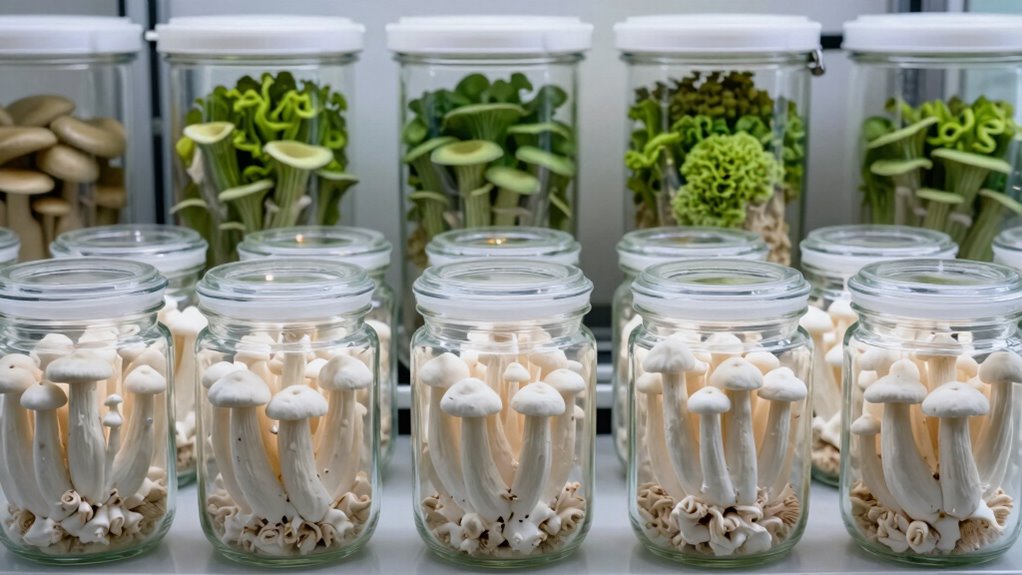
When starting out, many beginners use spawn jars. These jars contain sterilized substrate inoculated with mushroom spawn, which is essentially a culture of mycelium. Spawn jars are convenient because they provide a controlled environment to cultivate mycelium before transferring it to larger systems. You’ll want to keep these jars in a warm, dark place to encourage mycelium growth. As the mycelium spreads through the substrate, it begins breaking down nutrients, creating a nutrient-rich environment that supports mushroom development. This stage is critical because healthy mycelium is the foundation for good mushroom yields. The more vigorous and contaminant-free your mycelium is, the better your chances of a successful fruiting.
Once your spawn jars are fully colonized, you can transfer the mycelium to a monotub or other growing systems. Monotubs are popular because they provide a semi-controlled environment that’s easy to maintain. They typically consist of a plastic container filled with a substrate, such as sawdust, straw, or coco coir, which has been inoculated with your spawn. You’ll want to guarantee proper humidity and fresh air exchange to support ongoing mycelium growth. As the mycelium continues to colonize the substrate, it forms a dense network that efficiently absorbs nutrients and prepares the environment for fruiting. Maintaining proper conditions, like temperature and humidity, is essential during this phase to promote healthy mushroom development. Additionally, understanding the importance of contamination prevention can significantly impact your success rate. Proper air exchange helps reduce the risk of contamination and supports healthy mycelium growth. To maximize your success, it’s also helpful to learn about sterile techniques, which are critical for preventing unwanted organisms from taking hold.
Throughout this process, understanding how to nurture mushroom nutrition and support mycelium growth makes all the difference. The key is providing the right environment—clean, sterile, and at optimal temperatures—and patience, as mycelium takes time to fully colonize its substrate. Developing a good understanding of substrate preparation techniques can further improve your yields and reduce contamination risks. When conditions are right, you’ll see the mycelium start to pin and develop into mushrooms. With consistent care and attention, your home mushroom system will flourish, producing fresh, nutritious fungi that you grew yourself.

Myco Labs Premium Quick Colonizing 32oz 5-Grain Mushroom Spawn Jars (3-PACK)
- Pack Size: 3 jars of 32 oz each
- Grain Mix: Organic rye berries with small grains
- Faster Colonization: Designed for quicker growth
As an affiliate, we earn on qualifying purchases.
As an affiliate, we earn on qualifying purchases.
Frequently Asked Questions
How Long Does It Take for Mushrooms to Fully Mature?
Mushrooms typically take about 1 to 3 weeks to fully mature, depending on the strain and growing conditions. You can expect the harvest timing to vary based on the growth rate, which is influenced by temperature, humidity, and light. Keep an eye on the caps—when they’ve fully expanded and the veil begins to break, it’s usually time to harvest. Patience guarantees you get the best yield and potency.
Can I Reuse Spawn Jars or Monotubs?
Think of reuse like passing a torch—your spawn jars and monotubs can be reused, but with care. After spawn jar sterilization, you can inoculate fresh substrate, extending their life. For monotub setup, clean thoroughly and replace the substrate, making it almost like new. Reusing saves money and effort, but always guarantee everything is sterile to prevent contamination. Proper cleaning and sterilization are key to successful reuse.
What Are Common Signs of Contamination?
You’ll notice contamination signs like unusual colors—green, black, or pink—offensive odors, or slimy textures. To prevent contamination, focus on proper sterilization techniques and maintain a clean environment. Always inspect your jars or monotubs regularly, and discard any with mold or foul smells. Staying vigilant helps you catch issues early, ensuring your mushroom cultivation stays healthy and productive.
How Do I Troubleshoot Slow or Stalled Growth?
Think of your grow space as a garden needing perfect weather. If growth stalls, check humidity control and airflow management—like adjusting the breeze and rain. Too little humidity or poor airflow can suffocate or dry out your mycelium. Make sure vents are open and humidity stays consistent. Improving these conditions helps your fungi breathe and thrive, turning a sluggish garden into a vibrant mushroom patch.
Are There Specific Mushroom Species Best for Beginners?
For beginners, some mushroom species are especially beginner-friendly, making your first cultivation experience smoother. Popular beginner-friendly varieties include oyster mushrooms, shiitake, and button mushrooms. These mushroom species are resilient, grow quickly, and require less complex setups. Choosing these beginner-friendly varieties helps you learn the basics of mushroom cultivation without much hassle. As you gain experience, you can experiment with more challenging species, but these are perfect for starting out.
Conclusion
So here you are, ready to conquer the world of home mushroom cultivation. With your spawn jars and monotubs, you’re armed and prepared—yet, ironically, the biggest challenge might just be patience. After all, growing mushrooms isn’t a race; it’s a lesson in humility. Stick with it, keep learning, and soon you’ll realize that the real magic isn’t in the jars or tubs, but in the quiet satisfaction of nurturing life.