
Using broadforks, garden forks, and low-disturbance techniques helps you gently aerate your soil while preserving its natural structure and microbial life. These tools allow you to work the soil without turning it over, reducing erosion and maintaining healthy soil layers. This approach supports better nutrient breakdown, promotes resilient plant growth, and boosts soil fertility over time. Keep exploring to discover how these methods can transform your gardening success.
Key Takeaways
- Broadforks enable gentle, precise soil aeration without turning, preserving soil layers and microbial life.
- Low-disturbance techniques improve soil structure, enhance fertility, and support sustainable crop rotation.
- Using garden forks minimizes soil disruption compared to heavy machinery, promoting healthier microbial ecosystems.
- Proper soil testing guides tailored low-impact practices to address specific soil compaction and nutrient needs.
- These methods lead to long-term soil health, increased yields, and resilient garden ecosystems.
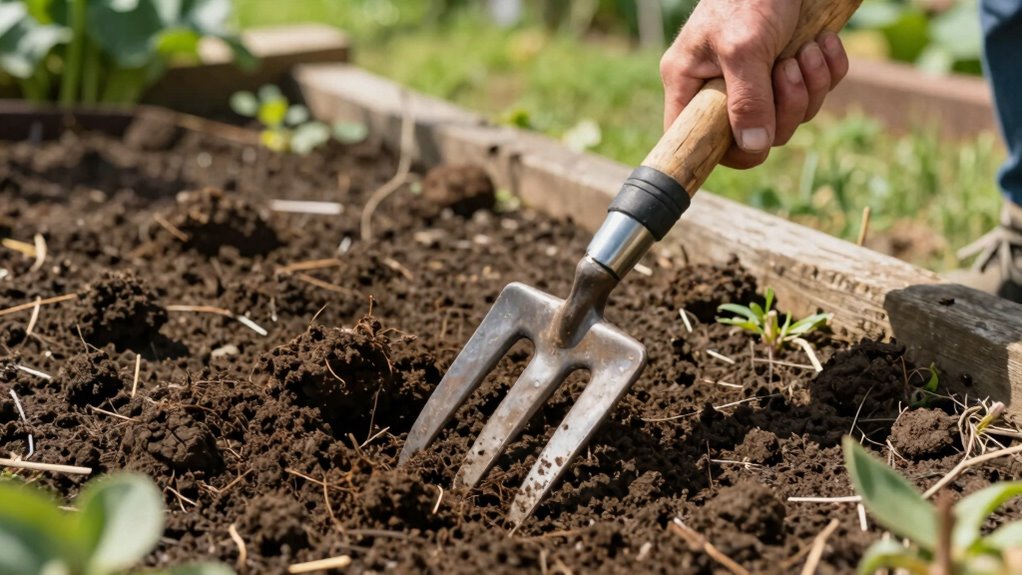
A garden fork is an essential tool for effective soil work, helping you break up compacted earth and improve aeration. When you use it properly, it allows your soil to breathe better, promoting healthier plant growth. This is especially important if you follow sustainable gardening practices like composting methods or crop rotation. By aerating the soil, you guarantee that nutrients from your compost break down more efficiently, making them more accessible to your plants. Additionally, using a garden fork instead of a tiller minimizes soil disturbance, preserving the natural structure and microbial life that are crucial for healthy soil ecosystems. Proper soil testing can help you determine the specific needs of your garden, further enhancing your low-disturbance approach.
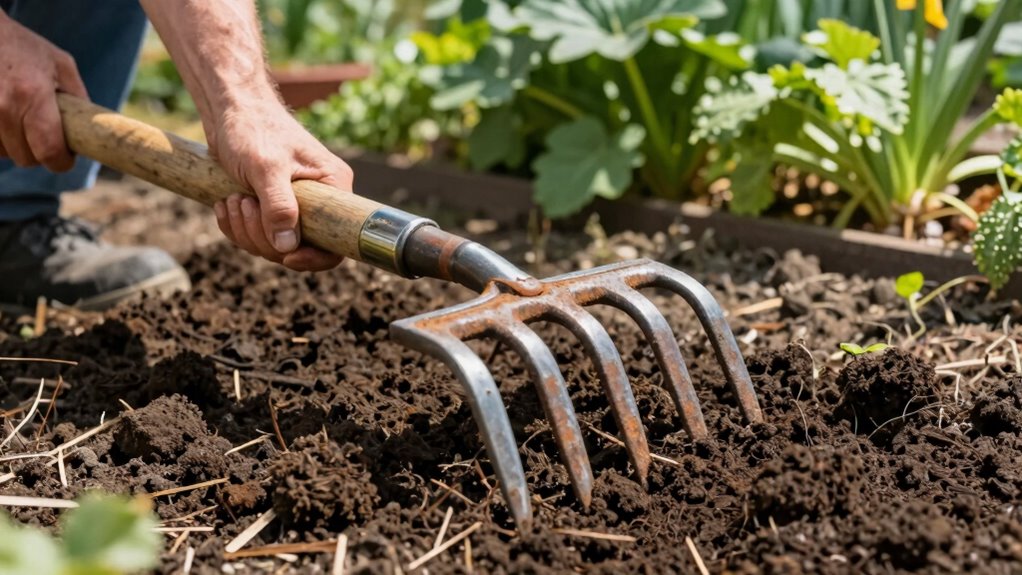
Broadforks and garden forks are particularly useful for low-disturbance soil work. Unlike heavy machinery or traditional tilling, these tools allow you to work gently and precisely. As you insert the fork into the soil and leverage it to lift and loosen, you don’t turn the soil over completely. This helps maintain the soil’s natural layers and prevents erosion while supporting diverse soil organisms. If you’re practicing crop rotation, this method becomes even more beneficial. Rotating crops often involves planting different plants in various sections of your garden, which can lead to uneven soil compaction. Using a broadfork helps you address these issues without disrupting the overall soil health. Incorporating soil structure into your gardening practices ensures a more resilient and productive garden environment. In addition, understanding the principles of soil health can guide your techniques and enhance your results.
Broadforks enable gentle, precise soil work, preserving layers and supporting healthy, diverse soil ecosystems during crop rotation.
Using proper techniques when working with these tools can further enhance the benefits of low-disturbance methods and protect your soil’s integrity. Incorporating a broadfork into your gardening routine also complements your composting efforts. When your compost is ready, you want to mix it into the soil without disturbing the existing microbial communities. Using a garden fork allows you to blend compost into the soil gently and evenly, ensuring nutrients are distributed without destroying beneficial fungi and bacteria. This method encourages continuous soil fertility and structure, which are key for successful crop rotation and sustainable gardening.
Furthermore, a garden fork’s versatility makes it ideal for preparing beds, aerating around established plants, and breaking up clumps of soil. Its use aligns well with minimal soil disturbance techniques, helping you cultivate a healthy and resilient garden. As you adopt these methods, you’ll notice improved soil texture and increased nutrient availability, leading to healthier plants and better yields. By choosing tools like broadforks and practicing careful, low-impact soil work, you support a thriving soil ecosystem. This approach not only benefits your current crops but also guarantees your garden remains fertile and productive for years to come.

VEVOR Broad Fork, 5-Tine Pitchfork with Dual Fiberglass Handles, Heavy Duty Garden Fork, Ergonomic U-Shaped Design Broadfork Hand Tiller, Gardening Tool for Composting Transplanting Aeration
- Durable Construction: Forged head and fiberglass handle for longevity
- Secure Assembly: Reinforced connection prevents loosening
- Ergonomic Length: 54-inch design reduces physical strain
As an affiliate, we earn on qualifying purchases.
As an affiliate, we earn on qualifying purchases.
Frequently Asked Questions
What Materials Are Best for Making a Broadfork?
You should choose materials like stainless steel or hardened steel for making a broadfork, as they offer excellent durability and withstand soil resistance. These materials also support an ergonomic design, ensuring the tool remains comfortable to use over time. Avoid softer metals that wear quickly. A well-made broadfork with sturdy material reduces fatigue and makes soil work more efficient, helping you maintain healthy, low-disturbance soil with ease.
How Often Should I Use a Broadfork in My Garden?
You should use a broadfork as often as your soil needs it, typically once or twice a season, to maintain ideal soil health. Incorporate compost enrichment during each session to boost nutrients. This soil aeration technique helps break up compaction, improves drainage, and promotes healthy root growth. Regular use ensures your garden stays well-aerated and fertile, making it easier for plants to thrive without disturbing soil structure excessively.
Can I Use a Garden Fork on Rocky or Clay Soil?
Yes, you can use a garden fork on rocky or clay soil, but it might be challenging. Rocky soil presents challenges like hitting hard stones, so take care to avoid damaging your fork or injuring yourself. For clay soil, a garden fork is excellent for aeration, breaking up compacted areas, and improving drainage. Just be patient and work slowly, especially in tough, rocky, or dense clay conditions.
How Does Low-Disturbance Soil Work Improve Plant Health?
Ah, in the days of chivalry, knights valued preserving their armor; today, you should value preserving your soil. Low-disturbance soil work boosts plant health by protecting soil microbial life and enhancing nutrient cycling. By minimizing disruption, you foster a thriving ecosystem beneath the surface, leading to healthier roots and better growth. This gentle approach keeps essential soil processes intact, ensuring your garden flourishes with vibrant, resilient plants.
Are Broadforks Suitable for Raised Bed Gardening?
Yes, broadforks are suitable for raised bed gardening. They help aerate and loosen soil without disturbing beneficial microbes, which supports healthy plant roots. When combined with companion planting, broadforks improve pest management by fostering diverse plant communities that naturally deter pests. Using a broadfork encourages healthy soil structure, leading to stronger plants that are more resilient against pests, making your raised beds more productive and sustainable.
Conclusion
Using a broadfork can considerably reduce soil disturbance—up to 50% less than traditional tilling—helping you maintain healthy, thriving soil. By incorporating this low-disturbance tool into your gardening routine, you preserve soil structure and boost fertility naturally. Remember, healthy soil is the foundation of a bountiful garden. So, next time you work the earth, choose a broadfork and give your soil the gentle touch it deserves for long-term success.