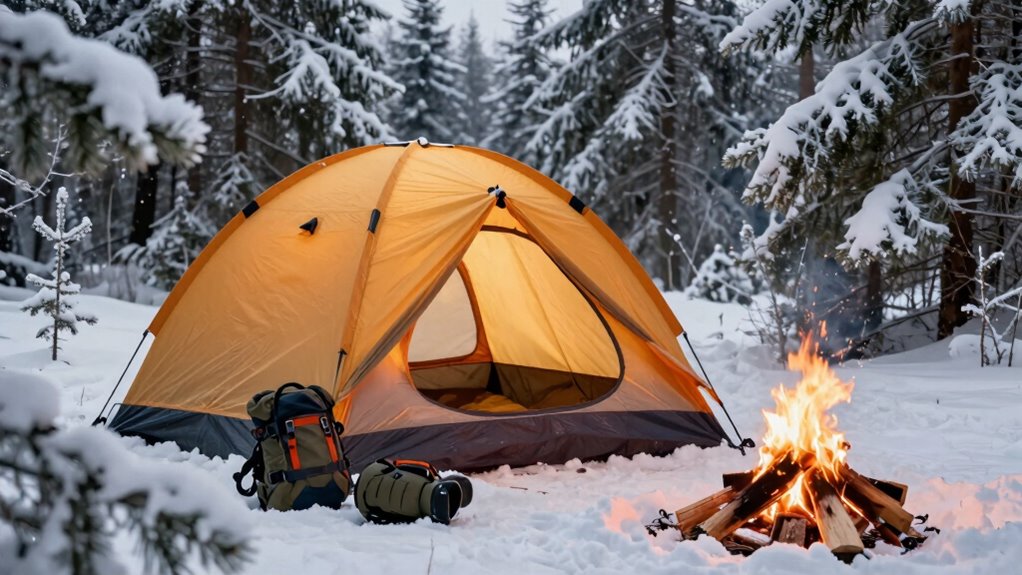

To stay warm and comfortable in winter bushcraft, use hot tents combined with effective shelter insulation, snow walls, or natural insulations like packed snow or ice. Add portable heaters or propane sources inside well-ventilated, insulated tents designed for cold conditions. Manage moisture carefully to prevent condensation and maximize warmth. Focus on building stable, insulated shelters with proper thermal mass and ventilation, and you’ll enjoy winter adventures safely. Keep exploring for more tips to master winter camping comfort.

Get garden gear delivered free — and shop member deals
- Fast, free delivery on millions of items
- Access to Prime Big Deal Days deals on October 6–7
- Prime Video, Amazon Music and more included
Key Takeaways
- Use portable, battery-operated or propane heaters inside well-insulated, ventilated tents designed for winter conditions.
- Construct snow shelters like igloos or quinzees to provide natural insulation and wind protection.
- Incorporate reflective materials and thermal mass within tents to retain and evenly distribute heat.
- Manage moisture effectively through proper ventilation to prevent condensation and maintain warmth.
- Combine heat sources with sturdy, insulated shelters for safe, comfortable winter camping and bushcraft activities.
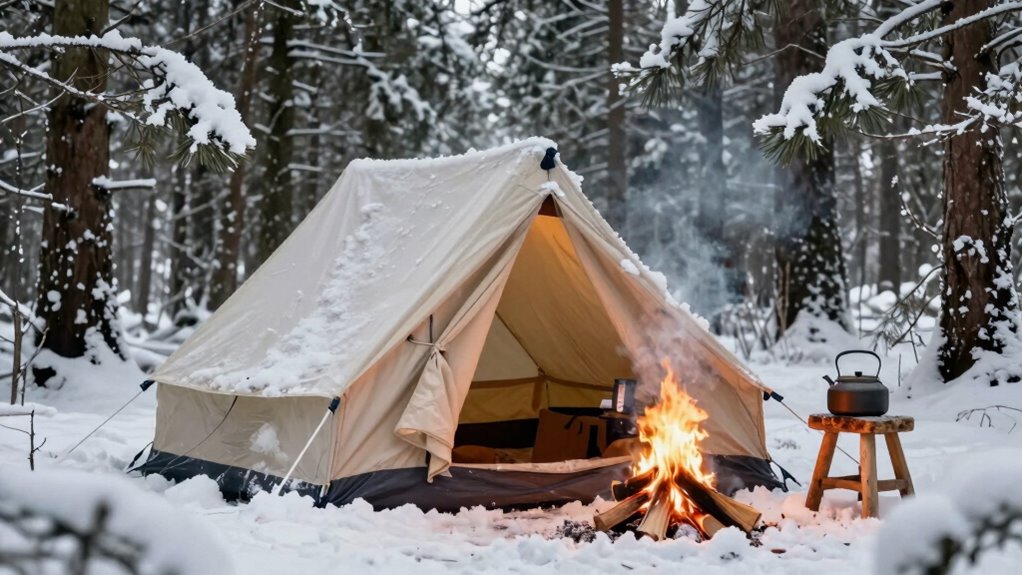
Have you ever wondered how to stay warm and safe when camping in winter’s harsh conditions? Winter camping challenges even the most seasoned outdoorspeople, but with the right tools and techniques, you can enjoy the cold without risking frostbite or hypothermia. One vital aspect is understanding how to keep heat inside your shelter and guarantee your body stays warm. Portable heating devices are game-changers in this regard. Compact, battery-operated heaters or propane-powered heat sources can provide consistent warmth, especially when used inside well-insulated tents designed for winter use. Always remember to prioritize safety by confirming proper ventilation and following manufacturer instructions to prevent carbon monoxide buildup or fire hazards.
Equally important is snow shelter construction, which offers a natural way to stay insulated from the cold. Building a snow shelter, like a quinzee or an igloo, takes some planning but pays off by creating a barrier against the wind and low temperatures. When constructing a snow shelter, you first need to select a suitable location free of overhanging branches and with solid, compacted snow. You’ll begin by shoveling or carving snow into a mound, then hollowing it out from the center to create a cozy interior. The key is to pack the snow tightly during construction, which increases insulation by trapping air and reducing heat loss. Once finished, you can add a layer of snow or ice as a door or entrance to minimize drafts. These shelters can maintain a stable internal temperature, especially when combined with portable heating sources. Additionally, understanding the importance of insulation in shelter design can greatly improve warmth retention and overall comfort. Recognizing the role of thermal mass can also help in designing effective winter shelters by stabilizing internal temperatures. Incorporating proper ventilation is equally crucial to prevent moisture buildup that can compromise insulation effectiveness and lead to cold spots inside your shelter. Moreover, employing moisture control techniques can prevent condensation from impairing your shelter’s insulation and warmth. Furthermore, using reflective materials inside your shelter can help reflect body heat and increase warmth efficiency.
As an affiliate, we earn on qualifying purchases.
Frequently Asked Questions
How Do I Prevent Frostbite While Camping in Winter Tents?
To prevent frostbite while camping in winter tents, you should prioritize frostbite prevention by keeping your extremities warm and dry. Wear insulated gloves, thermal socks, and layered clothing, and guarantee proper cold weather circulation by moving periodically to boost blood flow. Keep your tent insulated and avoid tight-fitting gear that restricts circulation. Staying active, staying dry, and maintaining warmth are essential strategies to protect yourself from frostbite in cold conditions.
What Are the Best Materials for Winter Bushcraft Tents?
You’ll want a winter bushcraft tent made from durable, insulated materials like canvas with a waterproof coating or high-quality nylon with insulated linings. Focus on insulation techniques such as adding foam pads or reflective blankets inside for extra warmth. Also, guarantee proper tent ventilation to prevent condensation buildup, which can make conditions damp and uncomfortable. Combining these elements creates a cozy, dry shelter suited for cold outdoor adventures.
How Do I Safely Build a Campfire Inside a Tent?
You need to be on the ball when building a campfire inside a tent. Start by choosing a safe spot away from walls and flammable gear, and always keep fire safety in mind. Use a portable stove or fire pit designed for indoor use. Make certain proper tent ventilation to prevent carbon monoxide buildup. Never leave the fire unattended, and always have a fire extinguisher nearby. Play it safe, and enjoy the warmth!
What Gear Is Essential for Winter Tent Survival?
You need a high-quality sleeping bag rated for winter temperatures and plenty of extra insulation, like a sleeping pad or foam mat. Make sure your tent has good insulation or add insulating layers inside. Pack thermal clothing, hand warmers, and a durable tarp for added protection. These essentials keep you warm and safe, helping you survive harsh winter conditions comfortably inside your tent.
How Can I Manage Condensation Inside a Winter Tent?
To manage condensation inside a winter tent, focus on fostering airflow through ventilation strategies like vent openings and adjustable flaps. Keep moisture control in mind by promptly drying wet gear outside and avoiding over-occupying the space. You can also create a cross-ventilation system to circulate air effectively, reducing moisture buildup. Regularly monitor and adjust ventilation to keep condensation at bay, ensuring a dry, comfortable shelter throughout your winter adventure.
Conclusion
As you embrace the cold with your hot tent and winter bushcraft skills, remember that every crackle of the fire and shared warmth becomes a story worth telling. In the silent, snow-covered wilderness, you’re not just surviving—you’re forging memories that glow brighter than any campfire. So, step into this icy adventure with confidence; for in the heart of winter’s challenge, you’ll find your true strength and spirit. Embrace it, and let your courage warm the coldest nights.
Fall yard work Picks
leaf blowers
As an affiliate, we earn on qualifying purchases.