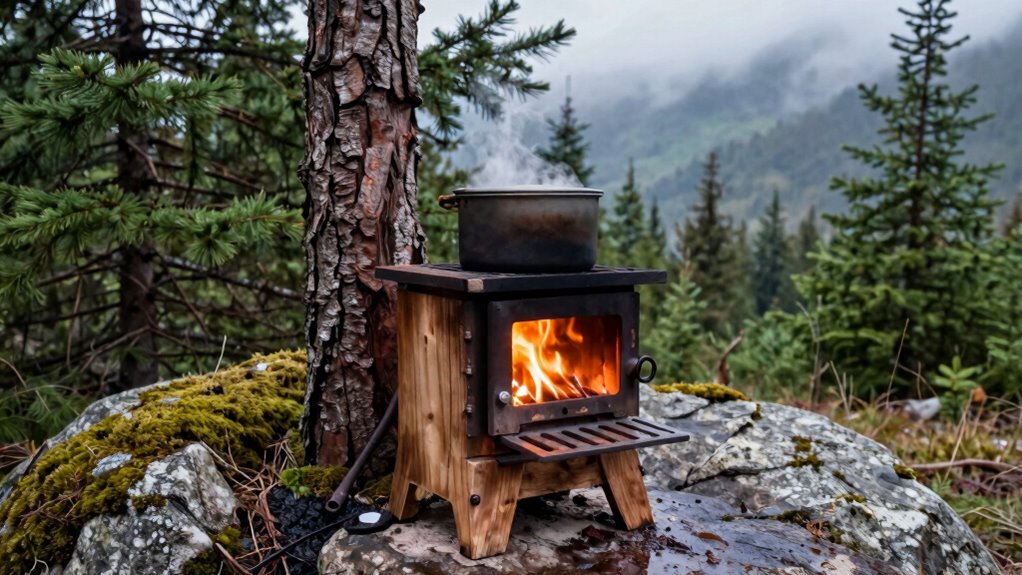

Using a wood burning camp stove in remote areas makes meal prep simple and eco-friendly. You rely on local wood, so you don’t need to carry fuel or depend on external sources. These stoves are efficient, providing strong heat with minimal wood, which means less energy spent gathering fuel. They also produce fewer emissions, helping you reduce your environmental impact. Keep exploring to discover even more benefits of this sustainable outdoor cooking solution.
Listen free for 30 days with Audible
Thousands of audiobooks and originals — cancel anytime.
As an affiliate, we earn on qualifying purchases.
Key Takeaways
- Uses locally available wood, eliminating the need for external fuel sources and simplifying logistics.
- Produces minimal emissions and ash, supporting environmentally friendly outdoor practices.
- Offers high fuel efficiency with optimized airflow, enabling longer cooking times with less wood.
- Provides reliable, on-site fuel gathering, reducing dependence on external fuel stations.
- Promotes sustainable camping by utilizing renewable, natural biomass as a clean energy source.

Have you ever wondered how to cook meals effortlessly while camping deep in the woods? Wood burning camp stoves are a game-changer for remote cooking, offering a simple yet effective way to prepare your food without relying on electricity or gas. These stoves burn locally sourced wood, making them a sustainable option for outdoor enthusiasts who want to minimize their environmental impact. They’re designed to use fuel efficiently, so you’re not wasting sticks or wood scraps, which means you can cook for longer periods without constantly gathering more fuel. This efficiency not only conserves your supplies but also reduces the need to carry heavy or extra fuel sources, making your camping experience more streamlined and self-sufficient.
One of the key benefits of wood burning camp stoves is their low environmental impact. Unlike gas stoves that rely on fossil fuels, these stoves burn biomass that’s readily available in the wilderness. When used responsibly, they produce minimal emissions and ash, especially if you choose models with good combustion efficiency. By using local wood, you avoid contributing to pollution or deforestation caused by transporting fuels from distant locations. Plus, since wood is a renewable resource, these stoves help you enjoy your outdoor experience while keeping your footprint as small as possible. This aspect is especially appealing if you’re committed to eco-friendly camping practices. Incorporating natural materials like wood aligns with the principles of sustainable backyard transformation and environmentally conscious outdoor living.
Fuel efficiency is another advantage that makes wood stoves popular among backpackers and car campers alike. Many models are designed with airflow vents and combustion chambers that maximize heat output while minimizing wood consumption. This means you get more cooking power from less fuel, which is crucial when you’re miles away from the nearest store or fuel station. You won’t have to worry about running out of fuel mid-meal or carrying excessive amounts of it on your back. Instead, you can focus on enjoying your surroundings, knowing your stove is optimized for efficient use. Additionally, understanding the importance of contrast ratio in your cooking setup can help you better manage your stove’s performance in varying outdoor lighting conditions. Properly selecting a stove with high fuel efficiency can significantly enhance your outdoor cooking experience, especially in remote locations where resources are limited. Plus, the availability of wood in most camping areas makes it a reliable, accessible fuel source that you can gather on-site.
As an affiliate, we earn on qualifying purchases.
Frequently Asked Questions
Are Wood Burning Camp Stoves Eco-Friendly?
Yes, wood burning camp stoves are eco-friendly because they have a lower environmental impact compared to fuel-powered stoves. They use renewable wood, which is often readily available in outdoor settings, reducing waste and emissions. Plus, their fuel efficiency means you use less wood for cooking, minimizing deforestation and pollution. By choosing a wood stove, you’re making a greener choice for remote cooking adventures.
How Do I Safely Operate a Wood Stove?
To safely operate a wood stove, follow essential safety precautions like setting it on a stable, non-flammable surface and keeping flammable materials away. Always guarantee proper ventilation to prevent dangerous buildup of smoke and carbon monoxide. Use dry, seasoned wood for efficient burning, and never leave the stove unattended while lit. Regularly clean the stove and chimney to prevent creosote buildup, minimizing fire risks and ensuring safe, effective operation.
Can I Use Any Type of Wood?
You can’t use any type of wood; stick to seasoned hardwoods like oak, maple, or hickory for best results. Avoid softwoods like pine or spruce, as they burn quickly and produce more creosote. Proper seasoning requires drying the wood for at least six months to reduce moisture content. Well-seasoned wood burns cleaner, hotter, and safer, ensuring efficient cooking and less smoke buildup in your stove.
What Maintenance Is Required for These Stoves?
Like a trusty steed, your wood-burning stove needs regular care. You should clean out ash buildup and check for rust or corrosion, ensuring stove durability. To maximize fuel efficiency, inspect the chimney and vents for blockages, and replace any worn parts. Regular maintenance keeps your stove running smoothly and prolongs its life, so you’re ready for remote adventures without worry. Keep it tidy, and it’ll serve you well!
How Do They Perform in Extreme Weather?
In extreme weather, your wood-burning camp stove holds up well, especially in cold climates. Its weather durability means it’s designed to withstand wind, snow, and rain, ensuring reliable performance. When temperatures drop, the stove heats efficiently, and the fire stays steady. Just keep a good supply of dry wood, and you’ll find it’s a dependable choice for remote cooking, even in the harshest cold-weather conditions.
Conclusion
As you sit by the flickering flame of your wood-burning camp stove, the crackle of burning logs and the gentle rise of aromatic smoke surround you. In this quiet moment, you realize how these stoves transform remote landscapes into cozy retreats, their warmth and crackling comfort weaving a symphony of nature and nurture. With each ember glow, you’re reminded that simple, sustainable fires forge not just meals, but memories in the wild’s embrace.
Fall Picks
fall essentials
As an affiliate, we earn on qualifying purchases.