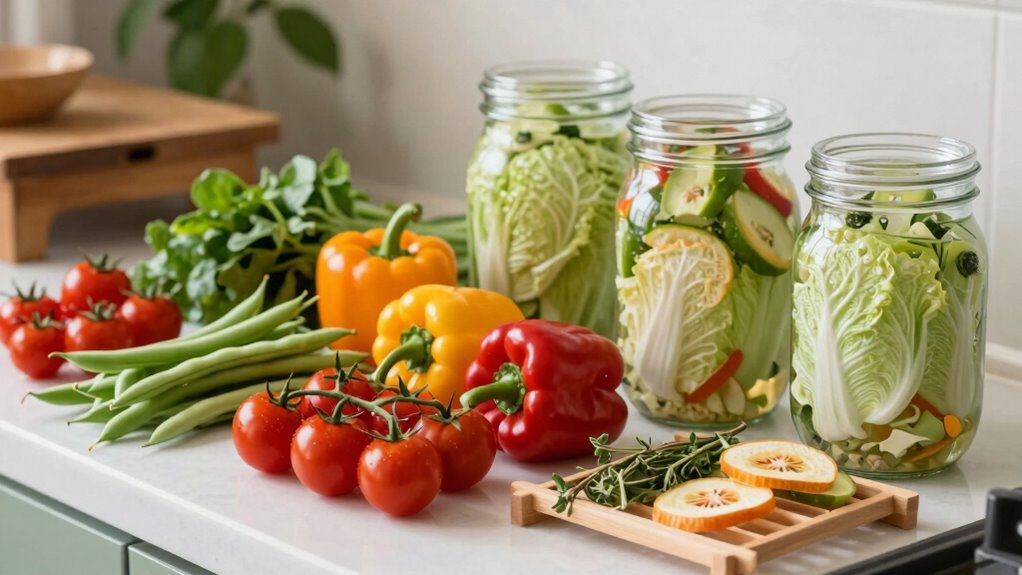

To decide what to dry, freeze, or ferment, consider the produce’s water content, texture, and intended use. Drying works best for herbs, berries, and flavor intensification, but high-water fruits may turn mushy. Freezing preserves the original qualities of fruits, vegetables, and meats with minimal effort, especially for delicate produce. Fermentation suits crunchy vegetables and dairy, adding flavor and probiotics. Knowing these traits helps you choose the best method—explore further to make the most of your options.

Get garden gear delivered free — and shop member deals
- Fast, free delivery on millions of items
- Access to Prime Big Deal Days deals on October 6–7
- Prime Video, Amazon Music and more included
Key Takeaways
- Consider the produce’s water content; high-water foods are better frozen or dried, while firm foods suit fermentation.
- Identify your storage goal: long-term preservation, portability, or flavor enhancement.
- Match the method to the food’s texture and structure to ensure quality retention.
- Determine if rehydration or fresh-like qualities are desired, guiding drying or freezing choices.
- Decide based on intended culinary use and nutritional benefits, such as probiotics or convenience.
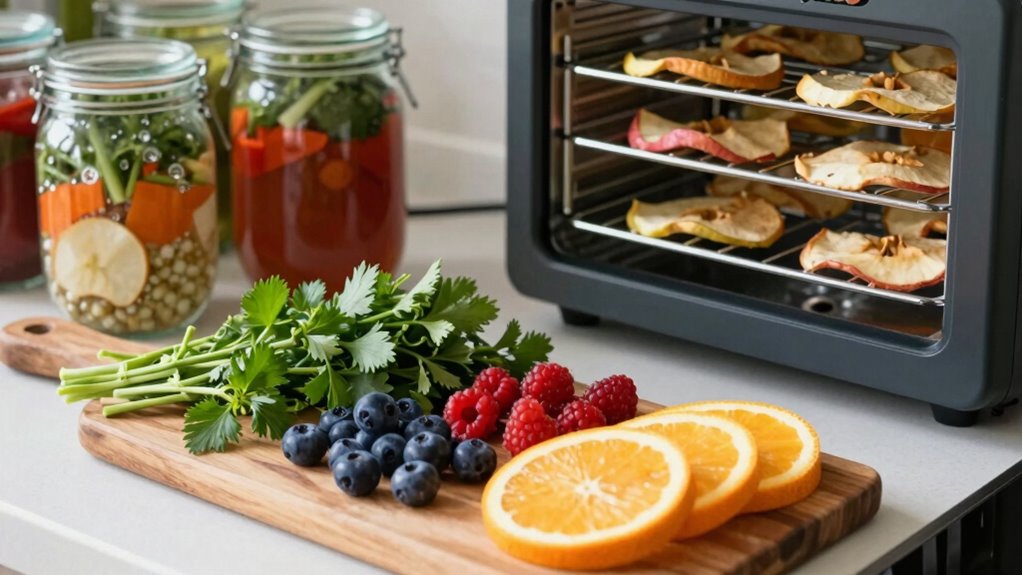
Deciding whether to dry, freeze, or ferment your harvest depends on the type of produce and your intended use. Each preservation method offers unique advantages, but choosing the right one requires understanding the food characteristics and how they respond to different techniques. Drying removes moisture, making foods lightweight and shelf-stable, ideal for herbs, berries, and mushrooms. Freezing, on the other hand, preserves the fresh qualities of fruits, vegetables, and meats, maintaining their texture and flavor. Fermentation transforms foods through microbial activity, creating probiotic-rich products like sauerkraut, yogurt, or kimchi, which also extend shelf life. Your decision hinges on the nature of the produce and what you want to achieve.
Choosing the right preservation method depends on produce type and your culinary goals.
When considering preservation methods, think about the food characteristics. For example, high-water-content fruits like watermelon or tomatoes don’t dry well—they become mushy and lose flavor. Freezing is more suitable here because it maintains their original texture and taste, provided you use proper packaging to prevent freezer burn. Dried fruits such as apricots or apples, with lower moisture content, are easier to preserve through drying, and they rehydrate well if needed. Vegetables like green beans or peas can be frozen effectively, but some, like leafy greens, might retain a better texture if blanched before freezing. Understanding these food characteristics helps prevent spoilage and ensures optimal quality. Additionally, considering food preservation techniques can help you select the best method for each type of produce. Incorporating proper storage methods can further improve the longevity and quality of your preserved foods.
Fermentation is best suited for crunchy vegetables and certain dairy products. If you’re dealing with cabbage, fermentation transforms it into sauerkraut, enriching it with probiotics and enhancing flavor complexity. The process relies on the natural microbes present on the produce or added cultures, breaking down sugars and creating tangy flavors. This method works well with foods that have a firm texture and a structure that can withstand the fermentation process without turning to mush. Fermentation not only preserves but also adds nutritional value, making it a smart choice for specific foods.
Ultimately, your choice depends on what you’re storing and how you plan to use it later. If you want long-term storage with minimal effort, freezing is often the easiest and quickest method, especially for delicate produce. If you prefer lightweight, portable snacks or want to intensify flavors, drying offers a good solution. For foods that benefit from a flavor boost and probiotic benefits, fermentation is ideal. By understanding the food characteristics and how each preservation method interacts with them, you can make informed decisions that preserve the quality and nutrients of your harvest. This approach ensures your preserved foods taste great and serve your culinary needs effectively.
food dehydrator for herbs and berries
As an affiliate, we earn on qualifying purchases.
As an affiliate, we earn on qualifying purchases.
Frequently Asked Questions
Can I Combine Drying, Freezing, and Fermenting for the Same Food?
Yes, you can combine drying, freezing, and fermenting for the same food to create a preservation synergy. For example, fermenting first boosts flavor, then drying concentrates it, and freezing helps store it long-term. Just guarantee each step suits the type of food and its texture. Combining techniques can enhance flavor, shelf life, and nutritional value, but you should plan carefully to avoid spoilage or texture loss.
How Long Does Each Preservation Method Typically Last?
You might wonder about shelf life—how long each preservation method keeps your food fresh. Drying can last up to a year or more if stored properly, while freezing extends storage duration to about 6 months to a year. Fermentation varies, often lasting several months depending on the product, but it’s best consumed sooner for ideal flavor and safety. Keep your storage conditions in check, and your preserved foods will last longer.
Are There Foods That Shouldn’T Be Dried, Frozen, or Fermented?
You should avoid drying, freezing, or fermenting certain foods for safety reasons, such as dairy products, raw eggs, and cooked meats, which have preservation limitations and can develop harmful bacteria. Fruits and vegetables with high water content also may not freeze well. Always consider food safety and the preservation limitations of each item to prevent spoilage or health risks. When unsure, research specific guidelines for safe preservation methods.
What Equipment Is Essential for Each Preservation Technique?
Did you know dehydration techniques can extend food shelf life by up to a year? To do this, you’ll need a food dehydrator or an oven with a low-temperature setting. For freezing methods, a reliable freezer and airtight containers are essential. These tools guarantee your preservation process is efficient and safe. Invest in quality equipment, and you’ll enjoy preserved foods that maintain flavor and nutrients longer.
How Do I Know if a Preserved Food Is Still Safe to Eat?
To know if your preserved food is still safe, check for spoilage signs like off smells, mold, or unusual textures. Store your foods properly, following storage safety guidelines, and regularly inspect them. If anything looks or smells strange, it’s best to discard it. Trust your senses; when in doubt, throw it out to avoid foodborne illness. Proper storage and vigilance help make certain your preserved foods remain safe to enjoy.
Conclusion
By understanding the characteristics of your produce and your preservation goals, you can confidently choose whether to dry, freeze, or ferment. Imagine a backyard gardener deciding to ferment cucumbers into tangy pickles for added flavor, while drying herbs preserves their aroma for months. With a little planning, you turn fresh harvests into delicious, lasting treats. Trust your instincts, experiment, and soon you’ll master the art of preserving your bounty in the way that suits you best.
Fall yard work Picks
leaf blowers
As an affiliate, we earn on qualifying purchases.