
To prevent waste during a heavy harvest, quickly sort and handle crops carefully to reduce damage. Use proper storage methods like cool, dark spaces or controlled atmospheres to extend freshness. Plan your harvest timing with demand and maturity monitoring to avoid overproduction. Consider preservation techniques like freezing, canning, or drying to stretch supply and open new markets. Exploring diverse sales channels and managing surplus wisely will help you maximize profits and cut down on spoilage—learn more by exploring these strategies further.

Get garden gear delivered free with Prime
- Fast, free delivery on millions of items
- Prime Video, Amazon Music and more included
- Member-only deals all year
Key Takeaways
- Implement precise harvest timing to avoid overripe or underripe produce, reducing spoilage.
- Enhance storage conditions with proper temperature, humidity control, and cleanliness to extend shelf life.
- Diversify sales channels like markets, online platforms, and CSA programs to quickly move surplus produce.
- Process excess crops through freezing, canning, or drying to preserve quality and create value-added products.
- Regularly monitor and inspect stored produce, removing spoiled items promptly to prevent spoilage spread.
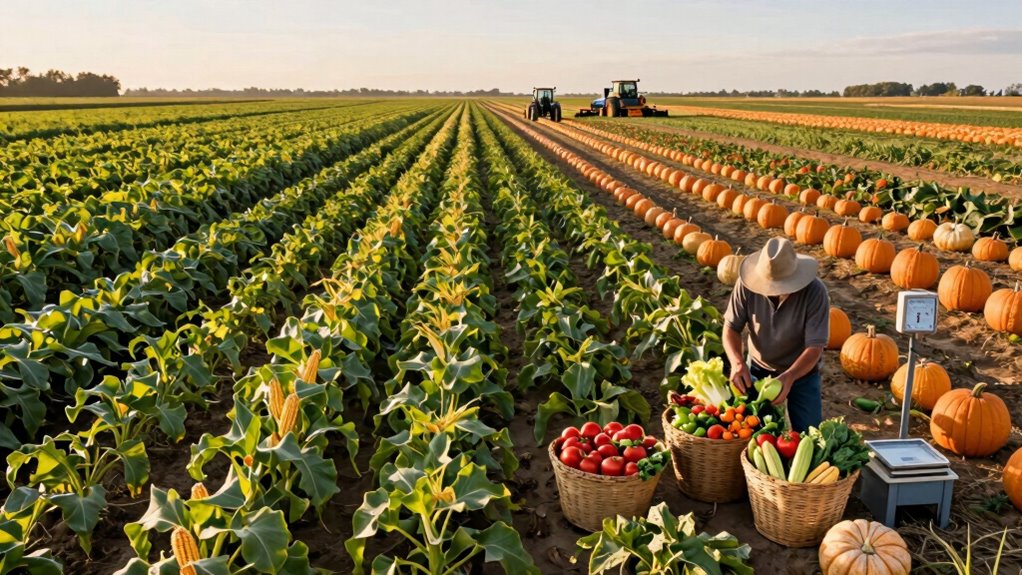
A heavy harvest season can be both a blessing and a challenge, especially when it comes to managing the surplus produce. You need to think carefully about post harvest storage to keep your crops fresh and prevent spoilage. Proper storage methods depend on the type of produce you have; for example, root vegetables may require cool, dark conditions, while fruits like apples need controlled atmospheres. Invest in the right containers, refrigeration units, or curing techniques to extend shelf life. Clean, dry storage spaces are vital to minimize mold and decay, so regularly inspect your storage areas, remove any spoiled items, and maintain ideal humidity and temperature levels. This careful approach helps you preserve your harvest longer, giving you more flexibility to sell or process the produce at a later date. Additionally, understanding the importance of color accuracy in storage conditions can help you monitor and optimize the visual quality of your produce over time.
Alongside post harvest storage, conducting a thorough market demand analysis is essential. You must understand what your buyers want and what’s currently in demand to avoid flooding the market with unwanted surplus. Talk to local vendors, retailers, and consumers to gauge preferences and identify trending crops. This insight allows you to plan your planting schedules better and adjust your harvest sizes accordingly. If you’re aware of upcoming demand shifts, you can avoid overproduction of certain items that might spoil before they find a market. Incorporating crop maturity monitoring techniques can further enhance your timing precision. Additionally, exploring diverse sales channels such as farmers’ markets, community-supported agriculture (CSA) programs, or online platforms can help you reach a broader customer base and reduce waste. Employing storage techniques can also optimize your handling process and improve product longevity, ensuring your surplus is utilized effectively. Diversifying your sales channels reduces the risk of waste and helps you move produce more efficiently. Furthermore, implementing post-harvest handling practices can improve the quality and shelf life of your crops, making them more appealing to buyers.
Timing your harvest is another key factor in waste prevention. If you harvest too early, your crops may not ripen properly, leading to spoilage or poor quality. If you wait too long, they could overripen or get damaged by weather. Keeping a close eye on crop maturity and using tools like refractometers or taste tests ensures you harvest at the perfect moment. Proper timing, combined with effective post harvest storage and demand analysis, minimizes waste and maximizes your profits.
Finally, consider processing options for surplus produce, such as freezing, canning, or drying. These methods extend the usability of your harvest and open new markets. By combining effective storage, demand analysis, precise timing, and value-added processing, you turn what could be waste into opportunities for profit and sustainability. Managing a heavy harvest wisely requires planning, but with these strategies in place, you’ll reduce waste and make the most of your abundant crops.
As an affiliate, we earn on qualifying purchases.
Frequently Asked Questions
What Are the Most Common Types of Waste During Heavy Harvests?
During heavy harvests, you often face waste from overripe crops, spoilage, and mishandling during post-harvest logistics. To minimize this, plan your crop rotation strategically to avoid overproduction of specific crops. Efficient post-harvest logistics, such as quick transportation and proper storage, help preserve quality. By managing these aspects, you reduce waste, guarantee better crop utilization, and maximize your harvest’s profitability.
How Can Technology Help Reduce Harvest Waste Effectively?
Technology helps reduce harvest waste by enabling precision farming and utilizing IoT sensors. With precision farming, you can optimize planting, watering, and harvesting schedules, minimizing overproduction and spoilage. IoT sensors provide real-time data on crop health, moisture levels, and environmental conditions, allowing you to make informed decisions quickly. This targeted approach guarantees you harvest only what’s needed, reducing waste and maximizing yield efficiency during heavy harvest seasons.
Are There Specific Storage Techniques to Minimize Spoilage?
Sure, because nothing screams “efficient” like stuffing your harvest into a dusty barn, right? To truly minimize spoilage, you should adopt innovative storage methods like controlled atmosphere storage and cold chains. Preservation techniques such as dehydration, pickling, or vacuum sealing also work wonders. These approaches keep your produce fresh longer, saving you from the heartbreaking sight of rotting crops. So, get smart—your harvest deserves better than a dusty death!
What Are the Economic Impacts of Harvest Waste on Farmers?
You face significant economic impacts from harvest waste, including reduced income and increased costs. Waste lowers your market pricing because excess supply can flood the market, decreasing overall value. To combat this, consider crop diversification, which spreads risk and stabilizes income when one crop’s yield is lower. Managing waste effectively helps you maximize profits, maintain market stability, and improve your financial resilience during heavy harvest seasons.
How Can Community Programs Support Waste Reduction During Harvest?
While harvests can yield abundance, community programs play a vital role in waste reduction. You can boost community awareness through educational campaigns highlighting the importance of proper harvesting and storage. Volunteer programs help distribute surplus produce to those in need, preventing waste while supporting local families. By engaging community members actively, you turn abundance into opportunity, making sure excess harvests benefit everyone rather than going to waste.
Conclusion
By planning ahead and acting swiftly, you can turn your bountiful harvest into a treasure trove rather than waste. Use proper storage techniques, share your excess, and consider preserving your produce for later. Think of your harvest as a river — if you dam it wisely, it flows steadily and benefits all. With these steps, you’ll guarantee your hard work blooms into lasting abundance, avoiding the storm of waste and reaping the full reward of your labor.
Halloween Picks
halloween
As an affiliate, we earn on qualifying purchases.