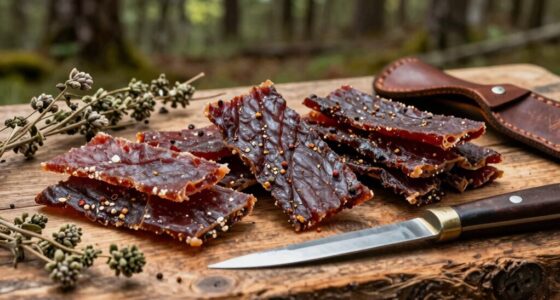
Using sausage stuffers and traditional preservation methods, you can turn fresh meats into flavorful, long-lasting creations rooted in centuries-old techniques. You’ll select quality cuts, grind them to your preferred consistency, and carefully stuff casings to avoid air pockets. Curing with salt, nitrates, or spices helps prevent spoilage and develop flavor. Proper storage and aging further enhance taste and safety. If you keep exploring, you’ll uncover more secrets of crafting preserved meats with art and science.
Key Takeaways
- Sausage stuffers ensure uniform filling and prevent air pockets, crucial for safety and preservation.
- Traditional home preservation includes curing, drying, and smoking techniques that extend sausage shelf life.
- Proper use of sausage stoppers and casings maintains hygiene and consistency in homemade sausages.
- Combining curing with flavoring and aging enhances taste and ensures safe preservation methods.
- Mastering both sausage stuffing and preservation techniques preserves culinary heritage and food safety at home.
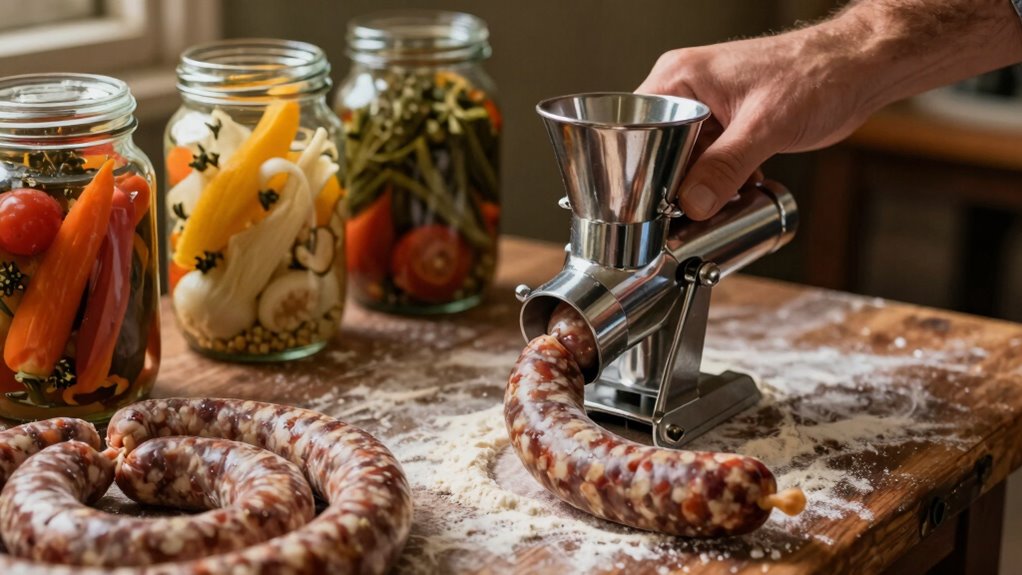
Sausage stuffers have long been indispensable tools in home preservation, enabling families to turn fresh meats into flavorful sausages that can be stored and enjoyed for months. When you’re preparing to make your own sausages, the process often begins with meat grinding. You select your choice cuts—pork, beef, or game meats—and grind them to your preferred consistency. Proper meat grinding is essential because it influences the texture and flavor of your final product. You might choose a coarse grind for a rustic feel or a finer grind for a smoother sausage. As you grind, you can control the fat content, ensuring your sausages are juicy and flavorful without being greasy.
Once your meat is ground, it’s time to contemplate curing techniques, which play a critical role in home preservation. Curing involves adding salt, nitrates, or nitrites to inhibit bacterial growth and preserve the meat over longer periods. You can cure meats in various ways—dry curing, wet curing, or a combination of both—depending on the type of sausage you want to produce. For example, dry curing typically involves rubbing salt and spices directly onto the meat and allowing it to cure in a controlled environment for days or weeks. Wet curing, or brining, submerges the meat in a salty, spiced solution, which can be quicker but equally effective. These curing techniques help develop the depth of flavor characteristic of traditional sausages. Additionally, understanding home preservation techniques allows you to extend the shelf life of your meat products safely and effectively. Proper temperature control during curing is vital to ensure safety and optimal results. Mastering these methods can also help you achieve consistent quality, which is essential in traditional food preservation. To ensure safety, it’s also important to be aware of spoiled meat detection techniques, which can prevent health risks. Incorporating safety guidelines is crucial in preventing spoilage and ensuring the preservation process is both safe and effective.
As you incorporate curing methods, you also need to pay attention to the balance of spices and seasonings. This step is essential because it enhances the overall flavor profile and helps in preservation. Once your meat is ground and cured, you mix in herbs, spices, and sometimes preservatives, then stuff the mixture into casings using your sausage stuffer. The stuffing process must be steady to avoid air pockets, which can lead to spoilage. After stuffing, many traditional recipes call for additional curing, aging, or smoking to deepen flavors and extend shelf life.
Home preservation through sausage making is a blend of art and science, requiring attention to detail at each step—from meat grinding to curing techniques. Your choice of methods influences the taste, texture, and longevity of your sausages. When you master these foundational techniques, you create not only delicious, preservable meats but also carry on a timeless tradition that connects you with generations of home preservers.

LEEVOT 7LBS/3L Manual Sausage Stuffer, Professional Stainless Steel Sausages Maker & Filler Kit with 2 Speed, 5 Stuffing Tubes, Vertical Meat Stuffers for Home Kitchen, Commercial Use
- Easy Filling & Cleaning: Detachable cylinder for effortless loading and cleaning
- Dual Release Valve: Removes air pockets for perfect sausages
- 2-Speed Operation: High-speed for quick filling, low-speed for control
As an affiliate, we earn on qualifying purchases.
As an affiliate, we earn on qualifying purchases.
Frequently Asked Questions
What Are the Best Materials for DIY Sausage Stuffer Repairs?
For DIY repair tips on sausage stuffers, stainless steel and food-grade plastics are your best bets. Stainless steel offers durability and easy cleaning, making it ideal for stuffer material comparisons. Food-grade plastics are lightweight and cost-effective but may wear over time. Make sure you select materials compatible with food safety standards, and always check for cracks or damage before repairing to maintain hygiene and functionality in your homemade sausage stuffer.
How Long Can Homemade Preserved Foods Last Without Refrigeration?
Homemade preserved foods can last from a few days to several months without refrigeration, depending on the preservation methods you use. Proper food storage techniques like canning, drying, or fermenting help extend shelf life. Generally, pickled or dried foods stay safe longer, while fresh or lightly preserved items might only last a week or two. Always check for signs of spoilage before consuming, and follow safe preservation practices to guarantee food safety.
Are There Traditional Seasoning Recipes Specific to Certain Regions?
A stitch in time saves nine, and regional spice blends often preserve local flavor profiles. You’ll find traditional seasoning recipes specific to certain regions, reflecting local ingredients and culinary history. Whether it’s smoky paprika in Spain or herbs de Provence in France, these blends capture unique tastes. Embracing regional spice blends enriches your cooking, connecting you to local traditions and ensuring authentic flavors in your preserved foods.
What Safety Precautions Should Be Taken During Home Canning?
To guarantee food safety during home canning, you should always follow proper canning techniques and use tested recipes. Sterilize jars and lids thoroughly, and maintain correct processing times and pressures to prevent bacterial growth. Use a reliable canning method, like water bath or pressure canning, depending on the food. Always check jar seals after processing and store in a cool, dark place to keep your preserved foods safe and fresh.
Can Sausage Stuffers Be Used for Non-Meat Fillings?
Yes, sausage stuffers can be used for non-meat fillings like vegetarian options or fruit fillings. You just need to guarantee the stuffer and attachments are thoroughly cleaned to avoid cross-contamination. Use appropriate casings or pouches for the fillings, and be mindful of the consistency to prevent clogging. It’s a versatile tool that can help you experiment with various homemade preserves, veggie mixes, or even sweet treats.
Conclusion
As you master the art of sausage stuffing and embrace home preservation traditions, you uncover more than just flavor—you tap into a timeless legacy. Each step, each twist of the stuffer, carries secrets passed down through generations. But what’s waiting at the end of this journey? A taste so rich, so full of history, that it leaves you wondering—what other traditions could you bring back to life? The future of your culinary heritage is just beginning.