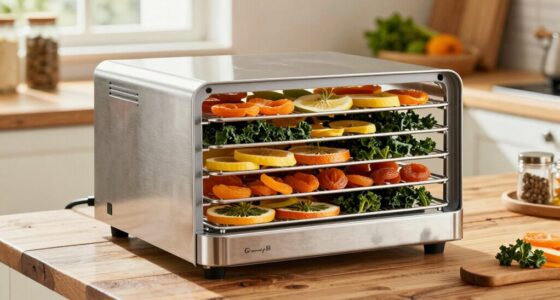
If you’re drying wild foods regularly, a stainless steel dehydrator is a better choice because it offers precise temperature control, durability, and higher safety standards. It resists rust and is easier to clean, making it suitable for large batches. Plastic models are lighter and more affordable but risk uneven drying and harboring bacteria if not maintained well. Want to find out how each material impacts your drying process? Keep exploring for more details.
Key Takeaways
- Stainless steel dehydrators offer automated temperature control for consistent, safe drying of wild foods, unlike manual plastic models.
- Durability and resistance to rust make stainless steel ideal for frequent, large-scale wild food preservation.
- Plastic dehydrators are lighter, more affordable, and suitable for occasional or small batch drying needs.
- Stainless steel units are easier to clean and maintain hygiene, reducing bacteria risk in wild food processing.
- Energy efficiency favors stainless steel models with precise control, whereas plastic units may have longer drying times and higher energy use.
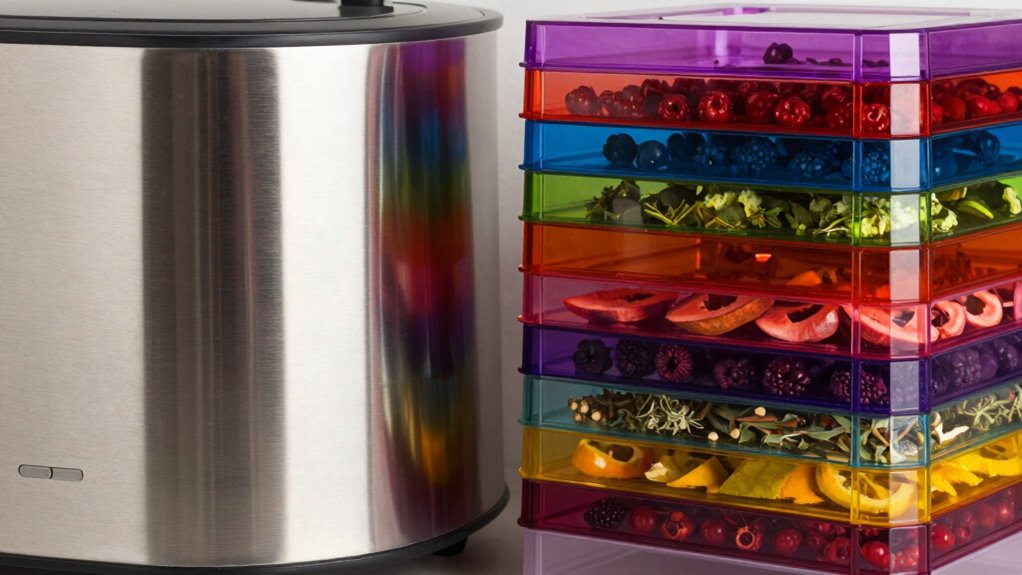
If you’re looking to conserve wild food efficiently, dehydrators are an invaluable tool. They help you turn your foraged treasures into long-lasting snacks, and choosing the right material can make a difference. When comparing stainless steel and plastic dehydrators, consider how each material impacts performance, durability, and safety. Stainless steel models often come with advanced features like automated temperature control, which guarantees precise, consistent drying. This not only prevents over-drying or under-drying but also optimizes energy consumption efficiency. With automated temperature control, you don’t have to guess or manually adjust settings constantly. Instead, the dehydrator adapts to the changing needs of your food, maintaining ideal conditions without wasting energy. The efficiency of these features can contribute to lower electricity bills and a more eco-friendly process, especially if you’re drying large batches of wild food regularly. Additionally, stainless steel’s resistance to rust and corrosion ensures a longer lifespan, making it a reliable choice for frequent use. Proper cleaning and maintenance also play a vital role in ensuring your dehydrator remains safe and hygienic over time. Regular cleaning helps prevent bacteria buildup, which is especially important when drying wild foods that may carry contaminants.
On the other hand, plastic dehydrators tend to be more affordable and lighter, making them easier to move around or store. However, they often lack the sophisticated temperature regulation systems found in stainless steel models. Without automated temperature control, you need to monitor and manually adjust the settings, which can be less precise and more time-consuming. This can lead to uneven drying, risking spoilage or mold growth on your wild edibles. While plastic models might be convenient for occasional use or smaller quantities, they may not offer the same energy consumption efficiency as their stainless steel counterparts. Since manual adjustments are less precise, you might end up using more electricity to compensate for uneven drying or extended drying times. Furthermore, the choice of material can influence the overall safety and hygiene of your dehydrating process, especially when handling wild foods that may carry bacteria or dirt. Proper cleaning and maintenance are crucial to prevent contamination, particularly with plastic models that may have crevices or porous surfaces. Considering the material properties can help you select a dehydrator that ensures safe and effective preservation of your wild harvest.
stainless steel food dehydrator
As an affiliate, we earn on qualifying purchases.
As an affiliate, we earn on qualifying purchases.
Frequently Asked Questions
Which Material Is More Environmentally Sustainable for Dehydrators?
Stainless steel is more environmentally sustainable than plastic for dehydrators because of its durability and recyclability. It has a lower environmental impact over its lifespan, as it lasts longer and can be recycled repeatedly without degrading. Plastic, on the other hand, often contributes to pollution, especially if not properly disposed of, and may contain chemicals that harm the environment. So, choosing stainless steel supports better recyclability considerations and reduces waste.
Do Stainless Steel Dehydrators Affect the Flavor of Wild Foods?
Think of stainless steel as a neutral stage for your wild foods, letting their natural flavors shine without interference. Stainless steel dehydrators don’t impact flavor preservation because the material impact is minimal, ensuring your herbs and berries taste as fresh as the moment you picked them. Unlike plastics, stainless steel’s inert nature keeps your wild foods’ essence intact, making each bite a true reflection of nature’s bounty.
How Easy Is It to Clean Stainless Steel Versus Plastic Dehydrators?
Cleaning stainless steel dehydrators is quite easy because of their smooth, durable surface. You can use simple cleaning methods like wiping with a damp cloth or using mild soap and water. Stainless steel’s material durability means it resists staining and corrosion, making cleanup straightforward. In contrast, plastic dehydrators might stain more easily and require gentle scrubbing to avoid scratches. Overall, stainless steel offers a more durable and easier-to-clean option for wild food dehydration.
Are Plastic Dehydrators More Affordable Than Stainless Steel Options?
Yes, plastic dehydrators are generally more affordable than stainless steel options. When you compare costs, you’ll notice plastics usually have a lower initial price, making them attractive for budget-conscious buyers. However, consider durability factors; stainless steel tends to last longer and withstand more wear and tear. If durability is a priority, investing in stainless steel might be more cost-effective over time, even if the upfront cost is higher.
Can Plastic Dehydrators Withstand Outdoor, Rugged Conditions Better?
A plastic dehydrator is like a lightweight backpack—easier to carry but less sturdy. It offers limited outdoor durability and rugged performance, so it might not withstand harsh weather or rough handling. Stainless steel models are better suited for outdoor use because they’re more durable and resistant to damage. If you’re planning wild food drying adventures, choose stainless steel for reliable, rugged performance in tough outdoor conditions.
plastic food dehydrator for wild foods
As an affiliate, we earn on qualifying purchases.
As an affiliate, we earn on qualifying purchases.
Conclusion
Choosing between stainless steel and plastic dehydrators is like selecting a trusted companion for your wild food adventures. Steel offers durability and a timeless strength, reminiscent of ancient alchemists transforming nature’s bounty. Plastic, on the other hand, provides lightweight convenience, much like a nimble explorer. Whichever you pick, remember that your journey echoes the spirit of discovery—turning forest treasures into nourishing memories, much like the legendary explorers who sought treasures hidden in the wild.
automatic temperature control dehydrator
As an affiliate, we earn on qualifying purchases.
As an affiliate, we earn on qualifying purchases.
large capacity stainless steel dehydrator
As an affiliate, we earn on qualifying purchases.
As an affiliate, we earn on qualifying purchases.