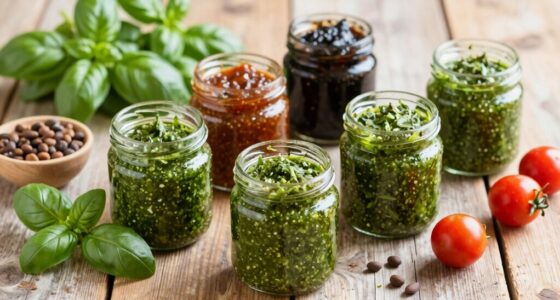
Wild jams stand out because their flavors come from naturally foraged fruits that grow in diverse soil and climate conditions. These jams capture bold, complex, and sometimes tangy notes that cultivated garden jams often lack due to controlled growing environments. Wild fruits have intense flavors and vivid colors, creating a connection to nature and seasonality. If you want to uncover what makes these jams uniquely vibrant and rich, there’s more to discover below.
Open a free Amazon Business account
Business pricing, bulk buying and tax-exempt orders.
As an affiliate, we earn on qualifying purchases.
Key Takeaways
- Wild jams feature foraged fruits with complex, intense flavors influenced by natural soil and climate conditions.
- Wild fruits grow without human intervention, leading to richer, more layered taste profiles than cultivated varieties.
- Wild jams have vibrant, natural colors that reflect their environment, unlike the uniform appearance of garden jams.
- Wild foraged flavors offer unpredictability and depth, enhancing culinary experiences with unique character.
- Garden jams provide consistent sweetness and appearance due to controlled cultivation practices.

Have you ever wondered what sets wild jams apart from those made with garden-grown fruits? The answer lies in the distinct flavors and the way each type of fruit is sourced. Wild jams boast wild foraged flavors that come from fruits growing naturally in their environment. These berries and other fruits develop their unique taste profiles because they’re exposed to diverse soil conditions, varying climate factors, and the absence of artificial fertilizers or pesticides. As a result, wild fruits tend to have a more complex, intense flavor that can’t be replicated by cultivated varieties. They often carry a tangy, tart, or deeply aromatic quality that adds a layer of depth to your jam, making each spoonful a taste adventure.
Wild jams offer complex, intense flavors from naturally foraged fruits, creating a rich, tangy taste adventure in every spoonful.
In contrast, garden cultivated sweetness is carefully managed and optimized for consistent flavor and size. Garden fruits are cultivated with the intention of producing reliable, plump, and sweet produce. Growers typically use fertilizers, pesticides, and controlled watering to ensure uniformity and high yield. This results in garden jams that are balanced and predictable, with a more straightforward sweetness. While these jams are delicious and reliable, they lack the bold, unpredictable character that wild foraged flavors bring. Garden fruits are often bred for their sweetness and appearance, which means they might be less complex in flavor, but they’re more accessible and easier to harvest in large quantities. Understanding the biodiversity involved in wild harvesting highlights how diverse and rich these flavors truly are.
When you choose wild jams, you’re embracing a more spontaneous and nature-driven flavor profile. Wild foraged fruits often contain a higher concentration of natural sugars and acids, which contribute to a richer, more layered taste. These flavors evoke the essence of their native environment, giving you a connection to the land and the season that cultivated fruits can’t quite match. Additionally, color accuracy in their natural state enhances the visual appeal of wild jams, making them more vibrant and appealing. Meanwhile, garden jams deliver a familiar, consistent sweetness that’s perfect for everyday use or when you want a predictable, sweet spread.
Ultimately, the difference comes down to the source and the story behind each jar. Wild foraged flavors carry the spirit of untamed nature, while garden cultivated sweetness offers the comfort of cultivation and control. Both have their place in your pantry, but understanding what makes wild jams unique can elevate your appreciation for their depth and character. Whether you prefer the wild, complex tastes or the steady, sweet familiarity, knowing the origins of your jam helps you savor each bite with intention.
As an affiliate, we earn on qualifying purchases.
Frequently Asked Questions
Are Wild Jams More Nutritious Than Garden Jams?
Wild jams are often more nutritious than garden jams because wild foraging allows you to harvest fruits at their peak ripeness, preserving maximum nutrients. Wild plants are naturally exposed to fewer chemicals, supporting natural preservation and healthier options. You can enjoy these benefits knowing your jam is made from free, wild ingredients, offering richer flavors and more vitamins compared to cultivated garden varieties.
How Do Wild Jams Taste Compared to Garden Jams?
Wild jams often have a more complex flavor contrast compared to garden jams. You’ll notice a richer, more nuanced taste because of the ingredient authenticity, as wild berries and fruits grow naturally without chemicals. This natural growth imparts a deeper, more vibrant flavor that’s less uniform but more authentic. Garden jams tend to be sweeter and more predictable, while wild jams surprise your palate with unexpected, earthy undertones.
What Is the Shelf Life of Wild Versus Garden Jams?
Wild jams, made from foraged berries, typically last about a year when properly stored, thanks to natural preservatives in wild berries. Garden jams, preserved through controlled methods like canning, often last a similar time but may vary based on sugar content and acidity. When you’re preserving wild berries or garden produce, guarantee you use proper sealing techniques to maximize shelf life and enjoy your jams longer.
Are Wild Jams More Environmentally Sustainable?
Wild jams are more environmentally sustainable because wild foraging relies on sustainable harvesting practices that leave the ecosystem undisturbed, like a gentle hand picking only what’s needed. Unlike cultivated garden jams, which depend on intensive farming, wild foraging preserves natural habitats and reduces resource use. By choosing wild jams, you support a balance with nature, ensuring these ecosystems thrive, like a well-tended forest that continues to flourish for generations.
Can Wild Jams Contain More Pesticides or Contaminants?
Wild jams generally contain fewer pesticide residues and lower contaminant levels because wild plants grow naturally without chemical interventions. Since they aren’t cultivated with pesticides, you’re less likely to encounter harmful chemicals. However, environmental pollutants like heavy metals can still be present in wild plants. So, while wild jams might have fewer pesticides, it’s wise to verify they come from reputable sources that test for contaminant levels.
Conclusion
In the end, wild jams are like nature’s secret whisper, bursting with untamed flavor and wild charm that garden jams can’t quite match. They’re the wildflowers in a carefully tended garden—free, unpredictable, and full of surprises. When you spread wild jam, you’re tasting the wilderness itself, a sweet, vibrant dance of flavors that’s as wild and free as the untamed landscape. Embrace the wild, and let your taste buds wander.
Fall Picks
fall essentials
As an affiliate, we earn on qualifying purchases.