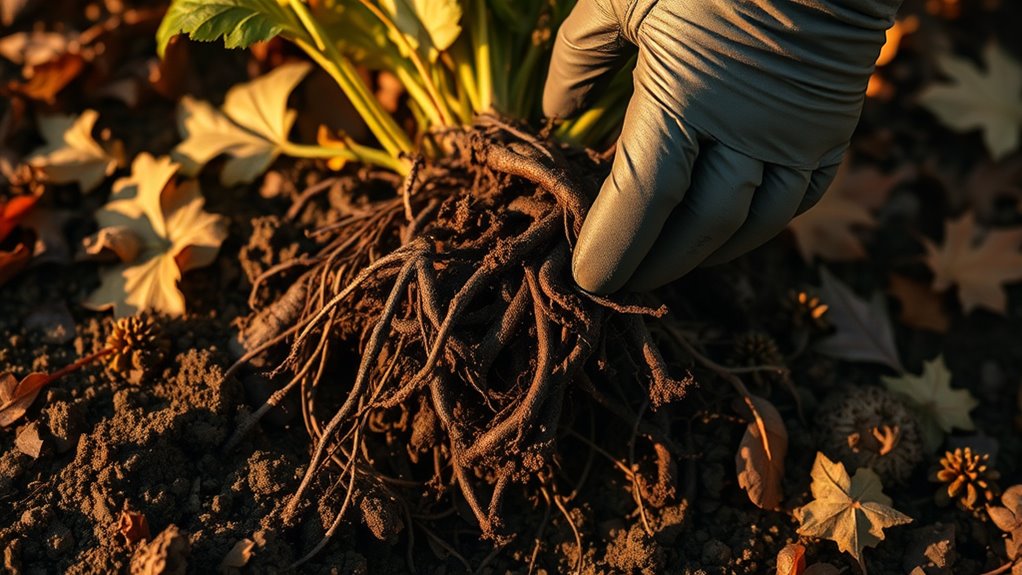

Late fall is an ideal time to dig up medicinal roots like burdock, chicory, and dandelion before winter arrives. You’ll find burdock’s taproot near disturbed soils, while chicory grows in fields and along roadsides, with dandelion roots just beneath the surface. Use sturdy tools and harvest responsibly, leaving enough roots behind for sustainability. Want to discover more tips to guarantee a successful and mindful harvest? Keep exploring for helpful insights.
Key Takeaways
- Late fall is ideal for harvesting burdock, chicory, and dandelion roots when nutrients are concentrated.
- Use sturdy tools like forks to carefully loosen soil and avoid damaging roots during late fall digging.
- Identify plants accurately to prevent harvesting toxic lookalikes and ensure sustainable foraging practices.
- Clean and dry roots thoroughly after harvest to preserve medicinal qualities for teas, tinctures, or decoctions.
- Harvesting during this season supports herbal self-reliance and reconnects with earth’s natural pharmacy.
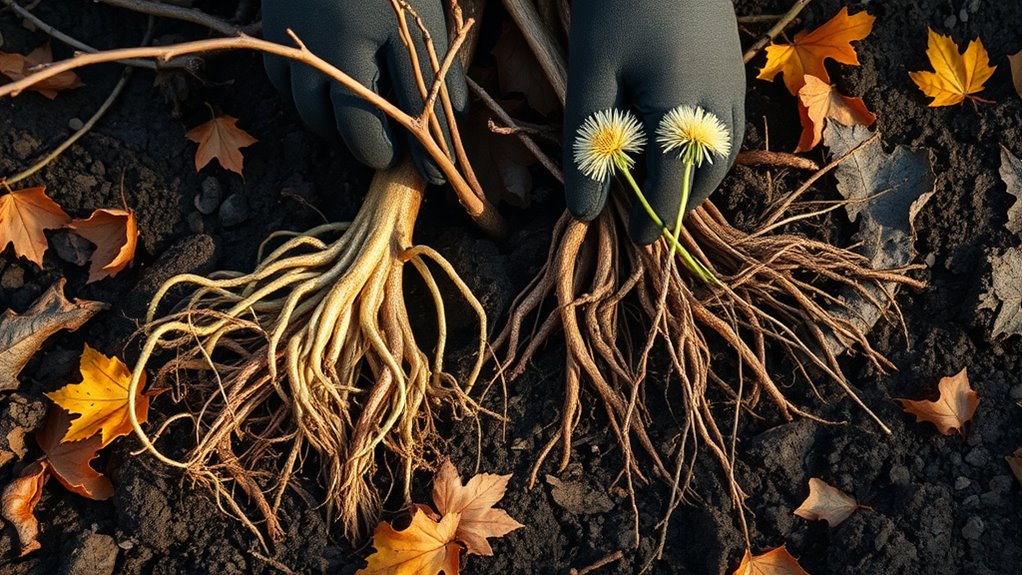
Have you ever wondered why root vegetables become so popular during the fall? It’s more than just tradition or hearty flavor; it’s about tapping into nature’s hidden pharmacy. As the season shifts, these underground treasures—burdock, chicory, and dandelion—offer a powerful pathway to herbal medicine and self-reliance. This is your moment to embrace foraging tips that disclose their full potential, freeing you from dependency on processed remedies and store-bought supplements. Digging into root season isn’t just about nourishing your body; it’s about reclaiming your health and connection to the earth.
Discover the healing power of fall’s root vegetables—nature’s pharmacy for health and self-reliance.
When foraging for these roots, your focus should be on mindful, confident harvesting. Burdock’s thick, tuberous roots are best found in disturbed soils, often near fences or old buildings. Chicory’s taproot is deep and slender, thriving in fields and along roadsides, while dandelions, with their bright yellow flowers, hide their roots just beneath the surface. To harvest responsibly, always identify your plants with certainty—mistaking a toxic lookalike can undo your efforts. Use a sturdy garden fork or digging tool to loosen the soil gently, avoiding damage to the roots and ensuring quick recovery of the plants afterward. Respect nature’s boundaries; only take what you need, leaving enough behind to sustain the plant’s growth and ecological role.
The beauty of foraging these roots is that they double as potent herbal medicine. Burdock is revered for its blood-purifying qualities and ability to support detoxification. Chicory is known for improving digestion and liver health, while dandelion roots serve as a diuretic and detox agent. Once harvested, clean the roots thoroughly and dry them in a well-ventilated space—this process preserves their medicinal properties and prepares them for teas, tinctures, or decoctions. Harvesting roots in late fall maximizes their medicinal potency, as they concentrate nutrients and compounds in preparation for winter. Incorporating proper drying techniques ensures the roots retain their therapeutic benefits and prevents mold or spoilage. This season, instead of relying solely on pills and potions, you’re harnessing the earth’s natural pharmacy—empowering yourself with knowledge and independence.
Embracing these foraging tips means more than gathering roots; it’s about reclaiming your health and sovereignty. By understanding the plants’ healing power, you step into a tradition of herbal medicine that’s been with us for centuries. Root season invites you to dig deep—literally and metaphorically—into the soil and your well-being. When you harvest consciously and use these roots wisely, you’re making a stand against the commodification of health, choosing instead to nourish and heal yourself with the gifts of the earth. That’s true liberation—knowing you can rely on nature’s abundance to support your body and spirit.
Frequently Asked Questions
How Do I Identify Mature Burdock, Chicory, and Dandelion Roots?
When identifying mature burdock, chicory, and dandelion roots, look for signs of plant maturity like thick, sturdy roots that feel firm and heavy in your hand. Burdock roots are long, with a tapering shape and a rough exterior. Chicory roots are thick, pale, and often have a slightly fibrous appearance. Dandelion roots are deep, with a forked, taproot that’s dark brown on the outside and white inside.
What Tools Are Best for Digging Roots in Late Fall?
For digging roots in late fall, you should choose a sturdy, sharp shovel—preferably a transplant or gardening spade—that allows precise digging. Use proper digging techniques like loosening the soil around the root and levering it out gently to avoid breakage. This way, you gain control and efficiency, freeing yourself from the constraints of stubborn roots and harnessing nature’s bounty with confidence and ease.
Are There Any Safety Concerns When Foraging Roots Late in the Season?
Imagine digging roots late in the season when toxic contamination might be lurking in the soil. You should be cautious of potential pollutants and avoid areas near industrial sites or busy roads. Also, consider wildlife disturbance—disturbing roots can harm local animals relying on that habitat. Always research your foraging spot thoroughly, wear gloves, and handle roots carefully to stay safe and protect the environment.
How Should Harvested Roots Be Stored for Long-Term Use?
You should store harvested roots using proper preservation techniques like cleaning thoroughly, then drying or refrigerating them to extend their freshness. For long-term root storage, consider freezing or drying to prevent spoilage and preserve potency. Keep roots in a cool, dark, and well-ventilated space or sealed container. This way, you maintain control over your roots, ensuring you can access their healing power whenever you desire, freeing you from reliance on store-bought remedies.
Can Root Harvesting Damage the Plants or Surrounding Environment?
Root harvesting can damage plants or the environment if you’re not careful, but with sustainable foraging, you minimize this impact. You should dig gently, take only what you need, and avoid disturbing surrounding plants or soil. This way, you preserve the ecosystem’s balance, ensuring these wild roots remain plentiful for others. Your mindful approach not only protects nature but also empowers you to harvest responsibly and freely.
Conclusion
As you dig into burdock, chicory, and dandelion this late fall, remember that patience pays off—”Good things come to those who wait.” By harvesting these roots now, you’re reconnecting with nature’s cycle and nourishing your body with seasonal bounty. So, stay mindful, enjoy the process, and let the earth reward your efforts. Embrace the season’s gifts, knowing that what you gather now will nourish you long after the leaves have fallen.