To optimize your coastal harvests, keep an eye on tide charts and moon phases, as they directly influence marine resource availability and quality. High tides bring marine flora and creatures closer to shore, making collection easier, especially during new and full moons when tides are most extreme. Understanding these natural cycles helps you plan harvest times effectively and sustainably. Continue exploring to uncover more tips for syncing with the ocean’s rhythm and maximizing your yield.
Key Takeaways
- Tide charts and moon phases predict optimal harvesting times by indicating high and low tide periods.
- Understanding lunar cycles helps align harvesting activities with peak marine resource availability.
- Monitoring weather patterns alongside tides ensures safe and effective coastal gathering.
- Major moon phases, like new and full moons, create ideal conditions for accessing submerged flora and marine life.
- Using tide and moon data promotes sustainable harvesting practices by avoiding overexploitation during critical periods.
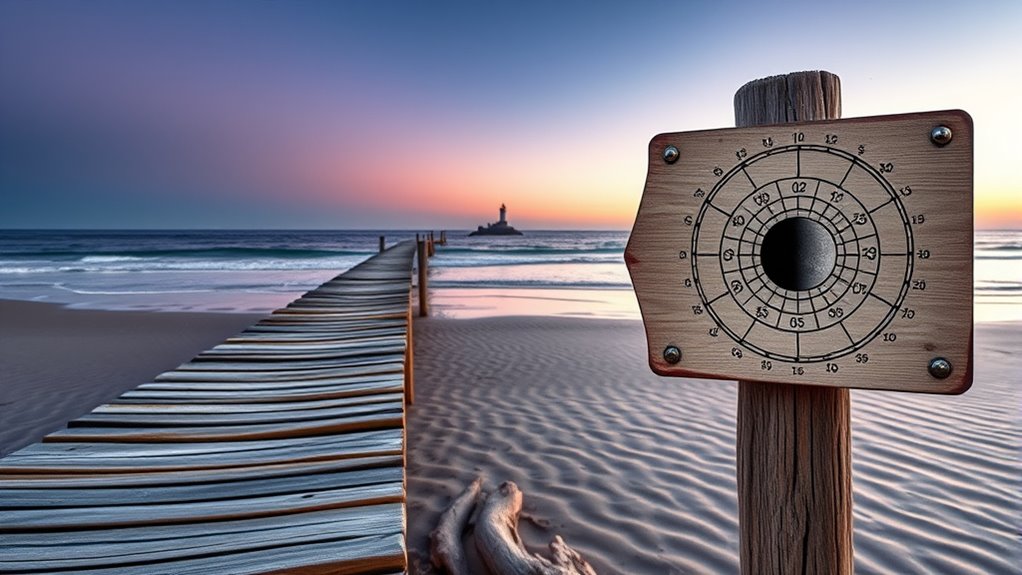
Understanding tide charts and moon phases is essential for successful coastal harvests, as these natural cycles directly influence the availability and quality of marine resources. When you know how the tides rise and fall, you gain a powerful tool to connect with the ocean’s rhythm, revealing freedom from guesswork and intuition-based gathering. The ocean is a dynamic force, driven by celestial movements and weather patterns that shape the environment where marine flora thrive and marine life congregates. By tapping into this knowledge, you can harvest with confidence, aligning your efforts with nature’s flow rather than fighting against it.
Marine flora, such as seaweeds and other underwater plants, respond to these cycles, flourishing during specific tide and moon phases. When the tide is high, the water covers more of the shoreline, creating ideal conditions for collecting certain types of marine flora that grow on rocks and submerged surfaces. Conversely, during low tides, you might find more exposed areas where marine plants are accessible, but you must be mindful of weather patterns that can change quickly, impacting safety and harvest success. Storms, winds, and atmospheric pressure shifts all influence tides and, consequently, the growth and accessibility of marine flora. Recognizing these weather patterns allows you to plan your harvests more effectively, ensuring you’re not caught off guard by sudden changes.
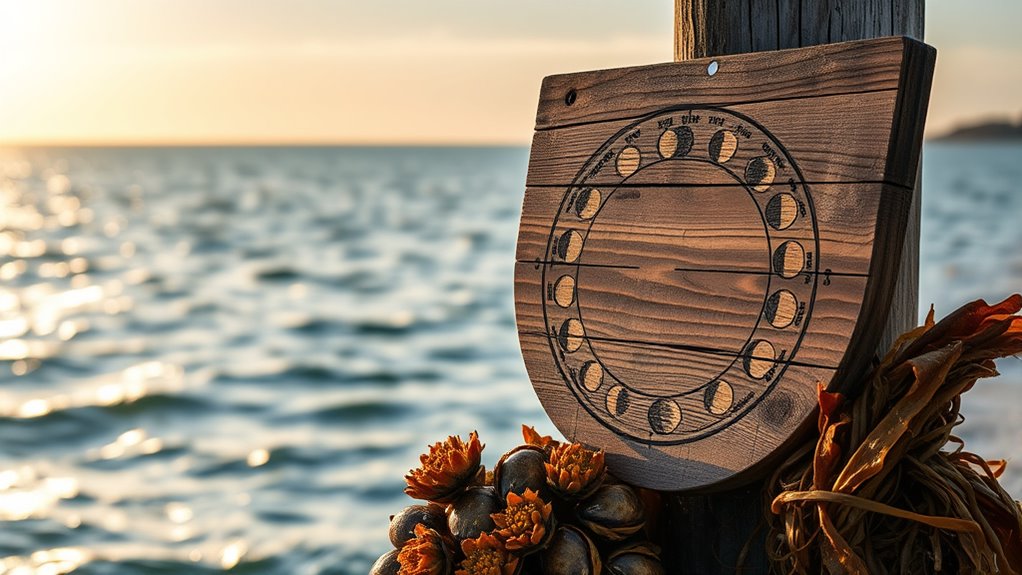
The moon’s phases play an important role, especially in coastal ecosystems where the gravitational pull affects the tides. New and full moons bring the most significant tidal shifts, creating opportunities to access areas that are otherwise unreachable. During these times, marine flora and other marine creatures are often more abundant and easier to harvest because they tend to congregate in areas where water levels fluctuate significantly. Understanding this connection grants you the freedom to synchronize your harvesting schedule with these lunar events, maximizing your yield and minimizing wasted effort. Additionally, understanding tidal cycles and their influence on marine ecosystems can help you develop more sustainable harvesting practices, preserving these resources for future seasons.
Frequently Asked Questions
How Do Weather Conditions Affect Tide Levels and Moon Phases?
Weather impacts, like storms or strong winds, can cause significant changes in tidal fluctuations, making tide levels unpredictable. High-pressure systems may lower tides, while low-pressure systems can raise them unexpectedly. These weather conditions disrupt normal patterns, giving you more freedom to adapt and seize coastal harvest opportunities. Keep an eye on weather forecasts, and you’ll harness these fluctuations instead of being limited by them, embracing the dynamic rhythm of nature’s tides.
Can Tide Charts Predict Extreme Weather Events?
You can’t rely solely on tide charts to predict extreme weather events, but they do offer valuable clues. Solar flares and shifting ocean currents influence weather patterns, hinting at storms or high winds ahead. Embrace this knowledge to gain control over your environment, freeing yourself from uncertainty. By understanding these connections, you can prepare and adapt, turning the unpredictable into an opportunity for empowerment and resilience.
How Accurate Are Moon Phase Predictions for Future Dates?
You’ll find that moon phase accuracy for future dates is generally quite reliable, but it’s not perfect. The prediction reliability depends on the method used and the source’s precision. Modern calculations are highly detailed, giving you confidence in planning activities like coastal harvests or night events. While you can trust these forecasts, stay flexible—moon phases can have slight variations, so keep an open mind and embrace the natural flow.
Do Tidal Patterns Vary Significantly From Year to Year?
Tidal patterns can vary markedly year to year due to long-term tidal variability influenced by celestial and atmospheric factors. You should consider historical tide pattern analysis to understand these changes better. This variability offers a sense of liberation, reminding you that nature’s rhythms aren’t fixed. Embrace the fluctuation and adapt your coastal harvest plans accordingly, knowing that each year brings unique tidal opportunities and challenges.
How Can I Customize Tide Charts for Specific Coastal Locations?
Why settle for generic tide charts when you can rebel? You can customize tide data by using online tools and apps that offer location-specific adjustments. Plug in your exact spot, and these tools will give you precise predictions, freeing you from the tyranny of inaccurate info. Take control of your coastal adventures, knowing your tides are tailored to your needs, not some outdated, one-size-fits-all chart.
Conclusion
By paying close attention to tide charts and moon phases, you’re revealing the secrets of coastal harvests like a seasoned explorer uncovering hidden treasures. These celestial cues are your guiding stars, helping you time your efforts perfectly. When you harness this natural rhythm, you’ll feel as unstoppable as the ocean itself, reaping batteries of bounty from the sea. Keep these tools in your pocket, and watch your harvests flourish with the power of the moon and tides.