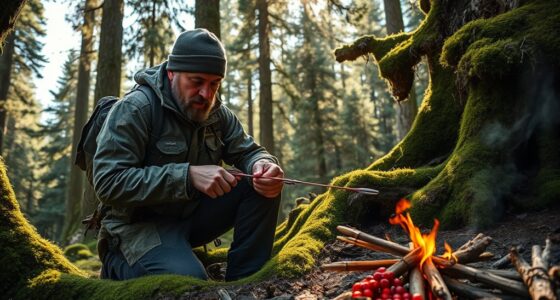
To start a bow-drill fire with foraged materials, first practice ethical harvesting by collecting dry, fallen branches and fibers without harming the environment. Prepare a straight, dry spindle and sturdy fireboard, then use a smooth bow to saw steadily and generate friction. Focus on maintaining consistent pressure and gentle movements until you produce an ember, carefully transfer it to your tinder, and gently blow to ignite. Continuing will reveal the key techniques for successful fire making.
Key Takeaways
- Select dry, straight sticks for the spindle and a sturdy, flat fireboard from softwood or deadwood.
- Gather natural fibers or cordage to create a bow that fits comfortably and can generate smooth sawing motion.
- Position yourself comfortably, hold the fireboard steady, and use a gentle, consistent sawing motion with the bow.
- Apply downward pressure on the spindle to generate friction, watching for smoke and a small ember forming.
- Carefully transfer the ember to tinder, gently blow to ignite, and thoroughly extinguish the fire afterward.

Creating a fire with a bow drill from foraged materials is a skill that combines patience and resourcefulness. It’s about mastering a primal connection to nature, taking what you need without excess, and respecting the environment that sustains you. Before you start, remember that fire safety is paramount. Clear your workspace of dry leaves, twigs, or anything flammable, and always have a way to extinguish the fire quickly—water, dirt, or a fire extinguisher. This isn’t just about ignition; it’s about doing so responsibly, honoring the balance of nature and ensuring your actions don’t cause harm or unintended damage.
Master fire safety: clear space, have extinguishing tools, and ignite responsibly to honor nature’s balance.
When gathering materials, practice foraging ethics. Only take what you need, and do so sustainably. Harvest materials like softwood from fallen branches or deadwood, avoiding living trees to preserve the health of your environment. Collect cordage or natural fibers from plants that can be stripped without damaging the plant. Be discreet and mindful, leaving enough for wildlife and the ecosystem to thrive. Respect private land, obtain permission if necessary, and always leave no trace. Your goal is to connect with nature, not exploit it.
Once you have your materials—such as a spindle made from a dry, straight stick, a sturdy bow, a resilient board or fireboard, and a socket or handhold—you’re ready to begin. Position yourself comfortably, respecting your surroundings, and check your materials for cracks or moisture, which could hinder your progress. When you start the process, keep your movements deliberate yet gentle, maintaining steady pressure and a smooth, consistent sawing motion with the bow. The friction generated will slowly turn the spindle against the fireboard, creating heat and eventually smoke. Patience is essential; sometimes it takes several attempts before you see the first ember.
Once an ember appears, carefully transfer it to your tinder bundle, gently blowing to nurture it into a flame. Remember, the goal isn’t just to start fire but to do so with an understanding of fire safety. Keep your fire contained and monitored at all times. When you’re finished, thoroughly extinguish the fire, ensuring no sparks or embers escape. This respect for fire and the environment is the essence of true freedom—living consciously, responsibly, and harmoniously with nature. Your ability to create fire from foraged materials isn’t just a survival skill; it’s a testament to your independence and your commitment to ethical foraging and environmental stewardship. Developing this skill can also deepen your understanding of fire safety, which is essential for responsible outdoor living.
Frequently Asked Questions
What Are the Best Foraged Woods for Bow-Drill Fires?
You should look for hardwoods like oak, hickory, or maple, as they produce good friction and are easier to work with. Focus on plant identification and choose sustainably harvested woods to protect nature’s balance. These woods are durable and provide the right density for a successful bow-drill fire. By selecting wisely, you tap into your freedom to connect with nature responsibly, forging fire with respect for the environment.
How Do I Identify Suitable Plant Materials for the Spindle?
To identify suitable plant materials for the spindle, focus on plant identification by seeking straight, smooth, and lightweight wood. Look for species like cedar, willow, or birch, which are known for their ease of material selection. Choose fresh, green wood when possible, avoiding rotten or overly dry pieces. Trust your intuition and experience, embracing the freedom to experiment with different woods until you find the perfect fit for your fire-making journey.
Can I Make a Bow-Drill Set With Only Natural Materials?
Yes, you can craft a bow-drill set with only natural materials, turning nature into your personal toolkit. With a little ingenuity, you’ll find suitable branches, vines, and bark that work perfectly for DIY survival and wilderness skills. Think of it as forging your own path, using whatever Mother Nature offers. Embrace the freedom of mastering fire with what’s at hand, and let your resourcefulness lead the way.
What Safety Precautions Should I Take During Fire-Starting?
You should prioritize fire safety and emergency preparedness while starting a fire. Always clear the area of flammable materials, keep a water source or fire extinguisher nearby, and work in a safe, open space. Wear protective gear if needed, and never leave the fire unattended. By taking these precautions, you empower yourself to enjoy fire-making freely, knowing you’re prepared for any unexpected situations that may arise.
How Do Environmental Conditions Affect the Success of Fire-Making?
Environmental conditions play a big role in your fire-making success. High humidity levels make it harder for your fire to ignite and stay lit, so you might need extra dry materials. Wind influence can either help by providing oxygen or hinder by blowing out your flame. To stay free and in control, choose a sheltered spot, gather dry tinder, and be adaptable to changing weather, embracing the challenge.
Conclusion
Don’t let fear hold you back from trying this ancient skill. With patience and practice, you’ll find joy in creating fire from simple foraged materials, connecting you to our ancestors. Even if it feels daunting at first, remember that every expert was once a beginner. Embrace the challenge, and you’ll experience a sense of accomplishment and independence. Trust yourself—you’re capable of mastering this timeless skill and revealing nature’s power right in your hands.