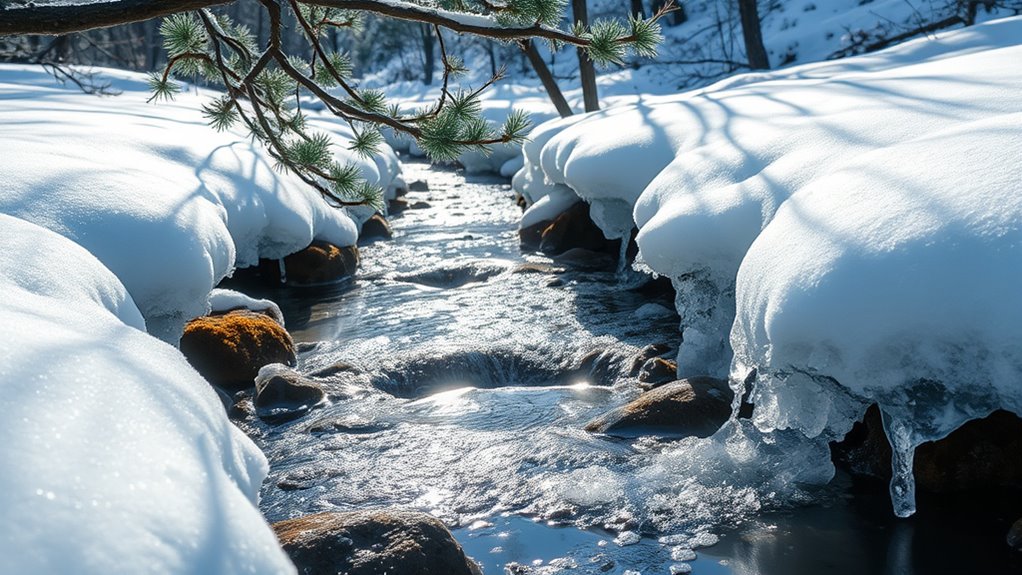

In cold climates, look for underground seeps and moist soil near rock outcroppings, as moisture can persist beneath the frozen surface. Check for darker, damp patches and carefully dig to find underground water sources. During warmer parts of the day, melt snow by creating channels or dams to direct runoff into containers. Always filter or boil snowmelt before drinking to guarantee safety. Keep exploring these techniques to find essential water sources in icy environments.
Key Takeaways
- Search for damp soil, rock crevices, or organic-rich areas where underground moisture may be accessible.
- Identify natural flow paths and depressions to collect melting snow efficiently.
- Create channels or barriers to direct snowmelt toward containers, maximizing collection.
- Focus collection efforts during midday when snowpack melt is at its peak.
- Always filter or boil snowmelt to ensure water safety and remove debris or pollutants.
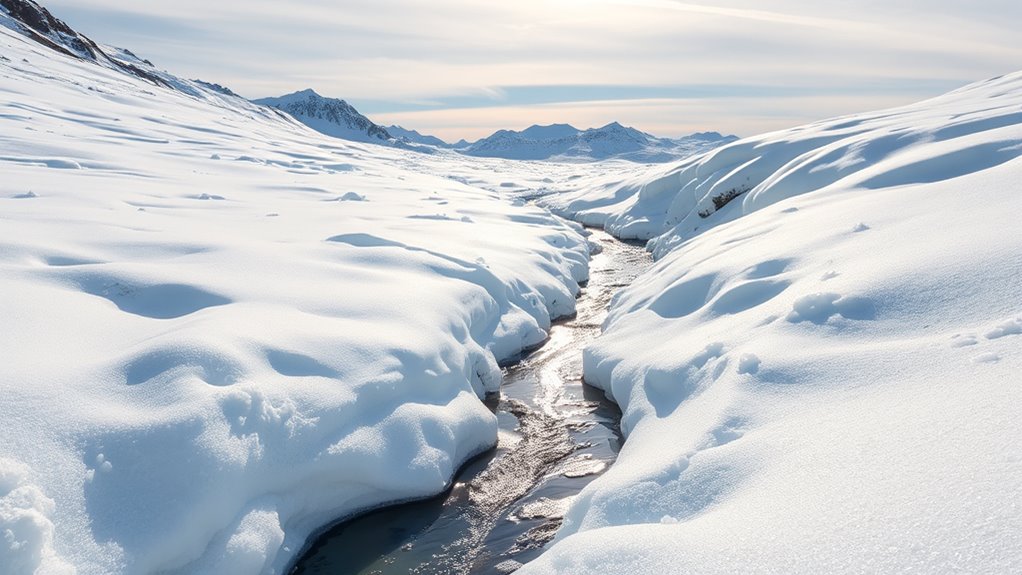
Finding water in cold climates can be challenging, but with the right knowledge and techniques, it’s entirely possible. You just need to understand how nature offers hidden resources that aren’t immediately obvious. One of the most reliable sources of water in such environments is underground moisture. Beneath the frozen surface, moisture can linger in soil and rock crevices, especially in areas with decent organic material or near rock outcroppings. Digging carefully into the earth can reveal damp soil or even small trickles of water seeping through cracks. Look for patches of darker soil, which often indicate moisture content. If you can, use a makeshift siphon or a simple container to collect this water, but always be cautious of contamination. Remember, tapping into underground moisture can be a game-changer, providing a steady supply when surface sources are scarce or frozen. Additionally, understanding the saturation of soil can help you identify areas where underground water might be more accessible. Another essential aspect of sourcing water in cold environments involves managing snowpack melt. Snow may seem like a static, frozen mass, but it’s a reservoir waiting to be tapped. As temperatures rise, snowpack melts, releasing water that flows downhill or collects in natural depressions. To harness this, identify the natural flow paths—trails of melting snow that follow the terrain. Create channels or divert melted water toward your collection points, such as makeshift basins or containers. Keep in mind that snowmelt is often contaminated with debris, dirt, or pollutants, so filtering or boiling this water before consumption is essential for safety. Timing is key; during the day when the sun’s strongest, the melt rate peaks, so plan your collection efforts accordingly. Effective snowpack melt management means understanding how to optimize your collection and storage. You might build a small dam or barrier to direct melting water into a container or dig out a shallow trench that channels runoff into a reservoir. As you do this, remember that the quality of snowmelt can vary, so always prepare to purify it. If you’re in a prolonged survival situation, capturing this melt early in the day maximizes your yield. When the sun sets and temperatures drop, the melting slows or stops, so your best chance is during the warmest parts of the day.
Frequently Asked Questions
How Can I Identify Underground Water Sources in Icy Terrains?
You can identify underground water sources in icy terrains through subsurface water mapping and geological surveys. Use ground-penetrating radar to detect moist zones beneath the surface, revealing hidden water flows. Conduct geological surveys to analyze soil and rock layers, pinpointing areas likely to hold water. These methods empower you to locate essential water sources, helping you break free from reliance on surface ice or snow and access underground reserves with confidence.
What Tools Are Best for Detecting Water Beneath Snow and Ice?
You should use ground penetrating radar and thermal imaging to detect water beneath snow and ice. Ground penetrating radar penetrates layers to reveal hidden water channels, while thermal imaging identifies temperature differences indicating liquid water below the surface. These tools empower you to explore freely, uncovering hidden water sources without invasive digging. Embrace these technologies to unveil the secrets beneath icy terrains and gain the freedom to explore what lies beneath.
Can Plants Indicate the Presence of Underground Water in Cold Climates?
Like a whisper of hope beneath frozen earth, plants become your silent guides. Plant indicators reveal underground water in cold climates, their lush growth and vibrant leaves signaling hidden sources. By observing these natural symbols, you uncover the freedom to find water without intrusive tools. Trust in the resilience of plants as your allies, guiding you through icy silence toward the life-giving underground streams waiting to be discovered.
How Does Seasonal Temperature Variation Affect Water Availability?
Seasonal temperature fluctuations dramatically impact your water availability. During the seasonal thaw, melting ice and snow create accessible water sources, freeing you from scarcity. However, in colder months, water becomes locked in ice, limiting your options. Embrace these changes, knowing that understanding temperature fluctuations helps you plan ahead. By adapting to these shifts, you can efficiently access water year-round, ensuring your needs are always met despite the cold climate’s challenges.
Are There Any Risks Associated With Melting Snow and Ice for Water Extraction?
Melting snow and ice for water can pose contamination risks from pollutants or bacteria, so be cautious. Structural hazards also exist, like unstable ice or hidden crevices, which could cause injury. You should assess the site carefully, use proper equipment, and prioritize safety. This way, you can access water freely while minimizing risks and staying in control of your environment.
Conclusion
As you navigate cold climates, remember that water’s quiet presence often whispers through seeps, melting ice, and snow. By paying close attention and using patience, you’ll uncover sources that might seem elusive at first. Embrace the subtle signs nature offers—you’ll find that even in the coldest places, life’s essential resource patiently waits to be discovered. With careful observation, you can turn frozen silence into a life-sustaining secret waiting just beneath the surface.