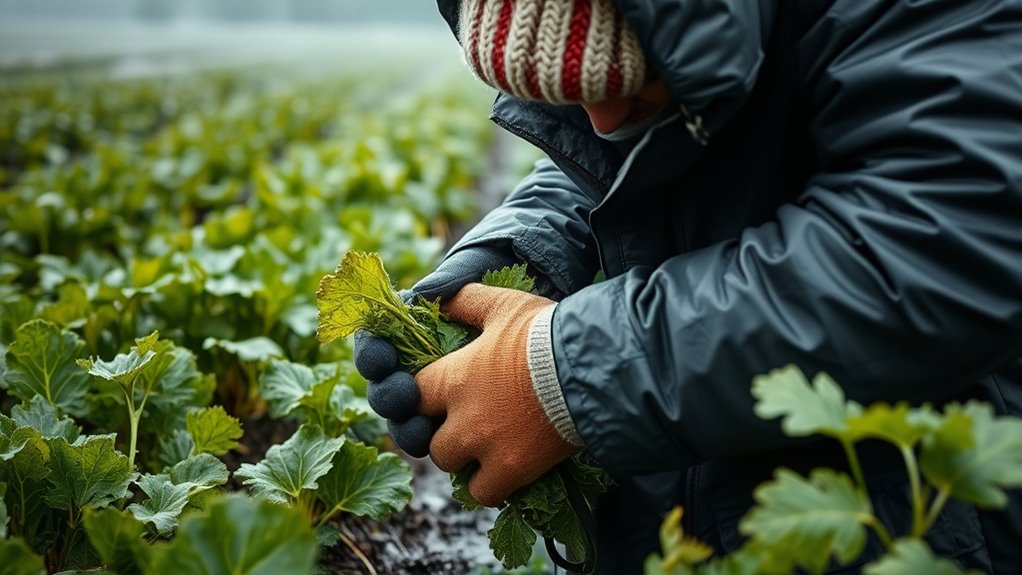

To avoid hypothermia while processing wet harvests, wear layered clothing with moisture-wicking base layers, insulating mid-layers, and waterproof outer shells. Stay dry and change into dry clothes if they get wet. Keep moving to generate body heat and take frequent breaks in warm shelters. Watch for signs like shivering and numbness, and act quickly if symptoms appear. Mastering these safety tips helps you stay warm and protected—continue to learn more to keep safe in cold conditions.
Key Takeaways
- Wear moisture-wicking base layers and insulating garments to keep skin dry and retain body heat.
- Use waterproof and windproof outer layers to protect against rain and damp conditions.
- Keep dry spare clothes, especially socks and gloves, to change into if your clothes get wet.
- Monitor for hypothermia symptoms like shivering and disorientation; seek shelter immediately if they appear.
- Carry emergency gear such as thermal blankets and hand warmers to quickly warm up if exposure occurs.
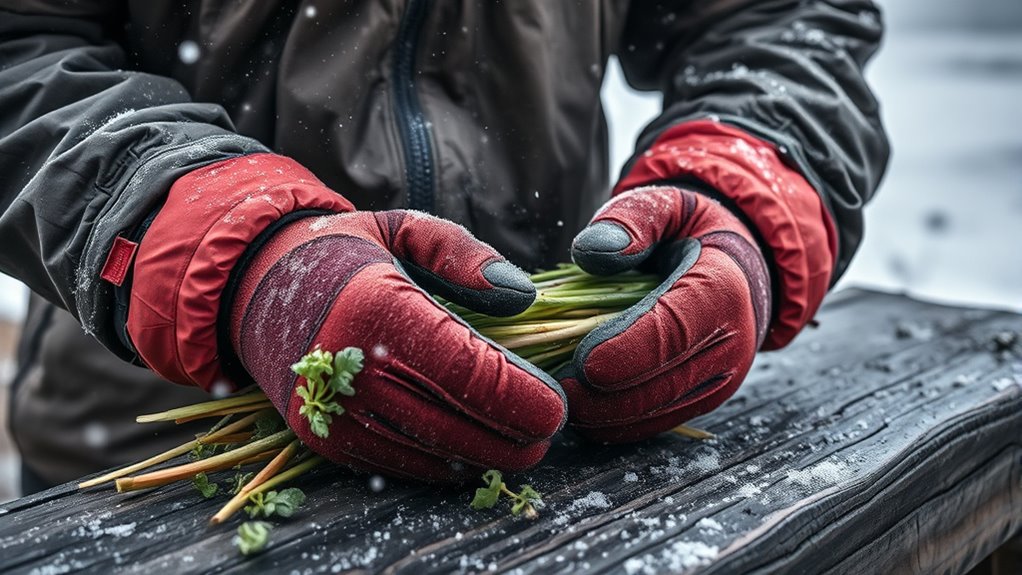
When spending time outdoors in cold weather, it’s crucial to understand how to prevent hypothermia, a dangerous condition caused by prolonged exposure to low temperatures. If you’re processing wet harvests, the risk increases dramatically because moisture accelerates heat loss. The key to staying safe is to prioritize proper clothing and be prepared for emergencies. You have the power to protect yourself by layering effectively and choosing gear designed for cold, damp conditions. Think of your clothing as a barrier that keeps your body heat in while preventing the cold from seeping in. Start with moisture-wicking base layers that draw sweat away from your skin, preventing you from becoming chilled even if you get wet. Then, add insulating layers—fleece or wool—that trap heat. Over these, a waterproof, windproof outer shell becomes your shield against rain, snow, or damp wind. This combination ensures you maintain as much core warmth as possible, giving you the freedom to work longer without risking hypothermia. Remember, proper clothing isn’t just about warmth; it’s about creating a barrier that keeps moisture out and retains body heat, empowering you to work confidently in challenging conditions.
Using appropriate clothing layers can significantly improve your insulation and moisture management, which are essential for cold-weather safety. But even with the best clothing, emergencies can happen. That’s why emergency preparedness is essential. Always carry a dry change of clothes, especially socks and gloves, so you can switch out damp gear if needed. Keep a compact emergency kit nearby, including thermal blankets, hand warmers, and a whistle to signal for help. If you start feeling numbness, shivering uncontrollably, or disorientation, it’s time to act fast. Get to a warm shelter, remove wet clothing, and start warming your core with dry blankets or heat packs. Knowing how to respond swiftly can mean the difference between recovery and serious health risks. Your ability to stay calm and prepared lets you seize control over your safety, even in the worst conditions.
Ultimately, protecting yourself from hypothermia while processing wet harvests is a matter of empowerment through proper clothing choices and emergency readiness. You have the tools to stay warm, dry, and alert, so you can continue your work and enjoy your freedom outdoors. Don’t wait until it’s too late—take charge of your safety today. Stay layered, stay prepared, and remember that your knowledge and quick action are your best defenses against hypothermia. The outdoors can be a place of liberation and resilience—embrace it with confidence, knowing you’re equipped to face the cold head-on.
Frequently Asked Questions
What Are Early Signs of Hypothermia During Harvest?
Early signs of hypothermia during harvest include feeling unusually cold, shivering uncontrollably, and numbness in your extremities. You might notice signs awareness like dizziness, confusion, or difficulty concentrating. Cold exposure dulls your senses and hampers your judgment, so stay alert. Recognize these signals early, take action by warming up, and avoid progressing into more serious stages. Your safety depends on catching these signs before they escalate.
How Long Can Someone Safely Stay in Cold Wet Conditions?
Like Icarus reaching for the sun, you risk falling if you stay too long in cold, wet conditions. Usually, you can withstand this for about 30 minutes if you’re properly insulated with thermal layering and moisture-wicking clothing. But once your clothing’s soaked or insulation fails, your risk of hypothermia skyrockets. Stay active, keep moving, and don’t push your luck—liberation comes from knowing your limits and dressing smart.
Are There Specific Clothing Materials That Prevent Hypothermia?
Yes, you should choose clothing made from moisture-wicking fabrics like merino wool or synthetic blends, which keep sweat away from your skin and dry quickly. Pair these with thermal insulation layers to trap body heat and stay warm. This combination helps prevent hypothermia by maintaining your core temperature, so you can work freely and confidently in wet conditions without feeling restrained or vulnerable.
Can Dehydration Increase Hypothermia Risk While Processing Wet Crops?
Dehydration effects are like a thief draining your energy, and yes, it can increase hypothermia risk during wet crop handling. When you’re dehydrated, your body struggles to regulate temperature, making you more vulnerable to cold. You’ll feel weaker and less alert, which hampers your ability to stay safe. Stay hydrated to keep your defenses strong, embrace your freedom, and handle wet crops confidently without succumbing to the cold’s grasp.
What Emergency Steps Should Be Taken if Hypothermia Occurs?
If hypothermia occurs, act quickly with emergency first aid. Remove wet clothing and insulate the person with dry blankets or clothing to preserve body heat. Keep them lying down, and if conscious, give warm, non-alcoholic fluids. Seek medical help immediately. Your priority is to restore body warmth through clothing insulation and gentle care, helping you regain control and stay safe in these critical moments.
Conclusion
To stay safe while processing wet harvests, remember that hypothermia can set in quickly—especially when temperatures drop below 50°F, where your risk increases markedly. Did you know that over 60% of hypothermia cases occur in outdoor work environments? Always wear insulated, waterproof clothing, take regular breaks in warm areas, and stay vigilant. By following these tips, you’ll protect yourself and ensure a safe, productive harvest season.