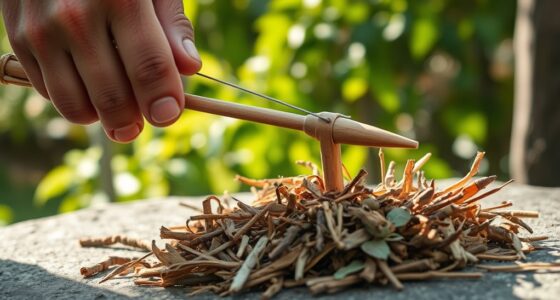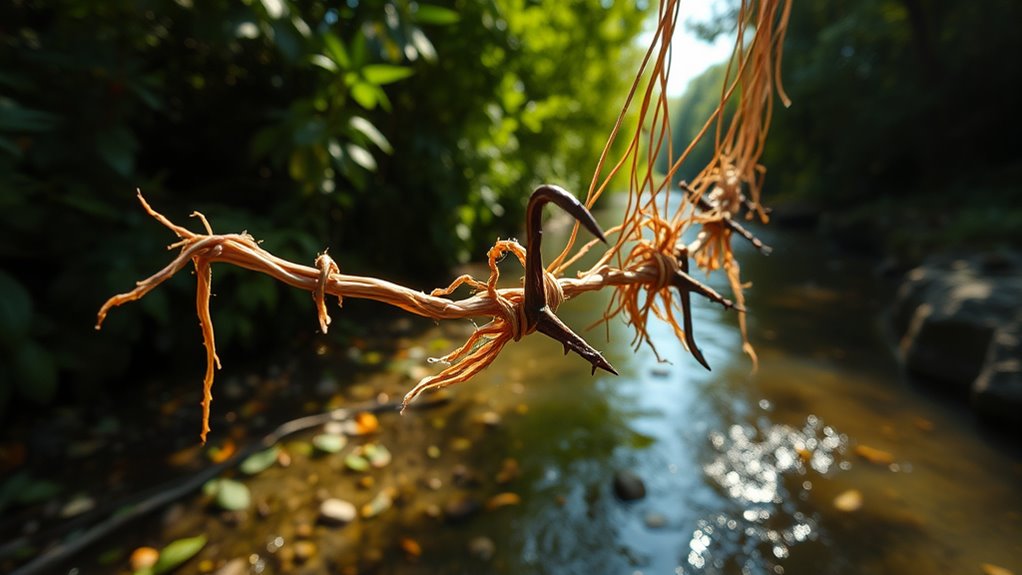
To improvise fishing with plant fibers and thorn hooks, gather strong, flexible fibers from roots, bark, or vines, then twist them into durable lines. Craft small hooks from sharpened sticks or thorny branches, baited with insects or natural bait. Place your lines quietly in shallow waters, being careful not to disturb the environment. This simple, sustainable approach helps you connect with traditional techniques—keep going to discover more ways to master this resourceful method.
Key Takeaways
- Gather strong plant fibers from roots, bark, or vines to craft durable, biodegradable fishing lines.
- Create hooks from thorny branches or sharpened sticks, ensuring they are small and sturdy.
- Twist plant fibers into effective fishing lines and attach natural bait like insects to hooks.
- Set lines in calm, shallow waters quietly to avoid scaring fish and disturb habitats.
- Practice sustainable fishing by taking only what is needed and minimizing environmental impact.
Ever wondered how early humans caught fish without modern gear? Long before fishing rods and nets, they relied on ingenuity, using plant fibers and thorn hooks to harvest their food. This ancient art exemplifies sustainable fishing techniques that honor natural resource conservation. By understanding and recreating these methods, you can connect with a way of fishing that’s both effective and respectful of the environment. It’s a reminder that you don’t need complex equipment to survive or thrive; sometimes, simple tools forged from the land itself are enough.
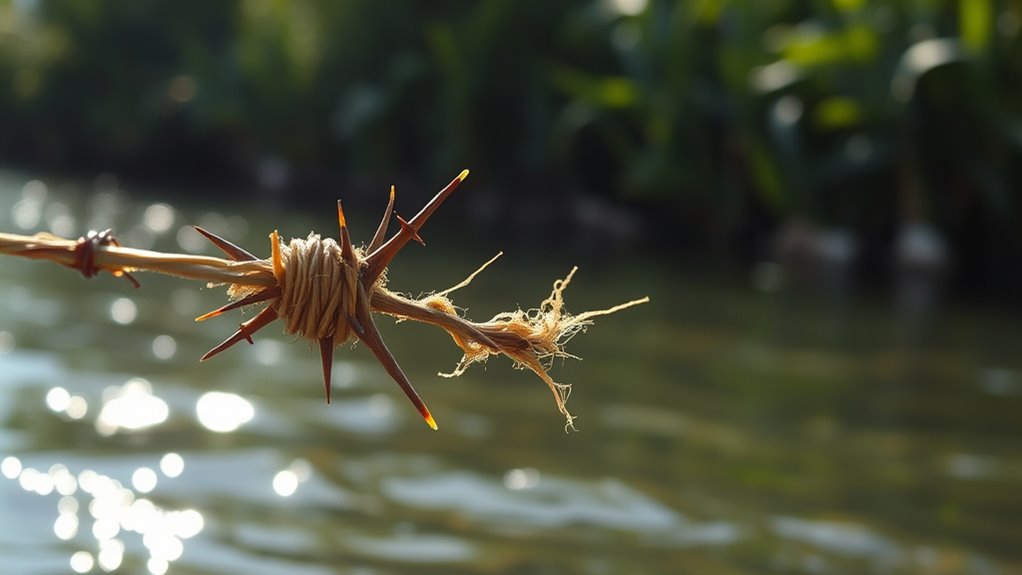
You start by gathering strong, flexible plant fibers—think of roots, bark, or vines—that can be twisted into a durable fishing line. These fibers are naturally biodegradable, which means your fishing practices stay aligned with the health of the ecosystem. You’ll want to craft hooks from thorny branches or even sharpened sticks, ensuring they’re small and sturdy enough to catch fish without causing unnecessary harm. These improvised hooks are a testament to resourcefulness, making use of what nature provides without depleting it.
When setting your trap or line, choose calm, shallow waters where fish are likely to gather. Gently place your plant fiber line with the thorn hook baited with small insects or natural bait. The goal is to blend seamlessly into the environment, avoiding loud disturbances that could scare away your catch. This quiet, careful approach exemplifies a sustainable mindset—fishing not as a conquest but as a harmony with nature’s rhythms. Each catch, no matter how modest, becomes a reminder that respect and patience are the true keys to abundance.
Using such methods, you’re practicing natural resource conservation. You’re not overfishing or damaging the habitat, but instead, working within the limits of what the environment can sustain. It’s a way of fishing that emphasizes balance—taking only what’s needed and leaving enough behind for future generations. This approach fosters a sense of liberation from dependency on high-tech gear and commercial methods, empowering you to live more simply and consciously.
In essence, improvised fishing from plant fibers and thorn hooks isn’t just about catching fish; it’s about reconnecting with a sustainable way of life rooted in respect for nature. It’s about embracing resourcefulness and understanding that the most effective tools are often the ones created from the land itself. When you fish this way, you honor the natural world, ensuring its vitality endures—free, wild, and abundant for all who seek to live in harmony with it.
Frequently Asked Questions
What Types of Fish Are Best Caught With Improvised Gear?
You can catch smaller, active fish like bass, bluegill, or trout with improvised gear, especially in calm, clear waters. These fish are attracted by their behavior, often feeding near the surface or along the shoreline. Focus on water conditions—shallow, still, or slow-moving waters increase your chances. By understanding their habits, you can effectively target these species, enjoying the thrill of liberation through simple, resourceful fishing.
How Long Does an Improvised Fishing Setup Typically Last?
Your improvised fishing setup can last anywhere from a few hours to several days, depending on durability and environmental factors. Stronger plant fibers and sturdy thorn hooks tend to hold up longer, especially in calm conditions. But exposure to water, sun, and rough handling can weaken your gear quickly. To maximize your liberation, regularly inspect and repair your setup, ensuring it’s ready for any challenge the wild throws your way.
Can Plant Fibers Be Used for Other Fishing Accessories?
Imagine weaving a net as freeing as the wind—plant fibers can indeed be used for other fishing accessories. Their natural fiber durability allows you to craft lines, traps, and even lures from sourced plant materials, embracing your primal connection to nature. You’re empowered to source these fibers freely, transforming raw, wild resources into tools that sustain your independence and deepen your bond with the environment.
What Safety Precautions Should Be Taken When Handling Thorn Hooks?
When handling sharp hooks, always wear gloves to protect your hands and handle hooks carefully to avoid injury. Use pliers for extraction and secure hooks in a safe container when not in use. Proper disposal of hooks is essential—wrap them in sturdy material and dispose of them in designated sharps containers. These precautions keep you safe and allow you to fish freely, without fear of accidental harm or environmental harm.
Are There Specific Plants More Effective for Making Fishing Lines?
Like a master sculptor choosing the perfect stone, you’ll find that plant fiber types like hemp, yucca, and dogbane excel for making fishing lines. These fibers are strong, flexible, and durable, ensuring your line withstands the test of time and tension. Selecting the right plant not only boosts your fishing success but also grants you the freedom to craft and survive independently, empowering your connection with nature’s raw beauty.
Conclusion
So, next time you’re faced with limited resources, remember that creativity is your best tool. Just like a thorn hook can turn a simple plant fiber into a fishing line, your ingenuity can turn challenges into opportunities. Don’t underestimate the power of improvisation; it’s like turning a barren field into a fruitful harvest. With patience and resourcefulness, you can master the art of fishing with what’s at hand—proving that sometimes, necessity truly is the mother of invention.