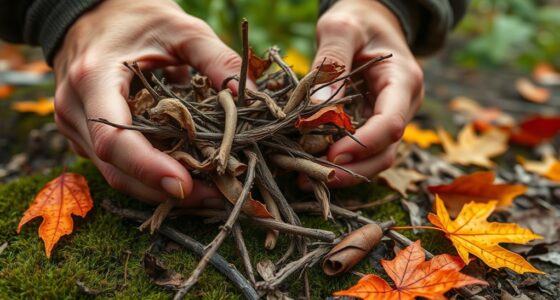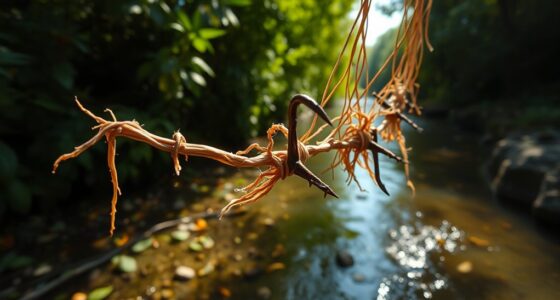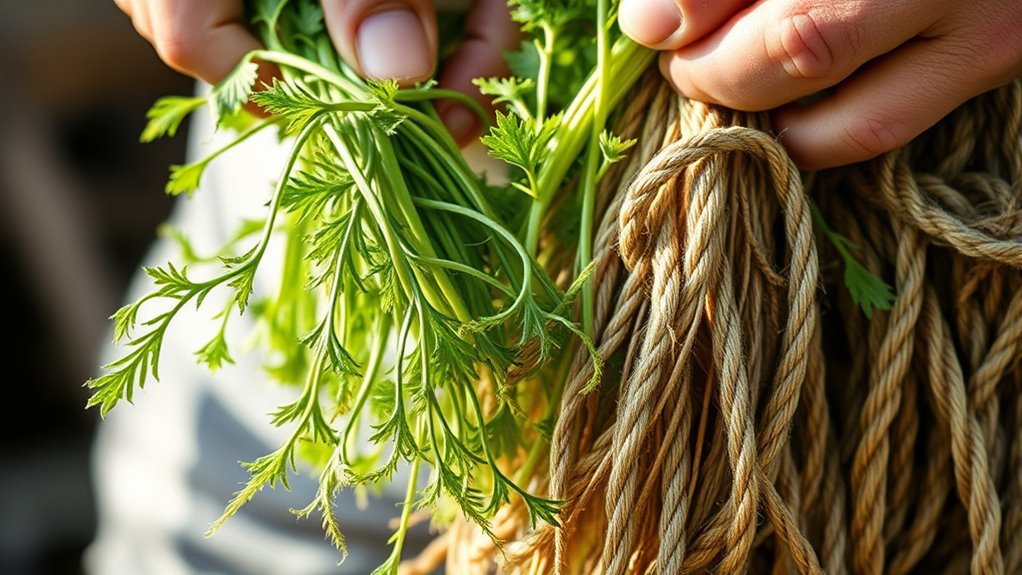

To turn nettle stalks into strong rope, start by harvesting mature stems with fibrous cores. Next, soak or lay the stalks in water (retting) to loosen the fibers, then peel away outer layers to reveal silky fibers. After drying, twist and spin the fibers into threads, which can be braided or twisted into durable cordage. Continuing with this process reveals an ancient craft that transforms natural resources into resilient, functional rope—see how it all comes together.
Key Takeaways
- Harvest mature nettle stalks with strong fibers, then soak them in water through retting to loosen the fibers.
- Peel and dry the fibers to prepare them for twisting and spinning into threads.
- Twist and spin dried fibers by hand to create durable, flexible threads suitable for cordage.
- Twist or braid the spun fibers into ropes and cords, utilizing traditional techniques for strength and versatility.
- Historically, nettle cordage was used for fishing lines, nets, and clothing, demonstrating its durability and cultural significance.

Have you ever wondered how ancient cultures created strong, sustainable cords without modern tools? It’s a fascinating journey into fiber processing and historical uses that reveals the ingenuity of our ancestors. They transformed humble plants, like nettles, into robust cordage that served as lifelines—whether for fishing, binding, or building. This process wasn’t just about survival; it was about mastering natural resources to forge independence and resilience. To understand this, you need to grasp the art of fiber processing: harvesting, retting, drying, and twisting fibers. With nettles, you start by carefully collecting the stalks, choosing mature plants with strong, fibrous cores. The next step involves retting, where you soak or lay the stalks in water or damp soil to loosen the fibers from the plant’s tougher parts. This step is vital because it separates the usable fiber from the plant’s tougher parts, making it easier to work with. Once the fibers are softened, you peel away the outer layers, revealing the silky strands underneath. Drying the fibers in the sun ensures they’re ready for transformation. Now, you begin twisting and spinning those fibers into threads. This process, often done by hand, converts raw material into a flexible, durable cord. The result is a strong, versatile fiber that can be woven, braided, or twisted into rope. Additionally, understanding the fiber extraction process is essential for maximizing the strength and quality of the cordage produced. Historically, cultures across the world have relied on nettle cordage for countless uses. In Europe, during the Bronze Age, people used nettle fibers to make fishing lines, nets, and even clothing. The resilience of the fiber meant it could withstand tension and harsh conditions, making it ideal for essential daily tasks. Native Americans employed nettle cordage in their hunting and fishing tools, appreciating its strength and availability. In parts of Asia, traditional textiles and fishing lines also drew from nettle fibers, demonstrating their global importance. The ability to process fibers efficiently allowed these communities to create tools that supported their independence from imported materials. They knew that by mastering fiber processing, they could harness nature’s bounty to meet their needs. And that’s precisely the essence of liberation—using natural resources consciously and skillfully to sustain yourself without reliance on modern technology. The history of nettle cordage reminds you that innovative craftsmanship is rooted in understanding and respecting the environment. It’s about reclaiming ancient knowledge and applying it today to forge a more sustainable, self-sufficient life. So next time you hold a piece of rope, consider the centuries of fiber processing and the countless hands that shaped it—reminding you that true strength comes from mastering the natural world around you.
Frequently Asked Questions
How Does Nettle Cordage Compare to Synthetic Ropes?
You’ll find that nettle cordage offers a great biodegradability comparison to synthetic ropes, making it an eco-friendlier choice for those seeking liberation from plastic waste. Although it may have a slightly lower tensile strength, a thorough tensile strength analysis shows it’s strong enough for many everyday uses. Embrace natural materials to break free from reliance on synthetic fibers, and enjoy the freedom of sustainable, biodegradable cordage that aligns with your eco-conscious values.
Can Nettle Cordage Be Used for Load-Bearing Applications?
You can use nettle cordage for load-bearing applications, but keep in mind it’s a biodegradable alternative with impressive tensile strength. While it may not match synthetic ropes in extreme situations, it offers a sustainable, eco-friendly option for many tasks. Embrace the freedom of choosing natural fibers that support your values, knowing nettle cordage combines strength and sustainability, empowering you to rely on nature’s resources without sacrificing performance.
What Are the Environmental Impacts of Harvesting Nettles?
When you harvest nettles sustainably, you minimize environmental impacts, supporting biodiversity conservation. By avoiding overharvesting and choosing selective, mindful collection methods, you help preserve plant populations and their ecosystems. This approach allows nettles to regenerate naturally, maintaining healthy habitats for insects and other wildlife. Embracing sustainable harvesting means you actively protect the environment while enjoying the benefits of strong, eco-friendly cordage, empowering your connection with nature and its preservation.
How Long Does Nettle Cordage Typically Last Outdoors?
A stitch in time saves nine, and your nettle cordage can last about 1 to 3 years outdoors if cared for properly. It’s biodegradable, so it’ll naturally decompose over time, but UV resistance can extend its life. To keep your rope strong and free, store it away from direct sunlight when not in use. Embrace the freedom of sustainable living, knowing your cordage supports both your needs and the environment.
Is Nettle Cordage Suitable for Maritime or Water-Based Use?
Yes, nettle cordage is suitable for maritime or water-based use. Its marine durability and water resistance make it a strong choice for your adventurous spirit. You can rely on it to withstand exposure to moisture and salt, giving you the freedom to explore without worry. Embrace the natural strength of nettle, knowing it’s crafted for those who seek liberation on the water, with resilience that endures.
Conclusion
You might think that making cordage from nettles is just a traditional craft, but research shows it’s surprisingly strong and durable—sometimes even comparable to modern materials. This proves that ancient methods can still hold up today, emphasizing the value of natural fibers. So, next time you see nettles, remember they’re not just weeds—they’re a sustainable resource with real strength, blending history with innovation in a truly impressive way.