To make strong rope from nettle stalks, you start by harvesting fresh stalks and removing the outer bark and leaves to access the fibers. Next, you scrape or beat the stalks to loosen the fibrous strands, then clean and soak them to prepare for spinning. These natural fibers can be twisted into durable cordage, a craft practiced for centuries. Keep exploring further, and you’ll discover how ancient communities mastered this process to craft essential tools.
Key Takeaways
- Harvest fresh nettle stalks and remove outer bark and leaves to access the fibrous inner material.
- Beat or scrape stalks to loosen fibers from the woody core for easier extraction.
- Clean, soak, and sometimes dry fibers to enhance their strength, flexibility, and usability.
- Spin or twist fibers into threads, then weave or twist into sturdy cordage.
- Historically used by ancient cultures for durable ropes in fishing, sailing, and construction.
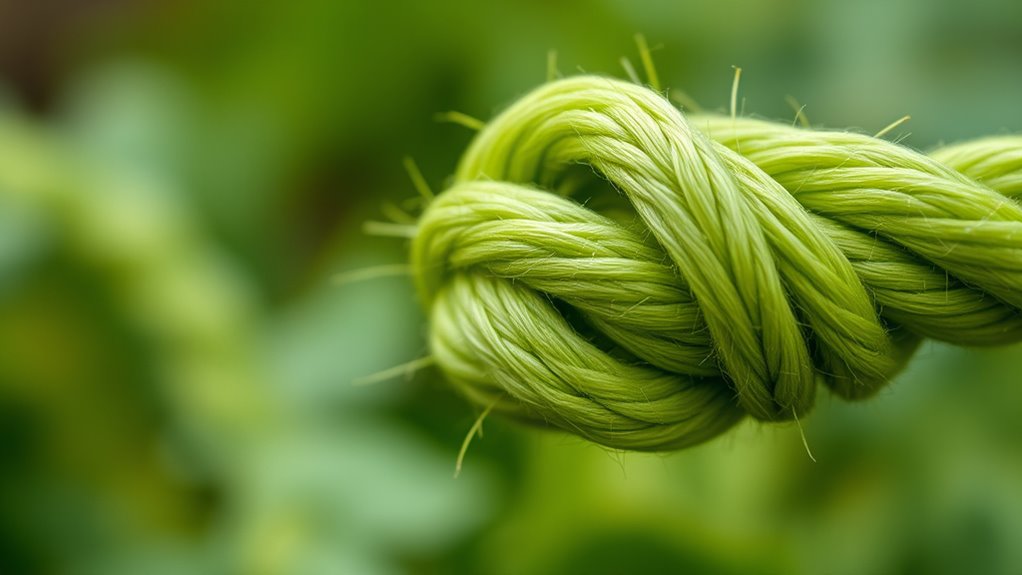
Have you ever wondered how ancient peoples created strong, natural cordage from plants? It’s a fascinating process rooted in fiber processing, a skill passed down through generations that allowed early civilizations to craft durable ropes from humble materials like nettles. These plants, often overlooked today, played an essential role in empowering communities, giving them the means to build, hunt, and thrive without relying on modern synthetic fibers. When you explore the historical usage of nettle cordage, you’ll discover a story of ingenuity and resilience, a testament to human resourcefulness in harnessing nature’s gifts.
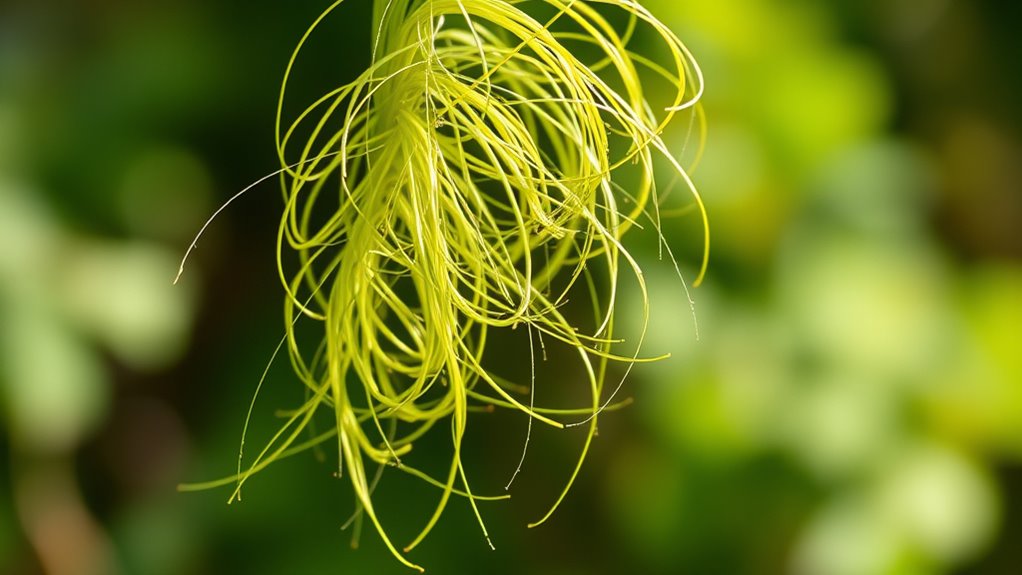
The first step in transforming nettles into rope involves fiber processing. You start with freshly harvested stalks, which contain strong, fibrous strands nestled within their stems. To access these fibers, you strip away the outer bark and leaves, revealing the core material. Traditionally, people would then beat or scrape the stalks, loosening the fibers and separating them from the woody core. This process requires patience and skill, as it influences the strength and flexibility of the final cordage. Once the fibers are loosened, they’re carefully cleaned and sometimes soaked to remove any residual plant material, making them easier to work with.
Historically, nettle fiber processing was essential for many ancient cultures. Archaeological finds reveal that people in Europe, Asia, and Africa used nettles extensively for cordage well before the advent of modern textiles. The versatility of nettle fibers meant they could be spun into threads, woven into fabric, or twisted into ropes suitable for fishing, sailing, and construction. These cords weren’t just utilitarian; they represented a form of self-sufficiency, a way to connect with the land and craft essential tools from what nature provided. The durability and strength of nettle cordage made it a preferred choice for many demanding applications, standing as a testament to the resourcefulness of those who relied on it.
Frequently Asked Questions
How Long Does It Take to Process Nettle Fibers Into Cordage?
Processing nettle fibers into cordage typically takes a few hours, depending on your experience and tools. You’ll start with fiber extraction, which involves harvesting and retting the stalks, then move on to cleaning and carding the fibers. The processing time can be quick if you’re efficient, but it’s also a mindful process that connects you to your materials. With patience, you’ll transform nettles into strong, liberated rope in no time.
Can Nettle Cordage Be Used Outdoors in Harsh Weather?
Yes, nettle cordage can be used outdoors in harsh weather, but you should consider weather resistance and durability concerns. Nettle fibers are naturally strong and flexible, making them suitable for outdoor use, yet prolonged exposure to rain or sun can weaken them over time. To maximize their lifespan, treat the cordage with natural sealants or store it indoors during extreme conditions, giving you the freedom to use it anywhere, anytime.
Are There Any Safety Concerns When Handling Raw Nettle Fibers?
Handling raw nettle fibers is like wrestling a wild stallion—exciting but risky. You should always wear protective gloves to prevent skin irritation, as the tiny hairs can cause a stinging sensation and discomfort. Think of it as taming a spirited creature—you gain freedom and strength, but only if you respect its power. So, gear up and approach nettle fibers with caution, transforming a potential hazard into a source of natural strength.
How Does Nettle Cordage Compare to Traditional Plant-Based Ropes?
You’ll find that nettle cordage surpasses traditional plant-based ropes in plant strength and eco-friendliness. Its fibers are durable and resilient, giving you a reliable, sustainable option for your needs. Compared to conventional ropes, it’s lighter on the environment and free from synthetic chemicals. Embrace the freedom of using a natural, eco-conscious material that empowers you to break free from industrial constraints and reconnect with nature’s true strength.
What Tools Are Necessary for Harvesting and Preparing Nettle Fibers?
You’ll need sharp shears or a sickle for harvesting nettle stalks—think of them as your sword to free nature’s treasure. For fiber extraction, a sturdy comb or hackle helps loosen fibers efficiently, giving you the power to reclaim your independence from synthetic ropes. Select tools that feel right in your hand, making the process smooth and empowering, so you can harness the strength of nettles and forge your own resilient cordage.
Conclusion
From stalk to strong rope, you’ve transformed humble nettles into a resilient lifeline. Like weaving sunlight into a sturdy net, you’ve turned nature’s wild fibers into a tribute of resourcefulness. Each strand, a thread of history and ingenuity, now stands ready to bear weight and weather storms. With your hands, you’ve spun a story of sustainability and strength, proving that even the simplest plants can become powerful tools—truly a tapestry woven from nature’s own fibers.