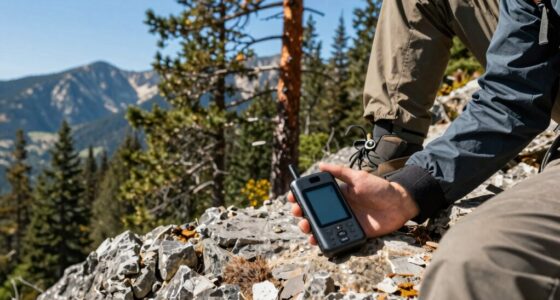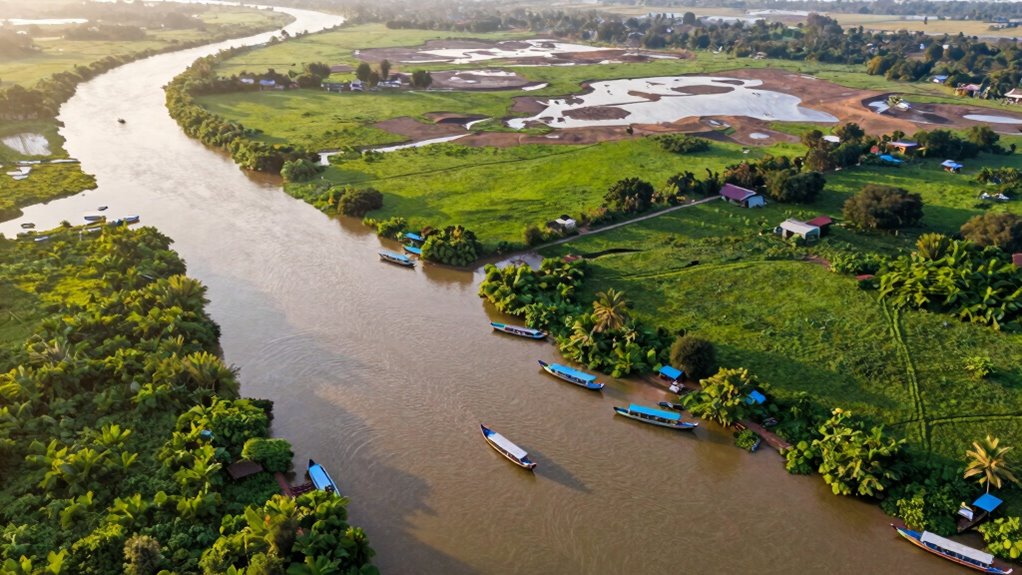

To recognize resource-rich zones near water, look for signs like lush vegetation or specific plants that thrive on mineral-rich soils. Pay attention to water chemistry, as certain geochemical signatures indicate mineral deposits. Observe ecosystem health, including unusual aquatic life or sediment layers, which can signal underground resources. Notice geological features like hot springs or mineralized outcrops, and see how water interacts with the landscape. Keep exploring to uncover more clues about hidden resource zones.
Key Takeaways
- Observe lush vegetation and specific plant species along waterways indicating nutrient-rich mineral deposits.
- Analyze water chemistry for geochemical signatures associated with mineralization zones.
- Look for visible mineral-rich sediments or outcrops near water bodies as deposit indicators.
- Detect changes in aquatic life diversity or unusual organism concentrations suggesting mineral presence or contamination.
- Identify hydrothermal activity around hot springs or geothermal areas as potential mineralization sites.
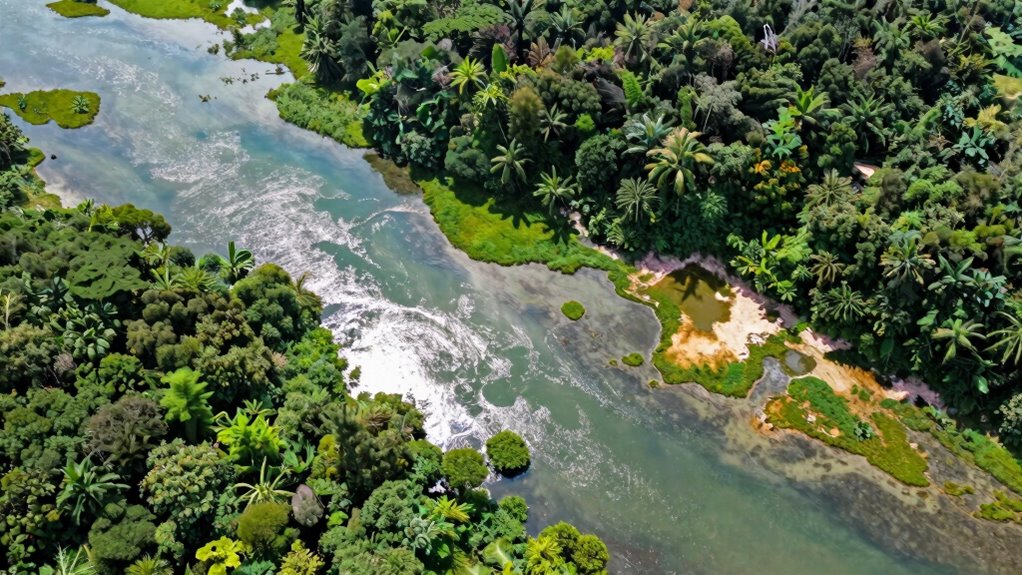
Have you ever wondered why so many resource-rich zones cluster near water? It turns out, water bodies play a vital role in shaping where valuable minerals and resources are found. When exploring potential sites, one of the first things you should look for are signs of mineral deposits. These deposits often accumulate along waterways because water acts as a natural transport system, carrying dissolved minerals from underground sources to the surface. For instance, areas with visible mineral-rich sediments or mineralized outcrops near rivers or lakes could indicate underlying deposits worth investigating further. Look for mineralized veins or patches of oxidized rocks, which often signal the presence of valuable minerals nearby. In addition, water influences the formation of certain mineral deposits through processes like hydrothermal activity, so zones around hot springs or geothermal areas can be especially promising.
Another key aspect to take into account is ecosystem indicators. Water bodies sustain diverse ecosystems, and changes within these ecosystems can reveal underlying resource potential. For example, lush vegetation along riverbanks or wetlands might indicate nutrient-rich soils derived from mineral deposits in the water or surrounding rocks. The presence of specific plant species, such as certain reeds or algae, can serve as indicators of mineral content in the water, which in turn suggests nearby deposits. Similarly, the health and diversity of aquatic life can signal the presence of minerals or other resources. Sudden shifts in species populations or unusual concentrations of certain organisms might point to mineral-rich waters or contaminated zones associated with resource deposits. You should also pay attention to sediment layers in lakes or riverbeds, as these often trap minerals and organic material that hint at the presence of resources underground. Recognizing geochemical signatures in water chemistry can further enhance your ability to identify promising resource zones.
Monitoring ecosystem indicators along water bodies provides valuable clues about mineral deposits and resource potential. These natural signs are often more accessible and less invasive than drilling or geological surveys. By observing vegetation patterns, water chemistry, and biological activity, you develop a nuanced understanding of the area’s resource richness. Additionally, understanding the hydrothermal processes that contribute to mineral deposit formation can guide your exploration and help you pinpoint the most promising zones. Recognizing the interactions between water and geological formations can reveal the pathways through which minerals are transported and deposited, aiding in targeted exploration. Remember, water itself is a natural conveyor of minerals, and its interactions with the environment leave telltale signs that resource exploration can capitalize on. When you combine the evidence of mineral deposits with ecosystem indicators, your chances of identifying viable resource zones near water increase considerably. This approach allows you to make smarter, more informed decisions on where to focus your exploration efforts, increasing the likelihood of discovering valuable resources hidden beneath the surface.
mineral detection kit for water analysis
As an affiliate, we earn on qualifying purchases.
As an affiliate, we earn on qualifying purchases.
Frequently Asked Questions
How Do Seasonal Changes Affect Resource Availability Near Water?
Seasonal fluctuations greatly impact resource availability near water. During high water levels, you’ll find abundant aquatic plants and fish, making resources easier to access. Conversely, low water levels reduce access to these resources, concentrating fish and plants in smaller areas. You should monitor water level changes throughout the seasons, as they directly influence the availability of edible plants, fish, and other water-based resources essential for your survival.
What Are the Environmental Impacts of Extracting Resources Near Water?
Extracting resources near water can profoundly impact the environment, with over 80% of wastewater from mining and industry polluting water bodies. This water pollution harms aquatic life and disrupts ecosystems, leading to loss of biodiversity. You might notice ecosystem disruption, such as declining fish populations or altered habitats, which affects local communities relying on these resources. Responsible extraction practices are essential to minimize these environmental impacts and preserve water quality.
How Can I Identify Underground Resource Deposits Near Water Bodies?
You can identify underground resource deposits near water bodies by using geophysical surveys, which detect variations in the Earth’s subsurface. Remote sensing techniques, like satellite imagery, help you spot surface clues such as mineral deposits or altered land patterns. Combining these methods allows you to analyze the area thoroughly, pinpoint potential resource-rich zones, and assess their proximity to water, reducing environmental impact and improving exploration accuracy.
Are There Legal Restrictions on Resource Extraction Near Water Zones?
You should know that legal permits and zoning regulations often restrict resource extraction near water zones to protect ecosystems. You’ll need to investigate local laws, as some areas require environmental impact assessments or special permits before starting any activity. By understanding these restrictions, you can avoid legal issues and guarantee your project complies with regulations designed to preserve water quality and natural habitats. Always check with local authorities before proceeding.
What Tools Are Best for Detecting Resource-Rich Areas Near Water?
You should use remote sensing tools like satellite imagery and aerial photography to spot potential resource-rich zones near water. Combine this with geophysical surveys such as seismic or magnetic methods, which help detect subsurface mineral deposits. These tools offer a non-invasive way to analyze large areas efficiently, giving you valuable data to identify promising locations without disturbing the environment or violating regulations.
Conclusion
By paying close attention to the signs around water, you can spot resource-rich zones before they slip through your fingers. Look for lush vegetation, unusual animal activity, or mineral deposits along the shoreline. Remember, where there’s water, there’s often a treasure waiting to be uncovered. Trust your instincts and keep your eyes peeled—sometimes, the real gold is just beneath the surface, ready to be found if you know where to look.