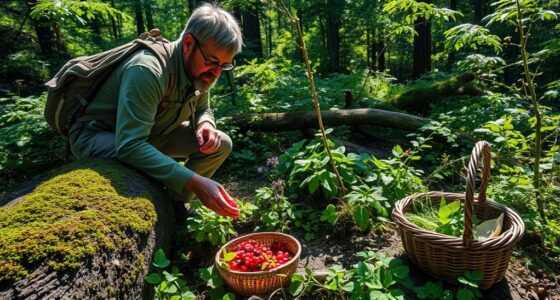

To track and interpret signs in plant-rich microhabitats, look for footprints, chewed plants, broken stems, bedding sites, and feathers nearby. These clues reveal which animals frequent the area and their activities, like browsing or resting. Pay attention to the pattern and concentration of signs to understand habitat use and health. Keep observing these details, and you’ll uncover more about the ecosystem’s complexity and the stories it tells.
Key Takeaways
- Study footprints, chewed plants, bedding sites, and feathers to identify animal presence and activity in microhabitats.
- Observe the spatial distribution and patterns of signs to infer species interactions and habitat use.
- Use scent cues alongside physical signs to improve accuracy in locating and understanding microhabitat features.
- Recognize signs like broken stems or feeding marks to assess plant herbivory and microhabitat health.
- Combine sign interpretation with environmental context to deepen understanding of ecosystem complexity and diversity.
Plant-rich microhabitats are vibrant hotspots for biodiversity, but identifying and understanding them can be challenging without the right tools. If you’re eager to connect with these thriving ecosystems and discover their secrets, learning how to track and read game signs becomes essential. These signs serve as the language of the land, revealing stories about wildlife indicators that signal the health and complexity of habitat diversity. When you pay close attention to footprints, feeding marks, or bedding sites, you gain insights into which species are thriving and how they interact within their environment. This knowledge empowers you to appreciate the richness of plant-rich microhabitats and to see beyond the surface, recognizing the intricate web of life that sustains them.
By honing your skills in tracking game signs, you begin to read the subtle clues left behind by animals that depend on these lush microhabitats. For example, fresh tracks in moist soil can indicate recent activity, while chewed plants or broken stems reveal herbivore presence. These signs act as wildlife indicators, helping you gauge the abundance and diversity of species that utilize the habitat. The more you practice, the more you understand that habitat diversity isn’t just about the number of plant species but also about the variety of animals that find refuge within it. Tracking game signs becomes a liberating activity, empowering you to engage directly with nature’s language, rather than simply observing from a distance.
Understanding how different species leave their mark allows you to piece together the ecological puzzle of plant-rich microhabitats. You might notice a concentration of deer tracks, indicating a thriving browse zone, or find bird feathers near berry-producing shrubs, pointing to feeding activity. Each sign you interpret deepens your appreciation for the ecosystem’s complexity and its resilience. As you become more attuned to these wildlife indicators, you’ll start recognizing patterns that reveal how habitat diversity sustains a wide array of life forms. This knowledge isn’t just for tracking; it’s a step toward taking ownership of your relationship with nature, fostering a sense of liberation through deeper understanding and connection.
Additionally, recognizing aroma cues like the scent of floral or musky fragrances can further enhance your ability to identify microhabitats and their associated wildlife. Ultimately, reading game signs isn’t merely a skill—it’s a pathway to experiencing the wild on your terms. It transforms a simple walk into a dialogue with the land, where every footprint, scratch, or nibble tells a story about the thriving microhabitats that fuel biodiversity. By sharpening your ability to identify and interpret these signs, you gain a new level of freedom—one rooted in awareness, respect, and a profound appreciation for the vibrant, diverse worlds that exist just beneath the surface.
Frequently Asked Questions
What Are Common Signs Indicating Rare Plant Microhabitats?
You’ll recognize rare plant microhabitats by flora indicators like unusual or specialized species that thrive in unique conditions. Habitat clues include patches of undisturbed soil, moist or shaded areas, and vibrant, diverse plant growth. These signs signal a thriving, fragile ecosystem worth exploring. Keep your eyes open for distinctive plants and subtle environmental cues—they reveal the secret microhabitats where rare plants flourish and nature’s hidden treasures await.
How Can I Differentiate Between Natural and Human-Made Game Signs?
Like a detective uncovering hidden truths, you can tell natural from human-made game signs by observing detail and placement. Natural signs, tied to wildlife tracking, often show random, undisturbed patterns, while human-made ones are more deliberate, reflecting habitat disturbance. You embrace the wild’s chaos, knowing that genuine signs reveal the land’s true story, not someone’s mark. Trust your instincts, and let the landscape’s whispers guide you to liberation.
What Tools Are Most Effective for Tracking Plant-Rich Microhabitats?
You’ll find that using a good plant identification guide and digital mapping tools is most effective for tracking plant-rich microhabitats. These tools help you accurately identify species and create detailed habitat maps, giving you the freedom to explore and understand nature’s complexity. With precise data at your fingertips, you can confidently observe and conserve these essential ecosystems, empowering you to connect deeply with the wild landscape around you.
How Does Seasonal Change Affect Game Sign Visibility?
Seasonal migration and weather impacts profoundly influence game sign visibility. As seasons change, signs may become harder to spot due to dense foliage or snow cover, making tracking more challenging. You’ll notice that in spring and summer, lush growth hides signs, while winter’s bare branches reveal more. Adapting your approach with awareness of these seasonal shifts allows you to observe nature’s dance more freely, embracing the wild’s ever-changing rhythm.
Are There Ethical Considerations When Tracking Plant-Rich Microhabitats?
You should always consider that disturbing plant-rich microhabitats can harm delicate ecosystems—did you know that even minimal interference can reduce biodiversity? Ethical tracking respects conservation ethics by minimizing impact, ensuring ecological health, and supporting nature’s balance. Embrace your role as a protector, not a disruptor. By doing so, you help preserve these essential habitats for future generations, allowing you to experience true liberation through responsible exploration.
Conclusion
By paying close attention to game signs, you gently uncover the quiet stories woven into plant-rich microhabitats. Each mark and subtle hint whispers secrets of tiny worlds thriving beneath your gaze, inviting you to become a respectful visitor. With patience and care, you help preserve these delicate domains, ensuring their beauty remains for others to discover. Embrace this mindful approach, and you’ll find yourself softly stepping into a vibrant, hidden tapestry that enriches both nature and your soul.