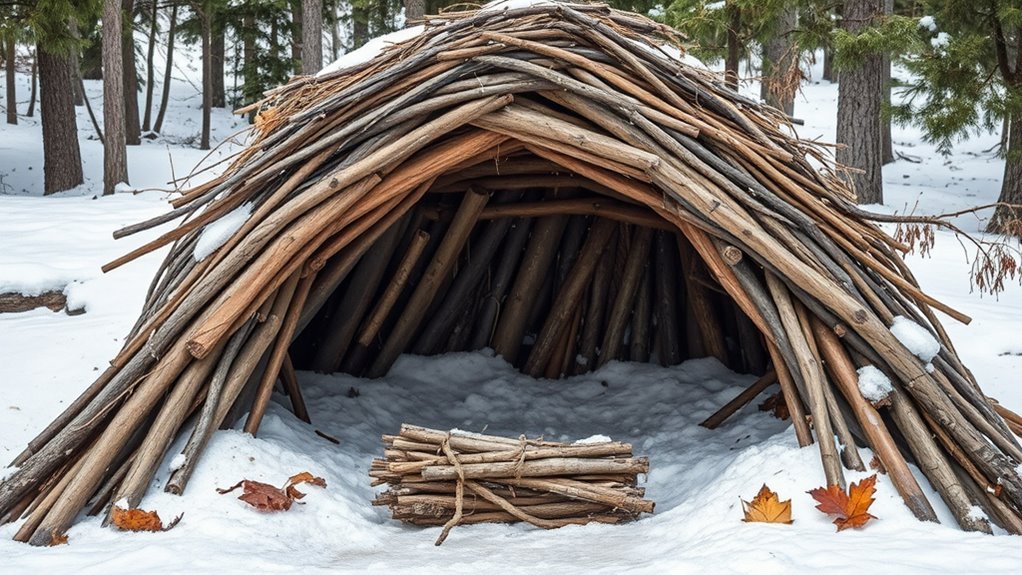

To build a winter shelter from natural materials, start with an A-frame design to shed snow and ice quickly, ensuring stability. Use debris wedges at the entrance to divert cold wind and funnel warm air inside. Incorporate fire-resistant insulation like wool, moss, or layered leaves inside the walls to trap heat efficiently. Strategically orient the shelter away from prevailing winds for added protection. If you keep exploring, you’ll discover more tips to enhance your survival shelter.
Key Takeaways
- Construct an A-frame shelter with steep angles to shed snow and prevent accumulation, enhancing stability.
- Use debris wedges at the entrance to deflect gusts and act as natural windbreaks.
- Incorporate fire-resistant insulation like wool, moss, or layered leaves within thick walls or layered barriers.
- Orient the shelter away from prevailing winds to maximize warmth and reduce cold air infiltration.
- Reinforce the shelter with natural debris or snow to improve insulation and wind protection effectively.
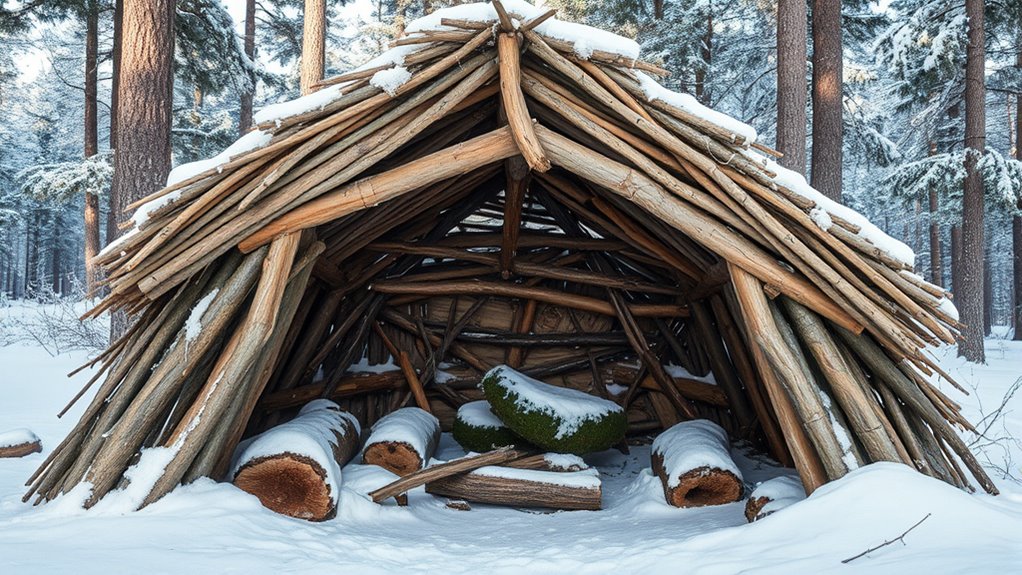
When winter approaches, building a shelter from natural materials can provide effective protection against the cold. You hold the power to craft a refuge that not only shields you from the elements but also grants you independence from reliance on manufactured structures. To maximize your shelter’s resilience, focus on integrating fire resistant insulation and windbreak design into your plans. These features aren’t just luxuries; they’re essentials for surviving harsh winter conditions while maintaining your freedom to move and adapt.
Fire resistant insulation is your best defense against the biting cold. Unlike synthetic materials, natural options like wool, moss, or layered leaves can be treated or selected for their fire-resistant properties. You can create thick walls or layered barriers that trap warm air inside, making your shelter more livable. By incorporating fire resistant insulation, you reduce the risk of accidental fires spreading and ensure that your shelter remains a safe haven, even in unpredictable winter weather. It’s about empowering yourself to stay warm and secure without relying on external systems. Additionally, understanding the properties of different natural insulations can help you choose the most effective materials for your environment.
Natural fire-resistant insulation like wool, moss, or layered leaves keeps your shelter warm and safe.
The wind can be relentless, stripping away your body heat and making even the sturdiest shelter feel vulnerable. That’s where windbreak design becomes vital. Constructing your shelter with a strategic orientation—placing the entrance away from prevailing winds—can greatly improve its effectiveness. Use natural materials like branches, shrubs, or fallen debris to create barriers that deflect gusts. A debris wedge, for instance, can serve as an effective windbreak at the entrance, funneling cold air away and maintaining warmth inside. This simple yet powerful design choice grants you control over your environment, allowing you to adapt your shelter to the conditions rather than surrender to them.
The A-frame structure offers another advantage in winter survival. Its steep angles shed snow and ice quickly, preventing accumulation that could compromise stability. Its shape also lends itself well to incorporating fire resistant insulation and windbreak features. By leaning natural debris, branches, or even snow against the A-frame, you reinforce insulation and wind protection simultaneously. This approach gives you the flexibility to build a resilient shelter that’s both lightweight and effective, freeing you from dependence on commercial solutions. Mastering the principles of airless paint sprayers can also inspire innovative approaches to sealing and insulating your shelter efficiently.
Ultimately, your ability to design a winter shelter from natural materials—focused on fire resistant insulation and windbreak design—embodies your desire for liberation. It’s about reclaiming control over your environment, relying on resourcefulness and knowledge rather than external support. With these strategies, you can face winter’s challenges head-on, confident in your ability to create a safe, warm refuge that respects your independence and resilience.
Frequently Asked Questions
How Do Debris Wedges Perform in Heavy Snowfall Conditions?
Debris wedges handle heavy snowfall well by shedding snow quickly, preventing excessive snow accumulation that could threaten shelter stability. You’ll find that their angled design allows snow to slide off easily, maintaining a sturdy structure even during storms. This means you stay protected and free from worries about collapse. With debris wedges, you gain a resilient shelter that adapts effortlessly to winter’s challenges, offering you liberation from the constraints of temporary or unstable shelters.
What Safety Precautions Are Recommended When Constructing an A-Frame Shelter?
When building your A-frame shelter, prioritize fire safety by keeping a safe distance from flames and ensuring proper ventilation. Focus on structural stability by securely anchoring the frame and using sturdy natural materials. Always check for potential hazards, avoid overloading the structure, and reinforce joints. These precautions give you the freedom to enjoy your shelter safely, empowering you to create a reliable refuge amid winter’s challenge.
Can These Natural Shelters Be Used for Long-Term Winter Storage?
Sure, these natural shelters scream “long-term winter storage,” if you enjoy embracing Mother Nature’s whimsy. While debris wedges and A-frames offer charming insulation, their shelter durability depends on material sourcing. Think of it as a wild adventure—your storage might outlast a squirrel or turn into a snow sculpture. Just accept the risk, pack your freedom, and remember: Mother Nature’s got her own plans, so be prepared.
How Do You Ensure Proper Insulation With Natural Materials?
To guarantee proper insulation with natural materials, you should focus on insulation techniques like layering and creating air pockets, which trap heat effectively. Select natural materials with high insulation value, such as straw, wool, or cedar bark. By combining these techniques with careful natural material selection, you can maximize warmth and comfort, giving you the freedom to enjoy winter without reliance on synthetic options. Embrace nature’s warmth and craft a shelter that truly protects you.
Are There Environmental Impacts From Building These Shelters?
Building shelters from natural materials can have minimal environmental impact if you choose sustainably sourced debris and avoid damaging ecosystems. You’re supporting ecological sustainability by using local, renewable resources, but be mindful to leave the environment undisturbed. Your goal should be to minimize ecological impact, ensuring your shelter aids in preservation rather than harm. Embrace this eco-conscious approach, empowering yourself to create shelters that honor and protect the natural world.
Conclusion
So, next time you’re caught in a winter storm, forget fancy gear—just grab some debris and craft your own shelter. Who needs modern conveniences when you can impress neighbors with a clever debris wedge or A-frame? After all, nothing screams “survival expert” like building a cozy hideout from Mother Nature’s leftovers. Stay resourceful, stay warm, and remember: the best shelter might just be the one you slap together with a little ingenuity—and a lot of debris.