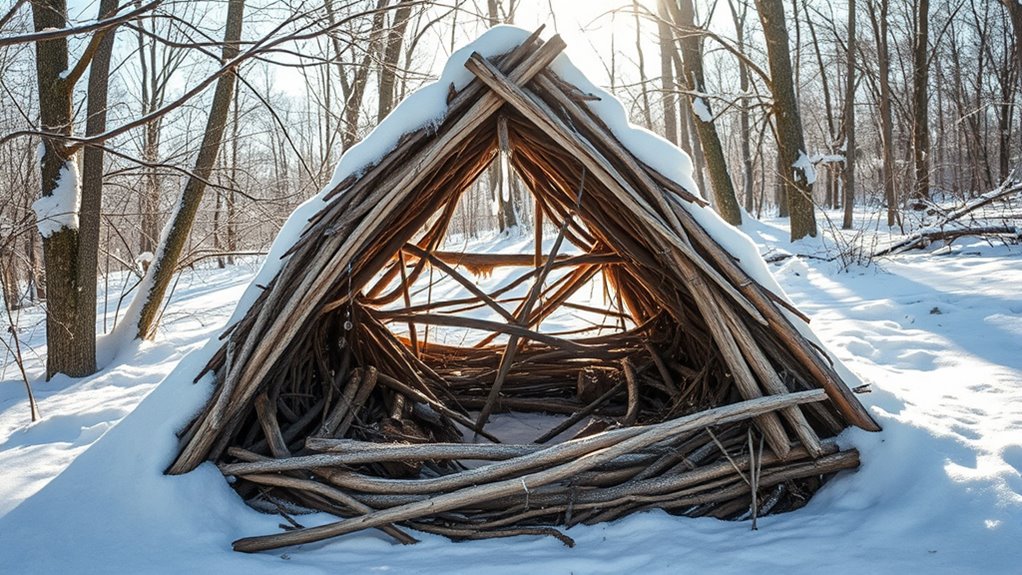

To build a winter shelter from natural materials like debris wedges and A-frames, focus on using sturdy, insulating debris to create a windproof barrier or a triangular structure that sheds snow and rain. Position your shelter behind natural windbreaks like rocks or dense foliage for extra protection. Use layered, fire-resistant insulation such as mud, snow, leaves, or moss to retain heat effectively. If you keep exploring, you’ll discover more essential tips to stay warm and secure in winter.
Key Takeaways
- Construct a debris wedge shelter using natural debris to trap heat, block wind, and provide insulation against winter elements.
- Build an A-frame shelter with steep, angled walls that shed snow and rain effectively while retaining warmth.
- Use fire-resistant insulation techniques like layered mud, snow, leaves, and moss to enhance warmth and durability.
- Place shelters behind natural windbreaks such as rocks or dense foliage for added protection and stability.
- Focus on purpose-driven design with natural, insulating, and windproof materials for maximum resilience in winter conditions.

As winter approaches, creating a shelter from natural materials can provide effective protection against the cold. You’re seeking liberation from the harsh elements, and a well-constructed shelter is your key to freedom. By focusing on fire resistant insulation and a windproof design, you can craft a refuge that keeps you warm, safe, and resilient in the face of winter’s fury. Natural debris, branches, and leaves are your allies, offering both insulation and structure, but it’s vital to build with purpose and precision.
Start with the debris wedge—an efficient shelter that uses a pile of natural debris to form a sturdy barrier. This design leverages the insulating properties of organic materials, trapping heat and blocking out wind. To maximize fire resistant insulation, incorporate layered materials that resist ignition, such as wet mud mixed with plant fibers, or use thick layers of snow where available. This not only enhances warmth but also adds a layer of protection against sparks or embers if you need to build a small fire nearby. The debris wedge’s windproof design ensures that even the strongest gusts won’t penetrate your shelter, leaving you shielded from the cold wind that drains your body heat.
Alternatively, the A-frame shelter offers a versatile, easy-to-build structure that emphasizes windproof capabilities. Its steep, triangular shape naturally sheds snow and rain, preventing accumulation from compromising your refuge. To boost fire resistant insulation, line the interior with thick layers of insulating materials—pine bines, leaves, or moss—that help retain your body heat. The A-frame’s angled walls create a tight, wind-resistant seal, reducing drafts and conserving warmth. When constructing your shelter, focus on overlapping layers and sealing any gaps with mud or natural clay, ensuring a seamless barrier against the elements. This approach grants you the freedom to stay warm and dry, even in the most unforgiving winter conditions.
Both designs champion self-sufficiency, empowering you to harness the natural environment for protection. They emphasize the importance of strategic placement—finding a sheltered spot behind natural windbreaks like rocks or dense foliage enhances your shelter’s effectiveness. Remember, your goal is liberation from the cold’s grip, and by emphasizing fire resistant insulation and a windproof design, you guarantee your shelter isn’t just a temporary refuge but a resilient sanctuary. Every element—from the materials you choose to the way you assemble them—serves your desire to live freely on your own terms, unshackled by winter’s constraints. Proper insulation techniques are vital to maintaining warmth in harsh conditions.
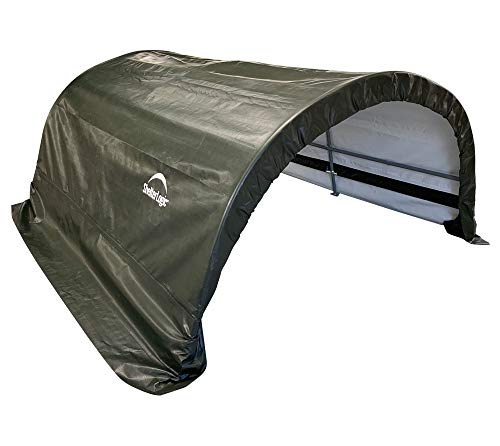
ShelterLogic 8' x 10' x 5' Small Round Livestock and Agricultural Storage and Shade Shelter Kit
READY TO BUILD: Livestock portable shelter kit comes with everything you need to assemble your livestock animal safety…
As an affiliate, we earn on qualifying purchases.
As an affiliate, we earn on qualifying purchases.
Frequently Asked Questions
How Do I Find the Best Natural Materials Locally?
To find the best natural materials locally, start with foraging tips like exploring wooded areas, riverbanks, and open fields. Use local plant identification guides to spot suitable resources such as grasses, bark, and fallen branches. Trust your senses and look for materials that are sturdy, dry, and abundant. By paying attention to your environment and learning what’s safe to use, you can gather materials that empower your shelter-building journey.
What Safety Precautions Should I Take When Building?
Ever wonder if your shelter is truly safe? Always inspect your structure regularly for damage or weak spots, especially before storms. Use sturdy, natural materials and secure everything properly to prevent collapse. Keep a toolkit nearby for emergency repairs, and have a plan for shelter maintenance. Be conscious of your surroundings to avoid hazards like falling debris or unstable branches. Your safety depends on diligent construction and ongoing vigilance.
Can These Shelters Withstand Heavy Snow or Wind?
Yes, these shelters can withstand heavy snow and wind if you design them well. Focus on increasing snow load capacity by angling surfaces, and boost wind resistance with sturdy, natural framing. Use flexible materials that bend without breaking, and guarantee proper anchoring. With thoughtful construction, you create a resilient refuge that defies nature’s forces, granting you the freedom to enjoy winter’s beauty without fear.
How Long Does a Debris Wedge or A-Frame Shelter Last?
You’ll find that a debris wedge or A-frame shelter can last several seasons if built with sturdy natural materials. Their durability depends on material longevity and how well you maintain them, but they’re as resilient as an old friend. Keep in mind, weather and use wear down these shelters over time, so with proper care, you can enjoy their sheltering power longer—time truly flies when you’re free to roam.
Are There Specific Techniques for Insulating These Shelters?
You can insulate debris wedge and A-frame shelters effectively through material layering. Use thick natural materials like leaves, moss, and grasses to trap warm air inside. Layer these insulation methods around the shelter’s walls and roof, creating multiple barriers against cold. For added warmth, incorporate insulating natural materials such as bark or pine needles. This approach offers liberation from winter’s chill, making your shelter warmer and more comfortable with simple, natural techniques.

Life Emergency Tent Survival Shelter – 2 Person Mylar Emergency Shelter Tube Tent, All-Weather Survival Kit for Outdoor Camping & Bug Out Bag Gear with Whistle & Paracord
【Ultimate Survival Shelter】 IMODOMIO Survival Tent is a compact emergency shelter made from durable PET Mylar, reflecting 90%…
As an affiliate, we earn on qualifying purchases.
As an affiliate, we earn on qualifying purchases.
Conclusion
As you step back and admire your debris wedge or A-frame shelter, you’ve woven a tiny fortress from nature’s own tapestry. It’s more than just protection; it’s a symbol of resilience and harmony with the wild. With each twig and leaf, you’ve crafted a sanctuary that whispers stories of survival. In these simple, natural shelters, you find strength and hope, like a seed breaking through winter’s icy grip—proof that even in scarcity, life endures.

2 Pack 11×14 Inch Welding Blanket Fireproof Welding Pad, 5mm Thickened Fire Resistant Carbon Felt, Flame Retardant Fabric, Heat Shield Resistant Mat for Soldering, Firepit, Grill, Welding Supplies
Extreme Heat Resistance (3000°F+) – Carbon Fiber Welding Blanket Made of high-density carbon felt welding blanket, our fireproof…
As an affiliate, we earn on qualifying purchases.
As an affiliate, we earn on qualifying purchases.

Emergency Blankets for Survival Gear and Equipment x6, Space Blanket, Mylar Blankets, Thermal Blanket, Survival Blanket, Survival Kits Emergency Kit, Emergency Supplies, Foil Blanket Camping Shelter
SILVER EMERGENCY BLANKET FOR CAR: Camping emergency blankets bulk 6 pack large, aluminized emergency mylar thermal blankets. Emergency…
As an affiliate, we earn on qualifying purchases.
As an affiliate, we earn on qualifying purchases.