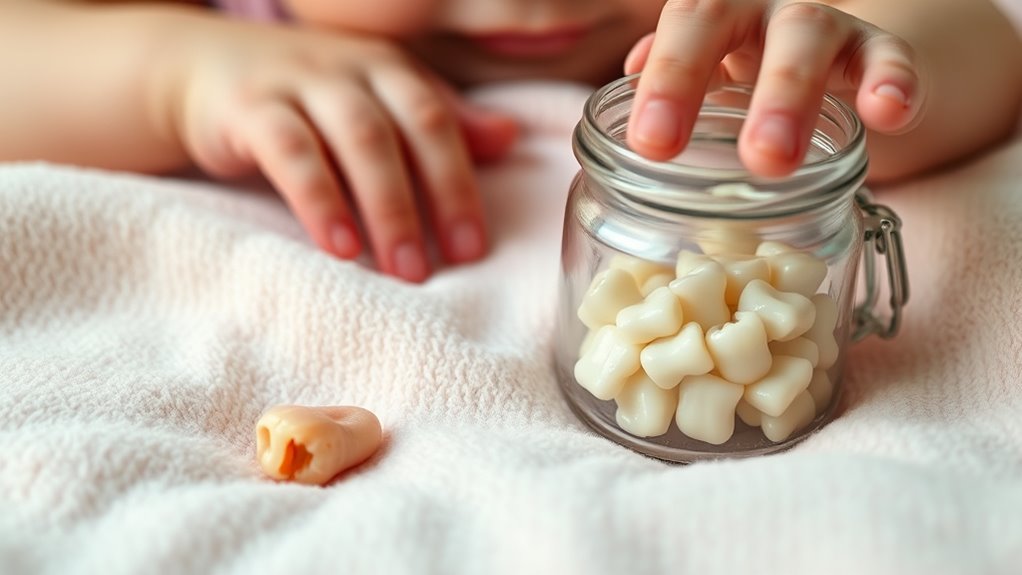

As a parent, you can expect your child’s first baby teeth to loosen and fall out around age six, signaling a key milestone in their development. This process, called exfoliation, happens as the roots dissolve to make room for permanent teeth. Wobbly teeth indicate your child’s jaw is growing, and the progression prepares them for adult dentition. If you want to understand the full journey behind these changes, you’ll find valuable insights ahead.
Key Takeaways
- Primary teeth typically start erupting around six months and fall out between ages 6-12.
- Tooth loss signals the transition from primary to permanent dentition, driven by natural developmental processes.
- Roots of baby teeth dissolve (resorption), causing teeth to wobble and eventually fall out.
- The timing of milestones varies but follows a consistent developmental sequence influenced by genetics.
- Proper oral health supports smooth tooth loss, guiding the emergence of stronger, permanent adult teeth.
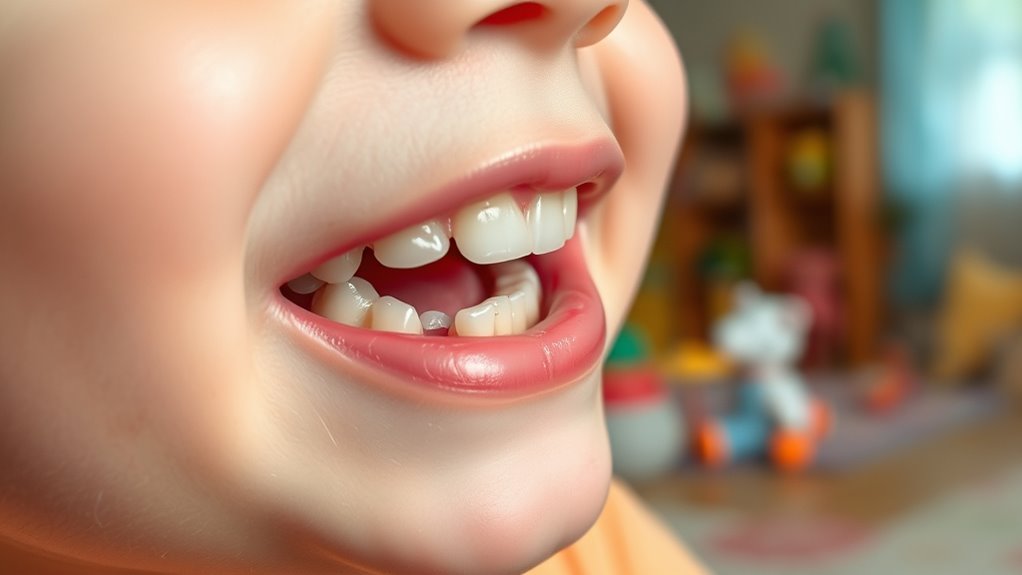
Losing teeth is a natural part of life, but understanding the science behind it reveals more than just aging. It’s a sign of your body’s remarkable ability to grow, adapt, and eventually make way for permanent change. When you look at oral development, you see a carefully timed process that guides your body through various dental milestones. These milestones aren’t just about losing baby teeth—they’re about the intricate development that prepares your mouth for functional, healthy teeth that will serve you well into adulthood.
In early childhood, your oral development begins with the eruption of primary teeth, often called baby teeth. Around age six months, these teeth start pushing through your gums, marking the start of a pivotal phase. These temporary teeth aren’t just for chewing and speaking; they set the stage for future dental milestones. As your child grows, these teeth help shape the jaw and guide the alignment of incoming permanent teeth. The loss of baby teeth isn’t a random event; it’s a carefully orchestrated process that makes room for the adult set to emerge.
By the age of six, your body signals a significant shift in oral development. That’s when the first of the permanent teeth, usually the molars and incisors, begin to appear. This phase is a major milestone—a sign that your body is progressing from childhood to adolescence. As new teeth come in, your jawbone adapts, and the roots of baby teeth start to dissolve. This process, known as exfoliation, signals that your body is preparing for adult dentition. When a baby tooth wobbles and finally falls out, it’s more than just a sign of aging; it’s the final act of a well-timed developmental sequence.
Throughout this period, your body is actively shaping your oral cavity to accommodate larger, stronger teeth. This isn’t accidental—it’s a finely tuned process driven by genetic and environmental factors. The timing of these dental milestones can vary, but the overall pattern remains consistent across individuals. Understanding this process empowers you to appreciate the natural progression of oral development, and it helps you recognize when things are on schedule or need attention. Additionally, modern dental technology, such as digital imaging, plays a crucial role in monitoring this development. Losing teeth isn’t a sign of decline; it’s a liberation from the old, making space for growth, strength, and a resilient smile that lasts a lifetime. Embracing these milestones means embracing your body’s incredible capacity to evolve and thrive through every phase of life.
Frequently Asked Questions
When Should I Start Brushing My Child’s Emerging Permanent Teeth?
You should start brushing your child’s emerging permanent teeth as soon as they appear. This helps establish good dental hygiene early on and prevents cavities. Use a small, soft-bristled brush and fluoride toothpaste suitable for kids. Encouraging daily tooth brushing now empowers your child to take charge of their dental health, making it a positive, liberating routine that guarantees strong, healthy teeth for life.
How Can I Tell if a Child’s Loose Tooth Needs Professional Attention?
If your child’s loose tooth causes tooth pain or bleeding gums that don’t stop, it’s time to seek professional help. Think of the tooth as a rebellious traveler; if it’s causing discomfort or bleeding persists, it needs a guide—your dentist. Don’t let pain or bleeding linger like storm clouds—act swiftly to make certain a smooth, healthy journey to a new smile.
Are There Ways to Prevent Early or Delayed Tooth Loss?
You can prevent early or delayed tooth loss by maintaining good oral hygiene and visiting the dentist regularly. Fluoride treatments strengthen your child’s teeth, reducing decay risk, while sealant applications protect their molars from cavities. Encourage a balanced diet and consistent brushing and flossing routines. Staying proactive with dental care helps guarantee healthy teeth and timely loss of baby teeth, setting the stage for a confident, liberated smile.
What Are Common Signs of Dental Issues During Tooth Shedding?
If you notice gum inflammation or tooth pain during your child’s tooth shedding, it’s a sign something might be amiss. These symptoms could indicate infection or other dental issues that need attention. Don’t ignore them—promptly consult a dentist to ensure healthy development. Addressing problems early can prevent future complications, giving your child the freedom to grow confident and pain-free without unnecessary dental worries.
How Does Diet Affect the Timing of Losing Baby Teeth?
You might notice your child’s teeth fall out earlier if they experience frequent tooth decay or poor calcium intake. Sometimes, it’s a coincidence—dietary neglect coinciding with the natural shedding process. When children consume enough calcium-rich foods, their teeth stay healthy longer, possibly delaying loss. Conversely, sugary snacks and inadequate nutrition can accelerate decay, prompting earlier tooth loss. Ensuring balanced nutrition helps your child take charge of their dental health and milestones.
Conclusion
As your child’s first loose tooth reminds you, this phase is just a chapter in their growth story. Think of it as planting a seed; with patience and care, new teeth will grow stronger and brighter. Remember, about 20 primary teeth make way for adult teeth, shaping their confident smile. Embrace this milestone, knowing each wobble brings them closer to the next exciting stage of childhood. Your support turns this natural process into a memorable journey.