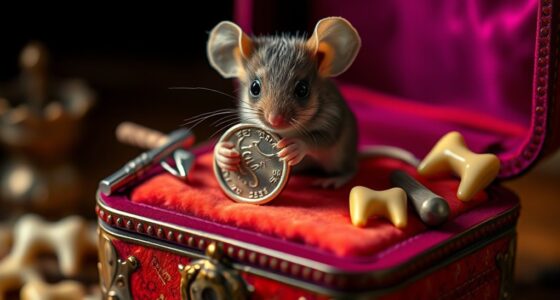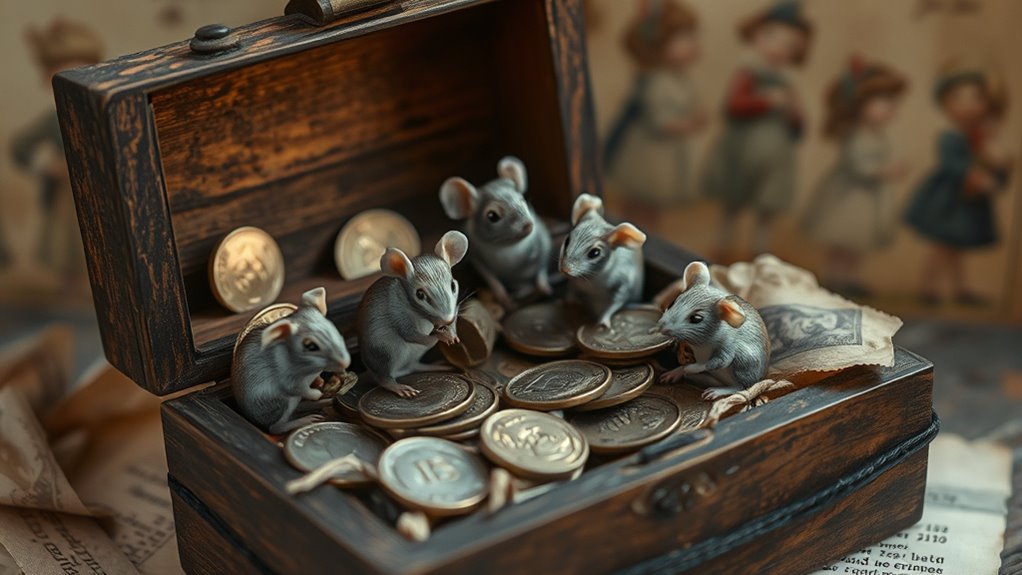

The tradition of the Tooth Fairy traces back to European folklore, where a “Tooth Mouse” or “Tooth Rat” was believed to collect children’s lost teeth, symbolizing luck and protection. These customs evolved over centuries into modern myths, transforming a childhood fear into a celebration of growth and resilience. Understanding these origins reveals how cultural stories shape rituals that help children navigate change—keep exploring to discover how this tradition continues to evolve today.
Key Takeaways
- The Tooth Fairy evolved from European legends of the “Tooth Mouse” or “Tooth Rat” collecting children’s teeth.
- These customs originated from ancient practices of burying or throwing teeth to ensure good luck and strong adult teeth.
- Folklore served to help children cope with change and mark milestones, transforming fear into celebration.
- The modern Tooth Fairy myth developed as a reimagining of these traditions, emphasizing independence and resilience.
- Cultural variations and historical legends shaped the Tooth Fairy’s evolution into a universal symbol of growth and transformation.

The origins of the Tooth Fairy blend myth, tradition, and history, shaping a beloved childhood ritual across many cultures. You might think it’s just a whimsical figure who leaves you coins in exchange for a lost tooth, but this story runs much deeper. Throughout history, different societies have created their own legends and customs surrounding the loss of teeth, revealing a desire to control fears and mark a rite of passage. These cultural variations reflect a universal human urge to transform a vulnerable moment into something empowering, allowing you to reclaim control over change and loss.
In many ancient cultures, legends centered on protecting children from evil spirits or ensuring good luck through the disposal of teeth. For instance, some European traditions tell of a “Tooth Mouse” or “Tooth Rat,” a creature that collects teeth and leaves gifts or money. These figures often symbolized luck, renewal, or even protection, turning a moment of vulnerability into a hopeful event. In the Spanish tradition, the “Ratoncito de los dientes” is celebrated similarly to the European “Tooth Mouse,” illustrating how stories adapt and evolve across regions. These cultural variations aren’t just stories—they’re acts of rebellion against fear, transforming a nerve-wracking experience into a joyful milestone.
Historically, legends about teeth date back centuries, and they often served practical purposes. In some cultures, throwing a tooth onto the roof or burying it in the earth was believed to bring good luck or ensure the growth of strong adult teeth. These rituals gave children a sense of mastery over their bodies, a way to navigate the anxiety of losing a tooth with a sense of control and optimism. Over time, these customs evolved, influenced by societal changes and intercultural exchange, giving rise to modern myths like the Tooth Fairy. This evolution wasn’t random; it was rooted in the human desire to make sense of change, to find meaning in the inevitable, and to turn a potentially frightening moment into a celebration of growth.
Additionally, understanding the cultural significance behind these customs enriches the story, showing how societies have historically used folklore to foster resilience and empowerment during life’s transitions. Today, the Tooth Fairy stands as a symbol of childhood independence and transformation. But understanding its roots reveals a powerful story of cultural variation and historical legends that have been reimagined to serve your need for liberation. It’s about reclaiming a moment that once might have felt helpless and turning it into an act of empowerment. So, when you leave your tooth under the pillow tonight, remember: you’re participating in a long tradition of transforming vulnerability into strength, a universal story that continues to evolve and inspire.
Frequently Asked Questions
When Did the Tooth Fairy First Appear in Popular Culture?
You’ll find the tooth fairy first appeared in popular culture around the early 1900s. Its myth origins tie to European traditions, but it gained widespread recognition in America during the 20th century. The cultural impact grew as children embraced the myth as a fun, magical way to handle losing teeth. This playful myth continues to inspire liberation from childhood fears, making losing teeth feel like a joyful, enchanting milestone rather than a scary event.
Are There Cultural Variations of the Tooth Fairy Worldwide?
You’ll find that cultural customs and folklore variations shape how different societies celebrate losing teeth. In some countries, like Spain and Latin America, the “Ratoncito” or “El Raton de los Dientes” is celebrated as a tooth mouse, while in others, children leave teeth in special places for specific figures. These diverse traditions reflect a universal rite of passage, giving you an exciting glimpse into how cultures honor childhood milestones uniquely around the world.
How Did the Tooth Fairy Influence Modern Dental Hygiene Practices?
The tooth fairy motivates you to maintain good dental routines by making losing teeth exciting. Her presence encourages childhood habits like regular brushing and flossing, turning oral care into a fun tradition. By associating a reward with healthy habits, you’re empowered to take control of your dental health. This playful influence helps you develop lifelong routines, freeing you from dental fears and fostering confidence in your ability to care for your smile.
What Materials Were Historically Used to Make the “Tooth” Offerings?
Imagine holding a tiny piece of history—your tooth was once offered using natural materials like cloth, gold, or even carved wood, acting as dental material and historical artifacts. You’re meant to feel liberated knowing that centuries ago, children’s offerings symbolized trust and hope, not just tradition. These materials weren’t just simple; they carried personal meaning, connecting you to a rich past where every tooth told a story of resilience and cultural expression.
Has the Legend of the Tooth Fairy Evolved Over Centuries?
Yes, the myth evolution of the tooth fairy has transformed substantially over centuries. You see, folklore transformation reflects changing cultural values and imaginations, turning a simple tradition into a magical figure who leaves gifts. This evolution liberates your imagination, allowing you to see the tooth fairy as a symbol of childhood innocence and wonder. Embrace this shifting legend, knowing it’s a living story that adapts to your dreams and beliefs.
Conclusion
So, next time you secretly toss your tooth under the pillow, remember—you’re part of a centuries-old myth that started as a tiny mouse and now earns you a visit from a fairy. All that effort, all those dreams of a shiny coin, just for a bit of fairy dust? Ironically, it’s the simple act of losing a tooth that keeps this charming legend alive, proving sometimes, the smallest things truly have the biggest stories.