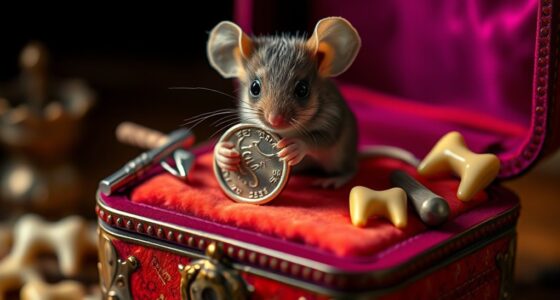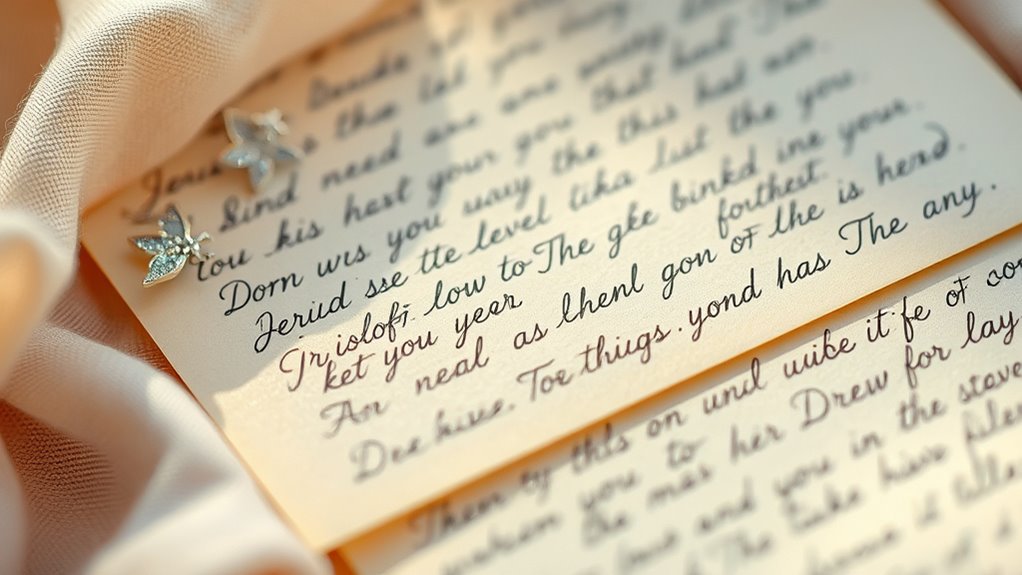

Tooth fairy letters are filled with cultural scripts and symbols that make the magic feel real. You might include tiny footprints, glitter, or personalized signatures to show the fairy’s presence. These symbols reinforce belief and wonder, transforming an ordinary event into a cherished tradition. Personal touches and cultural variations enhance the experience, deepening your child’s connection to this enchanting custom. To discover more about the symbols and their meanings, keep exploring how these traditions bring magic into everyday life.
Key Takeaways
- Cultural scripts often include personalized messages, signatures, and symbols like fairy footprints to enhance authenticity.
- Symbols such as glitter, tiny footprints, or fairy dust represent the fairy’s presence and magic.
- Customizing notes with family-specific symbols or traditions reinforces cultural and personal significance.
- Incorporating storytelling elements and traditional motifs helps maintain cultural continuity and wonder.
- Visual cues like sparkling glitter or fairy signatures deepen the enchantment and make the experience memorable.
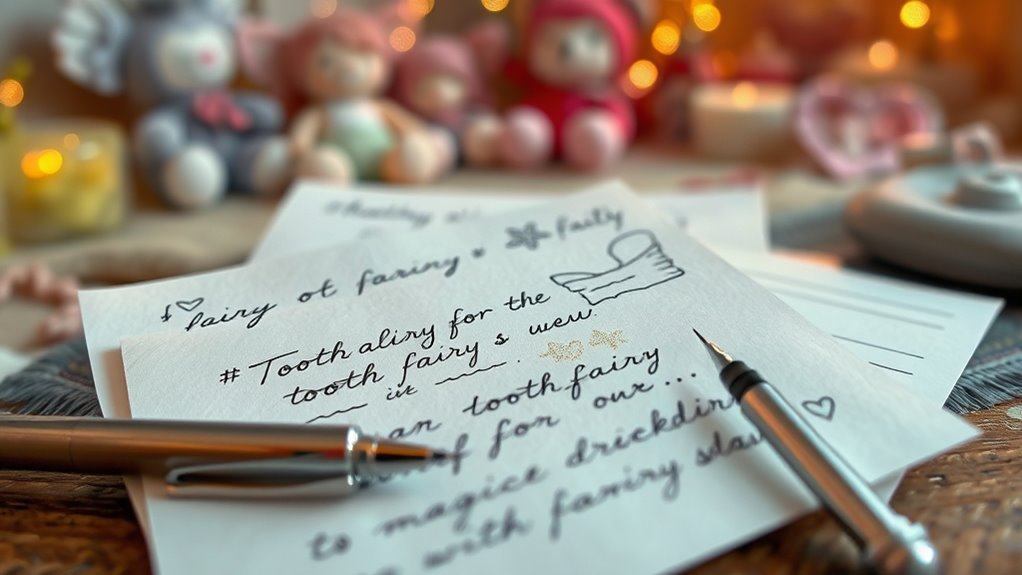
Have you ever wondered how a simple note from the Tooth Fairy can make a child’s experience of losing a tooth even more magical? It’s not just about the note itself; it’s about the cultural significance behind it and the letter writing customs that turn a common childhood milestone into a cherished memory. When you craft a Tooth Fairy letter, you participate in a timeless tradition that transcends generations, blending imagination with cultural scripts that reinforce wonder and belief. These small notes serve as symbols of encouragement and affirmation, connecting kids to a cultural fabric where fairy tales and childhood innocence intertwine.
The act of writing a Tooth Fairy letter isn’t just about leaving a message—it’s about creating a ritual that upholds cultural significance. Each note becomes a vessel for storytelling, a way to communicate magic that’s rooted in shared customs. Whether you choose to write a simple thank you or an encouraging message, you’re participating in a letter writing custom that celebrates childhood innocence and trust. This tradition often involves specific symbols—tiny fairy footprints, glitter, or a signature—elements that imbue the letter with authenticity and enchantment. These symbols aren’t random; they follow the cultural scripts that turn a mundane note into a magical token of belief.
As you write these letters, you’re also embracing a form of liberation—breaking free from the mundane and inviting your child into a world where imagination reigns. It’s a way to nurture their sense of wonder, to let them believe in something special and unseen. The customs surrounding these notes vary across cultures, but the core idea remains the same: to make the experience of losing a tooth a joyful event, filled with symbols of hope and excitement. Incorporating visual cues like glitter or footprints can enhance the authenticity and magic of the note, making it more memorable for your child. You can personalize each letter, adding your own symbols or messages that resonate with your family’s traditions, making the moment uniquely yours.
In the end, these letters are more than just notes—they’re symbols of trust, imagination, and cultural continuity. By understanding and honoring the customs that surround them, you give your child a gift far greater than money or a small token. You give them a story they can carry with them, a reminder that magic can be found in the simplest of gestures and that their belief in fairy tales is a powerful force. Through this practice, you’re not only celebrating a childhood milestone but also empowering your child’s sense of wonder and liberation—reminding them that the world is full of magic waiting to be discovered.
Frequently Asked Questions
How Do Different Cultures Personalize Tooth Fairy Letters?
You personalize tooth fairy letters by weaving in cultural storytelling and language variations that reflect your heritage. You might include local symbols, traditional phrases, or folklore to make the message meaningful and empowering. This approach celebrates your identity, liberating the experience from generic scripts. By customizing these letters, you honor your cultural roots and create a unique, enriching connection that transforms a simple exchange into a powerful expression of your background.
What Materials Are Best for Creating Authentic-Looking Letters?
Imagine holding vintage stationery in your hands, its textured paper inviting your handwriting techniques to dance across it. To create authentic-looking letters, choose materials like aged paper or parchment for that timeless feel. Use handwriting styles that mimic calligraphy or cursive to add charm. You’ll feel liberated, crafting magical messages that evoke nostalgia and wonder, transforming simple paper into treasured keepsakes that truly capture the enchanting spirit of the tooth fairy tradition.
How Can Parents Encourage Children to Believe in the Tooth Fairy?
You can encourage belief in the tooth fairy through storytelling techniques that captivate your child’s imagination. Share magical tales and create a sense of wonder, involving them in the story. Your active parental involvement, like leaving small surprises or handwritten notes, boosts their belief. By fostering an environment of enchantment and trust, you empower your child’s imagination, helping them embrace the magic and feel liberated from skepticism while nurturing joyful innocence.
Are There Specific Symbols That Enhance the Magic of These Letters?
You’ll find that mythical motifs and enchanted embellishments truly amplify the magic of these letters. Incorporate shimmering fairy dust, tiny glitter accents, or celestial symbols to evoke wonder. These small details create a sense of liberation from everyday logic, inviting your child to embrace imagination. When you include symbols like stars, moons, or delicate wings, you make the experience feel more mystical, inspiring belief and sparking joyful enchantment.
How Can Tooth Fairy Letters Be Adapted for Older Children?
You can adapt tooth fairy letters for older children by celebrating teenage milestones with personalized messages that acknowledge their growth and achievements. Use more mature language, include references to their hobbies or dreams, and make the tone empowering. Incorporate symbols like stars or feathers to evoke magic, but keep the message genuine and respectful. This approach helps them feel special and respected, embracing their journey toward independence with a touch of enchantment.
Conclusion
As you hold these tooth fairy letters in your hands, you’re holding whispers of childhood magic and cultural dreams. They’re like tiny stars, shining with hope and wonder, guiding your imagination through a night sky of memories. These symbols weave a tapestry of innocence and belief, reminding you that even the smallest gestures carry the weight of tradition. Embrace their enchantment, for in their glow, your childhood spirit continues to dance.