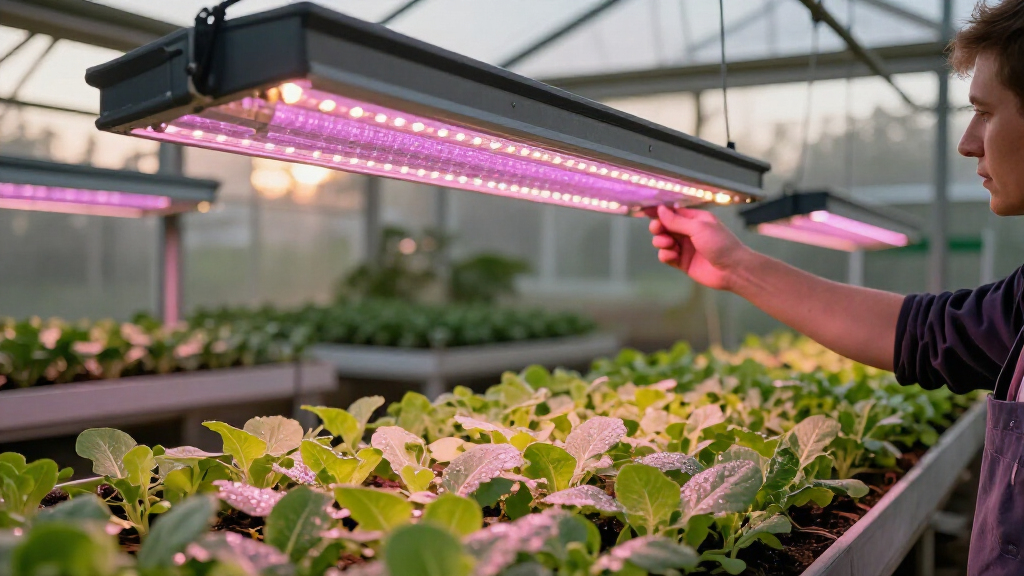
The best greenhouse grow lights add dependable light where daylight falls short, but the right setup depends on your growing area, weather exposure, and plants. My best overall pick is the Barrina TX72 4 ft LED Grow Light, which pairs four panels with a timer for broad, scheduled coverage. For flexible layouts, the VIVOSUN 12-Light Outdoor Grow Light String offers an adjustable 44-foot cord, while the Barrina T8 2-foot 6-pack suits shelves and smaller growing zones. The main tradeoffs are concentrated panel coverage versus spread-out string lights, plus higher output versus simpler installation and lower power use. Read on for the full comparison and guidance on choosing lights for your greenhouse.

Get garden gear delivered free with Prime
- Fast, free delivery on millions of items
- Prime Video, Amazon Music and more included
- Member-only deals all year
Complete the kit


Key Takeaways
- Panel-style fixtures lead for concentrated coverage: The Barrina TX72 combines four 4-foot panels with a timer, a practical package for growers who want scheduled light over a defined area.
- String lights solve layout problems rather than replacing every fixture: VIVOSUN’s 12-light string stands out for its 44-foot adjustable cord, while shorter strings fit more contained greenhouse zones.
- Four-foot strips suit benches and multi-shelf setups: Barrina and Elaruslux 6-packs offer multiple linear fixtures that can be spaced across rows instead of concentrating light in one spot.
- Water protection matters most where the fixture is exposed: Several string options specify waterproofing or IP65 protection, while buyers should check the exact fixture and connection ratings before placing any light near moisture.
- Compact choices trade coverage for placement flexibility: The Hlite 16-inch linkable lights and Barrina 1-foot T5 set fit propagation shelves and tight spaces, but they are not substitutes for broad-area greenhouse lighting.


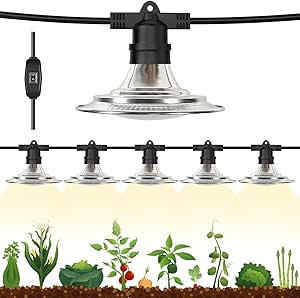


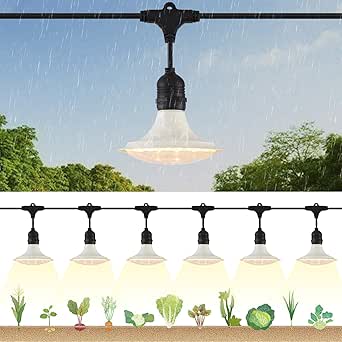
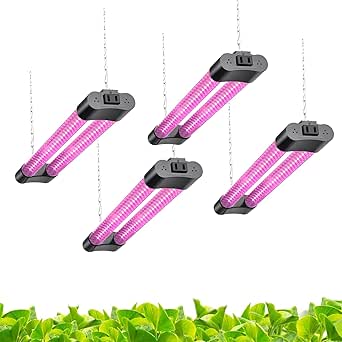

| greenhouse grow light | Spectrum | Length | Power |
|---|---|---|---|
| VIVOSUN LumaLight 100W Full-Sp | 3000K, 5000K, 660 nm red, and 730 nm far-red | — | — |
| Barrina T8 LED Grow Lights | 5000K full spectrum | 2 ft per light | 24 W per light; 144 W total |
| Elaruslux 4-Foot T8 Full-Spect | 5000K full spectrum | 4 ft per strip | 45 W per strip; 270 W total |
| Espird 6-Light Waterproof Full | 380–780 nm; cool white, blue, and red | — | — |
| Espird 6-Light Outdoor Greenho | 3000K, 5000K, and 660 nm red | — | — |
| Owleye 12 ft Outdoor LED Grow | Full spectrum, primarily red and blue with some green | 12 ft | 31 W |
| Barrina TX-L84 4 ft LED Grow L | — | 46.45 in | 168 W (2 × 84 W) |
| VIVOSUN 12-Light Outdoor LED G | 380–780 nm, including 460 nm blue and 660 nm red | — | 180 W total; 15 W per light |
| Barrina 4 ft T8 Full-Spectrum | — | 4 ft each | 42 W per light; 252 W total |
| Barrina TX72 4 ft LED Grow Lig | — | 4 ft each | — |
| VIVOSUN 6-Light Full-Spectrum | 380–780 nm | — | — |
| Barrina 4 ft Full-Spectrum LED | — | 4 ft per light | 42W per light; 252W total |
| PuxiGrow Waterproof Full-Spect | 380–780 nm | — | — |
| Hlite 16-Inch Linkable Full-Sp | Full spectrum | 16 inches per light | 20W per light |
| Barrina T5 Full-Spectrum LED G | Full spectrum | — | — |
More Details on Our Top Picks
VIVOSUN LumaLight 100W Full-Spectrum LED Grow Light
The VIVOSUN LumaLight 100W is a focused choice for a greenhouse grower who needs adjustable light over a compact indoor growing area. Its mix of 3000K and 5000K white LEDs, red, and far-red supports multiple growth stages, while four dimming levels let you reduce intensity for seedlings or smaller plants. Compared with the Barrina T8 2 ft six-pack, this is a single fixture rather than a set of strips, so it offers a tidier installation but less flexibility for spreading light across a long bench. The IP65-rated construction suits humid growing conditions, though the product is described for indoor use, not exposed outdoor installation. App scheduling also depends on a separately sold GrowHub, adding a required accessory for remote control.
Pros:- White, red, and far-red LEDs provide a spectrum intended for multiple growth stages.
- Four dimming levels allow intensity adjustments from 25% to 100%.
- IP65-rated design is suited to dusty, humid indoor growing environments.
- Rope hangers are included for ceiling or suspended installation.
Cons:- GrowHub is sold separately for app-based scheduling and remote monitoring.
- A single fixture offers less layout flexibility than Barrina’s multi-strip sets.
- Designed for indoor use rather than exposed outdoor greenhouse installation.
Best for: Indoor greenhouse growers lighting a compact 2×2 or 2×4 area who want adjustable intensity and may add GrowHub scheduling.
Not ideal for: Growers who need outdoor-exposed lighting, coverage across long benches, or app control without buying a separate GrowHub.
- Wattage:100 W
- Spectrum:3000K, 5000K, 660 nm red, and 730 nm far-red
- LED count:336
- Dimming:4 levels, 25%–100%
- Recommended grow tent fit:2×2 or 2×4
- Water and dust protection:IP65
- Connectivity:Bluetooth; GrowHub and app compatible
- Warranty:2-year unlimited warranty plus 3-year limited warranty
Our verdict“Choose the LumaLight for compact indoor greenhouse spaces where dimming and a sealed fixture matter more than distributed strip coverage.”
Barrina T8 LED Grow Lights, 2 ft, 5000K Full Spectrum, 6-Pack
For rows of trays or a short propagation bench, the Barrina T8 six-pack offers more layout options than the single-fixture VIVOSUN LumaLight. Each 2-foot strip can be positioned over a separate tray, and the lights link in series, helping keep a multi-light setup organized. The 5000K full-spectrum output is intended for seedlings, growth, and blooms; aluminum housings and V-shaped reflectors help manage heat and direct light. Compared with the longer Elaruslux 4-foot set, Barrina’s shorter strips fit compact shelving more readily, but require more careful spacing to cover a wide area. The set includes mounting hardware and three power cords, yet it still depends on a corded outlet, and the listed 265 V specification may not suit every greenhouse electrical setup.
Pros:- Six separate 2-foot strips can be arranged over individual trays or shelves.
- Linkable design supports connecting up to 10 strips in series.
- Aluminum housing and V-shaped reflectors support heat dissipation and light direction.
- Includes clips, tape, cable ties, and connecting cords for installation.
Cons:- Short strips need more spacing and placement work than 4-foot fixtures for long benches.
- Only three power cords are included for the six lights.
- Requires corded power, and the listed 265 V specification may limit compatibility.
Best for: Seed-starting growers and greenhouse owners lighting several short trays or shelves who want linkable fixtures and included mounting hardware.
Not ideal for: Growers covering a single long bench, seeking a weather-rated outdoor system, or unable to accommodate the listed 265 V supply specification.
- Pack size:6 lights
- Length:2 ft per light
- Power:24 W per light; 144 W total
- Spectrum:5000K full spectrum
- LED count:576 total
- Linking:Up to 10 strips in series
- Voltage:265 V
- Warranty:2 years
Our verdict“Pick this Barrina set for compact seedling shelves that benefit from several independently positioned strips rather than one long fixture.”
Elaruslux 4-Foot T8 Full-Spectrum LED Grow Light Strips, 6-Pack, 5000K, 270W
The Elaruslux 4-foot set makes more sense than Barrina’s 2-foot strips when a greenhouse bench needs continuous coverage along its length. Six fixtures provide a total of 270 W, and the aluminum reflectors direct light toward plants while helping disperse heat. Its built-in 6-, 9-, or 12-hour timer is a practical advantage over the Barrina T8 set, which lists switches but no timer; growers can set a daily lighting cycle at the fixture. The strips link in series, though the set supplies only three power cords for six lights, so the full layout still needs planning around outlets and connections. This is a corded indoor setup, not a weather-rated outdoor string, and its 4-foot length is less convenient for narrow shelves.
Pros:- Four-foot strips provide longer bench coverage than Barrina’s 2-foot T8 lights.
- Built-in timer offers 6-, 9-, and 12-hour cycles.
- Aluminum frames and reflectors support heat management and directed light.
- Linkable fixtures and included mounting hardware offer several installation options.
Cons:- Only three power cords are included for six strips.
- Four-foot fixtures may not fit narrow shelving or compact propagation spaces.
- Requires outlet access and is not specified as a waterproof outdoor fixture.
Best for: Greenhouse growers with long indoor benches who want full-length strips, a built-in timer, and a linked multi-fixture layout.
Not ideal for: Owners of narrow shelves, outdoor-exposed growing areas, or spaces where three supplied power cords cannot serve the intended six-light arrangement.
- Pack size:6 strips
- Length:4 ft per strip
- Power:45 W per strip; 270 W total
- Spectrum:5000K full spectrum
- LED count:224 per strip
- Timer:6-, 9-, or 12-hour cycles
- Series linking:Up to 6 strips
- Warranty:2 years
Our verdict“Choose Elaruslux over shorter Barrina strips when your priority is timed coverage along an indoor greenhouse bench.”
Espird 6-Light Waterproof Full-Spectrum LED Grow Light String
The Espird six-light string suits growers who want to hang lights across a greenhouse or garden without mounting individual strips. Its IP44-rated aluminum shades and indoor/outdoor design set it apart from the indoor-only VIVOSUN LumaLight and the Barrina strip fixtures. End-to-end connections also let the layout extend beyond one string, making it adaptable to irregular spaces. The tradeoff is less precise coverage: the recommended hanging height is 30–50 inches above plants, which can make it a poor fit for low shelving or seedlings needing close, controlled placement. Unused sockets must be protected from water, so the string should not be treated as fully sealed when any socket is open. Check power compatibility as well; the listed voltage is 240 V.
Pros:- IP44-rated aluminum shades are designed for indoor and outdoor use.
- End-to-end connections support extended layouts.
- Cool white, blue, and red light cover a broad stated 380–780 nm range.
- Reflective aluminum holders direct light toward plants.
Cons:- Unused sockets are not waterproof unless protected from water.
- Recommended installation height of 30–50 inches may not suit low-growing shelves.
- Listed 240 V power specification may limit compatibility.
Best for: Greenhouse and garden growers who need a hanging string that can serve sheltered indoor and outdoor areas.
Not ideal for: Growers using low shelves, requiring close control over light placement, or leaving sockets unused in wet conditions without protection.
- Number of lights:6
- Spectrum:380–780 nm; cool white, blue, and red
- Color temperature:5000 K
- Wattage:150 W
- PPF:27.849 µmol/s
- Water resistance:IP44
- Recommended mounting height:30–50 in above plants
- Connection:End-to-end; up to 120 lights per switch
Our verdict“Select this Espird string for a hanging greenhouse or garden layout where outdoor suitability matters more than close, shelf-level placement.”
Espird 6-Light Outdoor Greenhouse Grow Light String, 21.3 ft, Full Spectrum
Among the two Espird strings here, this 21.3-foot model is the clearer choice for growers who want a specified cable length and certification. Its six E26 sockets use bulbs with warm white, bright white, and 660 nm red LEDs, while the IP44 rating and UL certification suit a more formal outdoor greenhouse setup. The stated output of up to 15,000 lumens gives buyers a useful brightness figure, but it does not replace plant-focused measurements such as PPF; the other Espird string, for example, lists PPF. Both models connect end to end and call for a 30–50-inch hanging height. This string still needs careful socket handling: bulbs must be fully seated for water resistance, and uncovered, unused sockets need protection from water.
Pros:- UL certification and IP44 rating support outdoor greenhouse use.
- Six E26 sockets allow bulb replacement.
- Warm white, bright white, and 660 nm red LEDs target multiple growth stages.
- 21.3-foot string and end-to-end connections allow flexible placement.
Cons:- Bulbs must be fully screwed in for the sockets to be water-resistant.
- Unused sockets need protection from water.
- Lumens are specified, but PPF is not provided for comparing plant-focused output.
Best for: Greenhouse owners who want a certified, 21.3-foot outdoor string with replaceable E26 bulbs and end-to-end expansion.
Not ideal for: Growers who need a sealed string with empty sockets, a close-mount setup for low shelves, or plant-light output reported as PPF.
- Number of lights:6
- String length:21.3 ft
- Bulb base:E26
- LED chips:48 per bulb; 288 total
- Spectrum:3000K, 5000K, and 660 nm red
- Light output:Up to 15,000 lumens
- Water resistance and certification:IP44; UL certified
- Recommended mounting height:30–50 in above plants
Our verdict“Choose this model over the other Espird string when a stated cable length, UL certification, and replaceable bulbs are your priorities.”
Owleye 12 ft Outdoor LED Grow Light String, 3 Bulbs, Full Spectrum, IP65 Waterproof
I’d put the Owleye string near the top for greenhouse bays where moisture and dust make ordinary indoor fixtures a poor fit. Its IP65 protection offers a stronger barrier than the VIVOSUN 12-Light String’s IP44 rating, while the three pink-tinted heads are a simpler, smaller setup than VIVOSUN’s 12-light, 44-foot layout. The Owleye draws 31 watts and produces 33.89 µmol/s PPF, so it suits supplemental lighting over a modest plant section rather than serving as the main light for a large greenhouse. You can connect up to 10 sets if the area grows, but that still means adding more strings for broad coverage. I’d skip it if neutral-looking light matters or you need a high-output fixture for a dense canopy.
Pros:- IP65-rated construction provides water and dust resistance for indoor or outdoor use.
- Three light heads make it a compact fit for a small bench or plant section.
- Linkable design supports up to 10 sets, or 30 light heads.
- Full spectrum includes red, blue, and some green light.
Cons:- Its 33.89 µmol/s PPF is modest for lighting a large greenhouse area by itself.
- The pink light and 3000 K color temperature may not suit growers who prefer a more neutral view of plants.
Best for: Greenhouse growers who need a compact supplemental light string for damp or dusty areas and want the option to connect additional sets.
Not ideal for: Growers lighting a large bench or seeking neutral-looking illumination; its three heads and pink tint may not suit either need.
- Length:12 ft
- Light heads:3 LED bulbs
- Power:31 W
- PPF:33.89 µmol/s
- Spectrum:Full spectrum, primarily red and blue with some green
- Water and dust resistance:IP65
- Maximum linkable sets:10 sets; up to 30 light heads
- Color temperature:3000 K
Our verdict“Choose the Owleye for a small, damp greenhouse zone where IP65 protection matters more than broad, high-intensity coverage.”
Barrina TX-L84 4 ft LED Grow Light, 168W, 4 Panels
The Barrina TX-L84 is the stronger choice here for a defined indoor growing bench, where its four spaced panels can spread light across a wider area than the Owleye’s three-head string. The listed coverage is 47.24 × 19.69 inches when positioned 11.8 inches above plants, giving growers a useful placement reference rather than a promise of uniform coverage at any height. Its 168-watt output includes blue, red, and infrared wavelengths, and the panels can hang or sit on a surface. Compared with the Barrina TX72 four-light set, the TX-L84 has lower listed power and lacks a timer, but it offers a clear panel-style layout. I’d avoid it for wet greenhouse zones: no water-resistance rating is provided, and it cannot be dimmed or tuned by spectrum.
Pros:- Four panels spread light across a stated coverage area of 47.24 × 19.69 inches at 11.8 inches from plants.
- Full-spectrum output includes blue, red, and 680–780 nm infrared LEDs.
- Supports hanging or surface mounting and can link with up to three additional lights.
- Polycarbonate construction is designed for 360-degree heat dissipation.
Cons:- It is not dimmable and does not offer spectrum adjustment.
- The stated coverage depends on keeping the fixture at the specified distance from plants.
- No water-resistance rating is listed, limiting suitability for damp greenhouse zones.
Best for: Indoor greenhouse growers lighting a bench about four feet long who can set a fixed mounting height and want a panel fixture rather than separate strips.
Not ideal for: Growers with exposed, wet greenhouse locations or plants that need adjustable intensity as they grow.
- Length:46.45 in
- Power:168 W (2 × 84 W)
- LED count:864
- Maximum light output:10,200 lumens
- PPFD:504.68 μmol/m²/s at 3.94 in
- Listed coverage:47.24 × 19.69 in at 11.8 in from plants
- Wavelengths:430–460 nm blue, 620–680 nm red, 680–780 nm infrared
- Mounting and linking:Hanging or surface mount; up to 4 lights
Our verdict“Pick the TX-L84 for a dry indoor bench needing broad panel coverage, but choose a protected string light for exposed or wet areas.”
VIVOSUN 12-Light Outdoor LED Grow Light String, Full Spectrum, Waterproof, with 44 ft Adjustable Cord
For a greenhouse row that needs multiple light points rather than one concentrated fixture, I’d favor this VIVOSUN string over the Owleye’s three-head layout. It has 12 lights on a 44-foot cord, plus aluminum reflectors to direct light toward plants, making it easier to arrange around a longer growing space. The total listed output is 420 µmol/s PPF at 180 watts, substantially more than the Owleye’s 33.89 µmol/s, though the VIVOSUN’s IP44 rating is a lower level of protection than Owleye’s IP65. Its daisy-chain capacity also depends on supply voltage, and unused sockets need covers to maintain water resistance. I’d choose it for flexible coverage and expansion, not for a location where stronger moisture protection is the deciding factor.
Pros:- Twelve lights and a 44-foot cord allow flexible placement along greenhouse rows.
- Listed total PPF of 420 µmol/s is much higher than the Owleye string’s 33.89 µmol/s.
- Full-spectrum output covers 380–780 nm, including blue and red wavelengths.
- Daisy-chain design supports expansion, with aluminum reflectors directing light toward plants.
Cons:- IP44 protection is lower than the Owleye’s IP65 rating.
- Unused sockets must be covered to maintain water resistance.
- Maximum daisy-chain capacity varies by supply voltage.
Best for: Greenhouse growers arranging lights along a long row who want many light points, a long cord, and room to expand the layout.
Not ideal for: Growers in very wet or exposed locations who need stronger water and dust protection, or anyone unwilling to protect unused sockets.
- Number of lights:12
- Cord length:44 ft
- Power:180 W total; 15 W per light
- Total PPF:420 µmol/s
- Spectrum:380–780 nm, including 460 nm blue and 660 nm red
- Water resistance:IP44
- Daisy-chain capacity:Up to 36 lights at 110 V or 72 lights at 220 V
- Material:Aluminum
Our verdict“Choose the VIVOSUN for flexible, expandable coverage along a greenhouse row, provided IP44 protection suits the location.”
Barrina 4 ft T8 Full-Spectrum LED Grow Light, 6-Pack, 42W Each
This six-pack makes the most sense when a greenhouse has several dry shelves, seedling trays, or growing zones that benefit from separate four-foot fixtures. Each 42-watt T8 light can link in series, so the set is easier to distribute than the TX-L84’s four-panel fixture when shelf-by-shelf placement matters. Aluminum housing supports heat dissipation, and installation accessories are included. The tradeoff is environmental: unlike the IP65 Owleye string or IP44 VIVOSUN string, these lights are not water resistant, so they belong in protected indoor areas rather than where irrigation spray or condensation can reach them. Their pinkish-white light also differs from a more neutral daylight appearance. I’d choose this pack for modular indoor coverage, not for exposed greenhouse rows.
Pros:- Six separate four-foot fixtures can be distributed across shelves or growing zones.
- Each light uses 42 W and can link in series up to six lights.
- Aluminum housing supports heat dissipation.
- Installation accessories include tape, clips, and cable ties.
Cons:- Not water resistant, unlike the Owleye and VIVOSUN outdoor string options.
- Pinkish-white output may not suit growers who prefer a more neutral-looking work area.
- Connecting newer and older versions requires the new male-female connector cables.
Best for: Growers with multiple indoor shelves, seedling benches, or dry greenhouse zones who want separate four-foot fixtures that can link together.
Not ideal for: Growers placing lights near irrigation spray, persistent condensation, or other wet conditions; these fixtures are not water resistant.
- Pack size:6 lights
- Length:4 ft each
- Power:42 W per light; 252 W total
- Brightness:3,100 lumens per light
- Light color:Pinkish white
- Linking:Up to 6 lights in series
- Water resistance:Not water resistant
- Housing:Aluminum and polycarbonate
Our verdict“Choose this Barrina pack for modular lighting across dry shelves, but keep it away from greenhouse moisture.”
Barrina TX72 4 ft LED Grow Light, 288W, 4-Pack with Full Spectrum and Timer
The TX72 is the pick in this group for growers who want a built-in way to keep a regular light schedule across several indoor growing zones. Its mechanical timer runs on 15-minute intervals over a 24-hour cycle, a practical distinction from the TX-L84, which has no timer. The four 72-watt lights can link together and mount by hanging or on a surface; aluminum housings help dissipate heat. Listed PPFD is 2,102.76 μmol/m²/s at just 3.94 inches, so placement deserves care, especially with young plants close to the fixtures. This is a powerful set, but it has no dimming or spectrum adjustment and is not water resistant. I’d keep it in a dry greenhouse room or grow area, not an exposed bay.
Pros:- Mechanical timer supports schedules in 15-minute intervals across a 24-hour cycle.
- Four 72-watt lights can link together for a coordinated layout.
- Full-spectrum output includes 660 nm red LEDs.
- Aluminum housing and included hardware support hanging or surface mounting.
Cons:- Not water resistant, so it is unsuitable for locations exposed to irrigation or persistent moisture.
- No dimming or spectrum adjustment is available.
- The listed PPFD is measured close to the fixture, so placement needs care.
Best for: Indoor growers managing several dry plant zones who want four linkable fixtures and a mechanical timer for recurring daily schedules.
Not ideal for: Growers in damp greenhouse bays or anyone who needs adjustable output to suit different plant stages or mounting heights.
- Pack size:4 lights
- Length:4 ft each
- Total power:288 W (4 × 72 W)
- LED count:1,248
- Brightness:8,100 lumens
- PPFD:2,102.76 μmol/m²/s at 3.94 in
- Timer:Mechanical; 15-minute intervals and 24-hour cycle
- Water resistance:Not water resistant
Our verdict“Choose the TX72 for scheduled lighting in a dry indoor growing area, but skip it if your greenhouse needs moisture protection or adjustable intensity.”
VIVOSUN 6-Light Full-Spectrum LED Grow Light String
For a greenhouse that needs spread-out lighting rather than a single concentrated fixture, I’d put the VIVOSUN 6-Light String near the top of the shortlist. Its six bulbs hang along a 22-foot adjustable cord, making it easier to position light across benches or rows than Barrina’s rigid 4-foot strips. The mix of 3000K, 5000K, and 660nm red LEDs covers a broad stated spectrum, while the 90W total draw and 210 µmol/s PPF provide useful output figures for comparing setups. Its IP44 rating suits damp greenhouse conditions, though it is less protected than the IP65 PuxiGrow string. Daisy-chain connections also support expansion, but unused sockets need protection to preserve water resistance, and the connection limit varies with supply voltage.
Pros:- Six separated lights on an adjustable 22-foot cord can cover a broader area than short rigid bars.
- 3000K, 5000K, and 660nm red LEDs span a stated 380–780 nm spectrum.
- IP44 construction is suited to indoor and outdoor growing spaces.
- Daisy-chain design supports connecting additional sets.
Cons:- IP44 offers less water protection than the IP65-rated PuxiGrow string.
- Unused sockets must be protected to maintain the stated water resistance.
- Maximum connected-light count depends on whether the supply is 110V or 220V.
Best for: Greenhouse growers who want adjustable, distributed lighting across benches or plant rows and may add connected light strings later.
Not ideal for: Growers who need stronger protection against direct water exposure or want a rigid fixture with clearly defined mounting points.
- Light count:6
- Total power:90W
- PPF:210 µmol/s total; 35 µmol/s per light
- Spectrum:380–780 nm
- LED colors:3000K warm white, 5000K white, 660nm red
- Cord length:22 ft
- Water resistance:IP44
- Maximum connected lights:36 under 110V; 72 under 220V
Our verdict“Choose this string for flexible greenhouse coverage and expansion, but pick the PuxiGrow if higher water resistance is your priority.”
Barrina 4 ft Full-Spectrum LED Grow Lights, 5000K Daylight White, 6-Pack
If I were lighting long indoor greenhouse benches, I’d favor these six 4-foot strips over the VIVOSUN hanging string: their straight, ceiling-mount format makes it simpler to create an even row of fixtures above trays. Each strip uses 42W, and the kit provides 252W total, plus aluminum housings and V-shaped reflectors intended to manage heat and direct light. The 5000K full-spectrum white light is aimed at seedlings through blooming, while included clips, cords, and cable ties help with installation. The tradeoff is location: unlike the IP65 PuxiGrow string, these lights are not water resistant, so I’d keep them away from irrigation spray and wet greenhouse zones. Linking is convenient within the six-strip set, though older and newer Barrina products may need compatible connector cables.
Pros:- Six 4-foot strips suit long benches and shelf rows better than short fixtures.
- Aluminum housings and V-shaped reflectors support heat dissipation and light distribution.
- Includes power cords, connecting cords, clips, tape, and cable ties for installation.
- Up to six strips can be linked in series.
Cons:- Not water resistant, limiting placement around irrigation and damp greenhouse areas.
- The rigid strip format is less adaptable to irregular layouts than the VIVOSUN 22-foot string.
- Linking new and older products may require compatible male-female connector cables.
Best for: Growers with indoor greenhouse benches or shelving who want multiple long, fixed strips and a coordinated mounting kit.
Not ideal for: Owners of humid or splash-prone greenhouses who need fixtures rated for water exposure, or anyone seeking a portable hanging string.
- Quantity:6 lights
- Length:4 ft per light
- Power:42W per light; 252W total
- Color temperature:5000K
- Brightness:Up to 2,100 lumens per light
- LED count:1,152 total
- Water resistance:Not water resistant
- Series linking:Up to 6 light strips
Our verdict“Pick these Barrina strips for organized indoor bench lighting, not for greenhouse areas exposed to moisture.”
PuxiGrow Waterproof Full-Spectrum Outdoor LED Grow Lights, 6 Lights with 22 ft Cord
When moisture protection matters more than having a familiar brand or a rigid strip layout, the PuxiGrow six-light string has a clear advantage: its IP65 rating exceeds the IP44 protection on the VIVOSUN string and is better suited to exposed greenhouse conditions. Six aluminum-housed lights sit along a 22-foot cord, offering flexible placement across growing areas; the 90W system and stated 19,500-lumen output give buyers useful reference points. Its 380–780 nm spectrum is described as supporting multiple growth stages, and the lights can be daisy-chained. I’d still weigh two uncertainties before choosing it: the listing gives conflicting warranty terms, and its yellow light color may not appeal to growers who prefer white illumination like the Barrina 5000K strips. The data also doesn’t specify a PPF figure.
Pros:- IP65 rating provides stronger stated water protection than the VIVOSUN IP44 string.
- A 22-foot cord allows lights to be distributed across greenhouse plants.
- Full-spectrum 380–780 nm lighting is described for several growth stages.
- Aluminum housing and daisy-chain design support heat management and system expansion.
Cons:- Warranty information conflicts, listing both one year and lifetime.
- The listed yellow light color may be less appealing than Barrina’s 5000K white strips.
- No PPF value is provided for comparing plant-light output with the VIVOSUN string.
Best for: Greenhouse growers who need a flexible multi-light string with stronger stated water protection for damp or exposed areas.
Not ideal for: Buyers who want consistent warranty details, a white-looking grow light, or a published PPF value for comparing usable plant-light output.
- Light count:6
- Total power:90W
- Brightness:19,500 lumens
- Spectrum:380–780 nm
- Water resistance:IP65
- Cord length:22 ft
- Voltage:120V
- Bulb base:E26
Our verdict“Choose PuxiGrow when IP65 water protection is the deciding factor, provided the warranty and yellow light color suit your needs.”
Hlite 16-Inch Linkable Full-Spectrum LED Grow Lights, 4-Pack
For a small indoor greenhouse, plant shelf, or grow tent, I’d choose the Hlite 16-inch four-pack over Barrina’s 4-foot strips when compact placement matters more than covering a long bench. Each 20W light can be installed with the included screws, hooks, chains, zip ties, or brackets, and up to six units can link together. That gives a shelf grower more options for fitting lights around trays and plant levels. The full-spectrum claim covers seedling through fruiting stages, but the product is indoor-only and not waterproof, unlike either outdoor string in this group. Its pink light may also be a drawback for anyone who prefers the 5000K white appearance of the Barrina models. At 16 inches, these units are easy to place but require more fixtures to cover broad greenhouse benches.
Pros:- Compact 16-inch length fits small shelves and tight growing spaces.
- Four mounting accessory types offer flexible installation options.
- Linkable design supports connecting up to six units.
- Full-spectrum lighting is specified for multiple plant growth stages.
Cons:- Indoor-only and not waterproof, unlike the PuxiGrow and VIVOSUN strings.
- Short fixtures require more units to cover long benches than Barrina’s 4-foot strips.
- Pink light may not suit growers who prefer white illumination.
Best for: Indoor growers lighting compact shelves, small grow tents, or a limited number of plant trays who need flexible mounting options.
Not ideal for: Greenhouse owners lighting long benches or exposed, humid areas who need longer fixtures or water-resistant construction.
- Quantity:4 lights
- Length:16 inches per light
- Power:20W per light
- Spectrum:Full spectrum
- Linkable units:Up to 6
- Indoor/outdoor use:Indoor
- Waterproof:No
- Light color:Pink
Our verdict“Choose Hlite for a compact indoor shelf setup, but use longer Barrina strips for broad benches or a water-resistant string outdoors.”
Barrina T5 Full-Spectrum LED Grow Lights, 1 ft, 4-Pack, 5000K
I’d reserve this 1-foot Barrina T5 four-pack for seed-starting shelves and other small growing zones where separate control is more useful than long, continuous coverage. Each fixture has its own on/off switch, and the lights can link in runs of up to 16, a much higher stated connection limit than the six-strip Barrina 4-foot kit. The 5000K full-spectrum output is intended for several growth stages, and the included clips, connectors, tape, and cable ties give buyers multiple mounting approaches. Compared with Hlite’s 16-inch units, these are shorter and offer individual switches, but the listed data doesn’t state wattage per fixture, which makes power planning less transparent. They also aren’t described as water resistant, so I’d keep them away from spray and damp greenhouse zones.
Pros:- Individual on/off switches allow separate control of the fixtures.
- Linking supports runs of up to 16 lights.
- Short 1-foot fixtures suit narrow shelves and small trays.
- Includes clips, connecting cords, tape, and cable ties.
Cons:- Short fixtures provide less continuous coverage than Barrina’s 4-foot strips.
- Not specified as water resistant, so placement near irrigation requires care.
- Listed power consumption lacks a per-fixture wattage breakdown.
Best for: Seedling growers building modular indoor shelving who want short fixtures with individual switches and room to link a longer run.
Not ideal for: Growers lighting long benches, exposed greenhouse spaces, or buyers who need clearly stated per-fixture wattage before planning a system.
- Pack size:4 lights
- Light length:1 ft
- Color temperature:5000K
- Spectrum:Full spectrum
- LED count:96
- Linkable fixtures:Up to 16
- Dimensions:12.6 x 4.14 x 2.17 inches
- Model number:MC05
Our verdict“Choose this Barrina set for switchable, modular seedling shelves, but opt for 4-foot strips when you need broader bench coverage.”
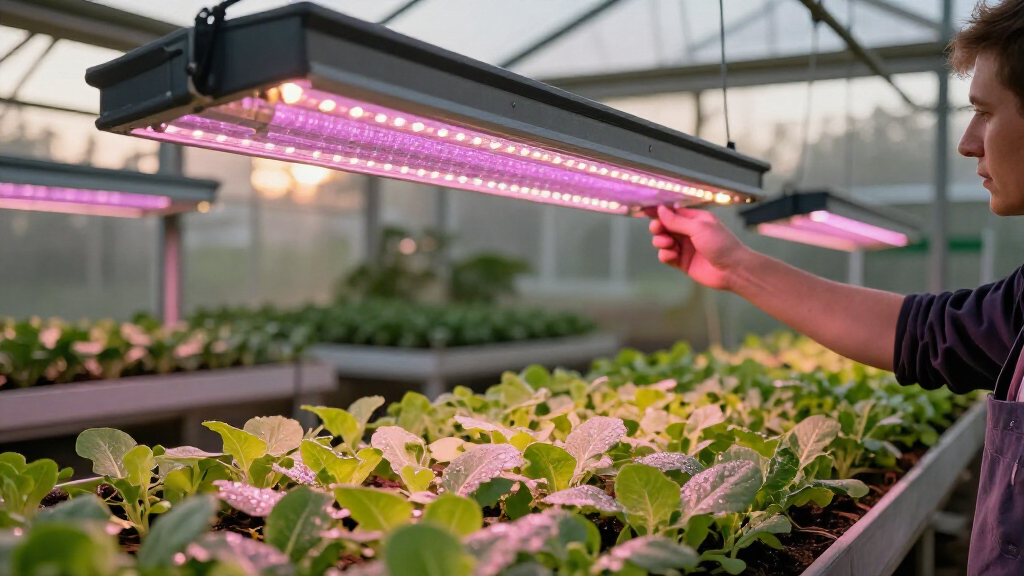
How We Picked
I compared these greenhouse grow lights by how well their form, stated output, and installation features match real greenhouse layouts. The main criteria were coverage style, fixture length and count, stated wattage where provided, weather-protection claims, cord reach, linkability, timers, and flexibility for benches, shelves, or open growing areas. I also looked at whether each product’s design makes it easier to distribute light evenly or instead concentrates illumination in a smaller zone.
The ranking favors options that balance useful coverage with practical setup and clear greenhouse fit. The Barrina TX72 leads for its four-panel format and timer; string lights rank well when cord reach and exposure protection fit the space, while multi-pack strips earn their place for modular bench or shelf layouts. Compact and specialty fixtures rank lower for general greenhouse coverage, not because they lack a use, but because their smaller formats serve narrower needs. Product claims such as waterproofing should be checked against the installation location, especially at plugs and connections.
Factors to Consider When Choosing Greenhouse Grow Lights
Before choosing a fixture, map the greenhouse and the plants that need supplemental light. I would match the light’s shape and placement to the growing layout first, then check output, protection, controls, and expansion options.
Match Fixture Shape to Your Growing Layout
Start by drawing the areas that need supplemental light: benches, seedling shelves, hanging baskets, or a larger central bed. Linear strips can follow long benches and shelves, while panels concentrate light over a more defined footprint and strings can distribute bulbs along irregular rows. A common mistake is choosing by total wattage alone; a high-output fixture can still leave the ends of a long bench dim. Check the manufacturer’s coverage guidance and plan fixture spacing before mounting anything. For a greenhouse with several small zones, multiple shorter fixtures may be easier to position than one large unit. If plants will grow taller, leave room to adjust fixture height and spacing as the canopy changes.
Separate Supplemental Light From Full-Day Lighting
Decide whether the lights will extend short winter days, support seedlings, or provide most of a plant’s daily light. Supplemental lighting can fill predictable gaps without needing to illuminate every square foot, while primary lighting calls for closer attention to coverage and intensity across the whole growing area. Do not assume a full-spectrum label means a fixture will supply enough light for every crop or growth stage. Compare stated output and coverage information, and think about the plants’ light needs rather than the color of the fixture alone. Flowering or fruiting crops may call for a different setup from seedlings or leafy greens. If the product listing does not provide usable coverage or performance details, treat that uncertainty as a reason to plan conservatively.
Check Moisture Exposure at Every Connection
Greenhouses combine humidity, condensation, irrigation, and sometimes direct splashes, so the fixture itself is only part of the safety picture. Waterproof or IP-rated claims can help identify products intended for exposed locations, but they do not automatically mean every plug, connector, or extension point has the same protection. Read the product’s installation instructions and keep electrical connections out of splash zones. Avoid routing cords across wet floors or where carts and tools can damage them. A string with a long cord may be easier to place, but extra length can create more cable to secure and protect. When a light’s exposure rating is unclear, choose a sheltered mounting spot rather than assuming it is greenhouse-safe.
Plan Power, Controls, and Daily Operation
Grow lights often run on a schedule, so think through outlet access, cord routing, and how you will switch fixtures on and off. Built-in timers reduce daily handling and help keep light periods consistent, while fixtures without them may need an external timer compatible with the load. Add up the electrical demand of all lights on a circuit instead of judging each fixture alone. A longer cord can simplify placement, but it does not remove the need for safe, weather-appropriate connections. Also consider whether the control will remain accessible after shelving or plants are in place. Before buying, confirm that the intended schedule and power setup work with your greenhouse’s existing electrical arrangement.
Buy for the Crop’s Future Size, Not Just Seedlings
Small fixtures can be excellent for propagation, but seedlings may outgrow a compact lighting area quickly. Expandable and linkable designs make it easier to add coverage as a collection grows, whereas a fixed panel may suit a stable, dedicated zone better. Think about plant height, spacing, and whether foliage will block light from neighboring pots. One frequent mistake is packing plants closely under a narrow fixture and expecting uniform growth at the edges. Leave room to spread plants or add another row of lights. If your growing plans change with the seasons, modular strips or adjustable strings can offer more layout flexibility than a single fixed-size fixture.
Compare Running Costs and Maintenance Needs
Stated wattage helps estimate electricity use, but it does not tell the whole story about useful light reaching the plants. Coverage per fixture, operating hours, and the number of lights in the setup all affect ongoing energy use. Estimate daily consumption from the total wattage and hours of operation, then compare that figure with the area actually being lit. Keep lenses, reflectors, and surrounding surfaces accessible for cleaning, since dust and condensation residue can reduce light transmission. Also check whether the product can be mounted securely and whether cords will remain easy to inspect. Paying more for a timer, better-suited weather protection, or a more adaptable layout makes sense when it solves a real operating problem in your greenhouse.
Frequently Asked Questions
Are waterproof grow lights necessary inside a greenhouse?
Not every greenhouse fixture needs to sit in direct spray, but humidity and condensation make exposure worth checking. Waterproofing claims and IP ratings can help when lights are near irrigation or open sides, though the plugs and connections may have different limits from the fixture body. Read the installation directions and keep electrical joints sheltered and elevated. If the light will hang above a bench that gets watered from below, consider both splash risk and condensation rather than relying on the product label alone. A sheltered location can reduce exposure, but it does not replace safe wiring practices.
Should I choose grow light strings or linear fixtures for my greenhouse bench?
The choice depends on the bench shape and how evenly you need light spread across it. Linear fixtures follow straight rows and shelves, which can make spacing easier to plan; strings are more adaptable when the growing area is irregular or the lights need to reach separate points. Strings may also make cord management more involved, especially across a long span. For a narrow, continuous bench, start by considering strips; for separated plants or a flexible layout, a string may fit better. Check fixture spacing and coverage information before deciding, since the product’s shape alone does not guarantee even light.
Can a 5000K full-spectrum light replace natural sunlight in a greenhouse?
A 5000K or full-spectrum description tells you something about the light’s color or spectrum, but it does not prove the fixture can replace sunlight for every crop. Coverage and usable output matter alongside color temperature, and different plants have different light demands. Many greenhouse growers use LEDs to extend daylight or fill shaded areas rather than illuminate the whole structure from dawn to dusk. Check product performance and coverage details, then compare them with your crop and growing schedule. If the listing lacks those details, avoid assuming the spectrum label alone means full-day growing capacity.
Do I need a built-in timer, or can I use an external timer?
A built-in timer is convenient when its schedule fits your routine, but an external timer may work for fixtures that lack one. Check compatibility and total electrical load before connecting multiple lights to a timer or smart plug. An external control can also help coordinate several fixtures, though it adds another connection to place safely in a humid space. Follow the fixture and timer instructions, and keep controls away from water and condensation. If consistent daily scheduling is a priority, choose a setup that is simple to adjust and easy to check.
How much should I prioritize wattage when comparing greenhouse grow lights?
Wattage is useful for estimating electrical use, but it should not be your only measure of a light’s growing performance. Fixture layout, coverage, and spacing affect how much light reaches the plants and whether it is spread evenly. A multi-panel fixture may cover a defined area differently from a string or several strips, even when their stated wattages appear similar. Compare output and coverage claims where available, then match those details to your plants and growing footprint. Also include operating hours and the total number of fixtures when planning energy use.
Conclusion
For one adaptable setup with panel coverage and scheduled operation, I would start with the Barrina TX72 as the best overall pick. The Barrina T8 2-foot 6-pack is my best value choice for growers spreading light across shelves or smaller zones, while the VIVOSUN 12-Light Outdoor String is the best premium-style option for a larger or less regular layout that benefits from its long adjustable cord. Beginners with a compact propagation area can choose the Barrina T5 1-foot 4-pack for short shelves, while experienced growers should match fixture count and spacing to their crop canopy rather than relying on a single light. For exposed or awkward greenhouse areas, compare the waterproof string options and verify protection at the cords and connections before installation. Choose by the area you need to light and how you will mount and power the fixtures; that will narrow this lineup more reliably than wattage alone.