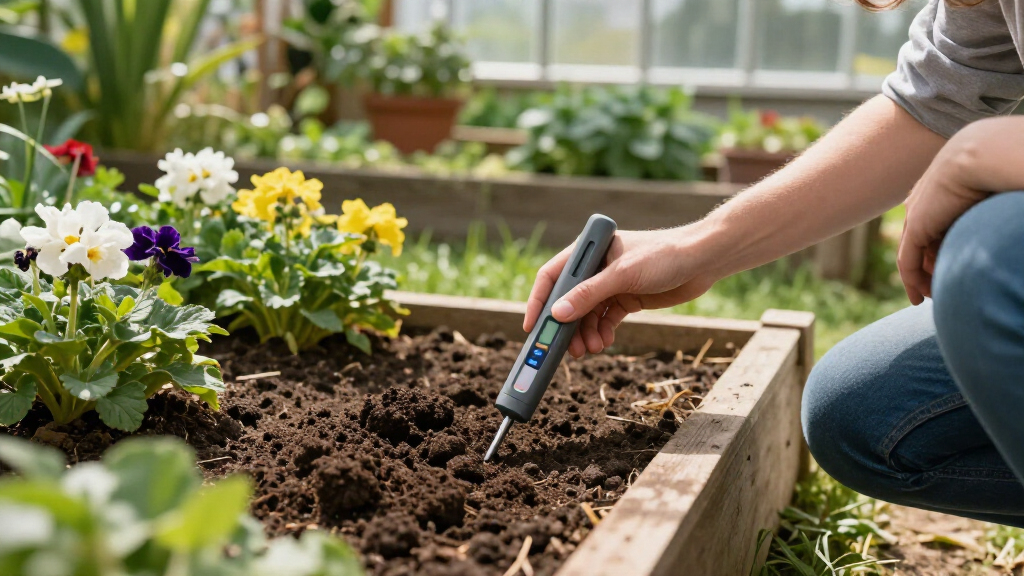
Healthy plants start below the surface, and guessing about your soil is the fastest way to waste money on fertilizer that your garden doesn’t need. A good garden soil tester tells you whether your pH is blocking nutrient uptake, whether your beds are actually low on nitrogen, and whether you’re overwatering — three problems that look identical from above. After comparing the most popular options on the market, two picks stand out for opposite reasons: the 3-in-1 Soil Tester meter for instant, repeatable moisture and pH spot-checks, and the MySoil lab kit for a level of nutrient accuracy no at-home kit can match. For gardeners who want chemical testing without a lab trip, the 140-test soil test kit offers the lowest cost per test of anything in this lineup.

Get garden gear delivered free — and shop member deals
- Fast, free delivery on millions of items
- Access to Prime Big Deal Days deals on October 6–7
- Prime Video, Amazon Music and more included
The main tradeoff you’re choosing between here is speed versus accuracy versus longevity. Electronic probe meters give you readings in seconds but only cover the basics. Chemical test kits cost more per test and take a few minutes of mixing and color-matching, but they measure the actual N-P-K nutrients that drive growth. Lab kits are the gold standard, yet you’ll wait nearly a week for results and pay more for a single sample. My job in this guide is to match those tradeoffs to the kind of gardener you are.
Complete the kit


Key Takeaways
- Probe meters like the 3-in-1 Soil Tester are best for frequent moisture and pH spot-checks, but they can’t measure N-P-K nutrients at all.
- Chemical capsule kits (both Rapitest versions) measure nitrogen, phosphorus, and potash, but cost per test matters more than upfront price over a season.
- The 140-test kit drops the cost per test to pennies, making it the clear choice for multi-bed gardens or anyone monitoring soil across a full growing season.
- MySoil‘s lab analysis is the only option here with personalized fertilizer recommendations, which pays for itself if you’re renovating a lawn or starting a new garden.
- Most at-home kits, including the probes, work best on moist soil — test a day after watering for the most trustworthy readings.
| Soil Tester 3-in-1 Soil Moisture, Nutrient, and pH Meter Kit for Garden and Indoor Plants |  | Best for Instant, Repeatable Spot-Checks | Measurement Types: Moisture, Fertility, pH | Usage: Insert probe into soil, toggle switch to select measurement | Moisture Range: 1–10 scale | VIEW LATEST PRICE | See Our Full Breakdown |
| Rapitest Soil Test Kit for Gardens, Vegetables, Flowers, and Lawns (40 Tests) |  | Best Value Chemical Starter Kit | Tests Included: 40 | Tests per Parameter: 10 | Parameters Measured: pH, Nitrogen, Phosphorus, Potash | VIEW LATEST PRICE | See Our Full Breakdown |
| MySoil Soil Test Kit – Complete Nutrient and pH Analysis with Recommendations |  | Best Premium, Lab-Grade Accuracy | Test Types: Nutrient levels and pH | Number of Tests: 1 per kit | Analysis Time: 6–8 days | VIEW LATEST PRICE | See Our Full Breakdown |
| Rapitest Soil Test Kit for Gardens, Vegetables, Flowers, and Lawns (20 Tests) |  | Best Budget Option for Small Gardens | Brand: Luster Leaf | Number of Tests: 20 | Tests per Parameter: 5 | VIEW LATEST PRICE | See Our Full Breakdown |
| Soil Test Kit 140 Tests (2026 Updated Instructions) – pH, N, P, K & Ammonia |  | Best for Season-Long Monitoring | Number of Tests: 140 | Parameters Tested: pH, Ammonia, Nitrogen, Phosphorus, Potassium | Instructions: Updated 2026 edition | VIEW LATEST PRICE | See Our Full Breakdown |
| garden soil tester | Method | Skill Level | Number of Tests |
|---|---|---|---|
| Soil Tester 3-in-1 Soil Moistu | — | — | — |
| Rapitest Soil Test Kit for Gar | Capsule dissolution with color comparator | Beginner to experienced | — |
| MySoil Soil Test Kit | — | Anyone — no interpretation required | 1 per kit |
| Rapitest Soil Test Kit for Gar | Capsule dissolution with color comparator | — | 20 |
| Soil Test Kit 140 Tests | Chemical reagent with color comparison | Intermediate | 140 |
More Details on Our Top Picks
Soil Tester 3-in-1 Soil Moisture, Nutrient, and pH Meter Kit for Garden and Indoor Plants
This 3-in-1 probe earns its place by solving a problem none of the chemical kits can: it gives you a reading in under a minute, as many times as you want, for a single purchase price. That makes it the natural companion tool for anyone who waters on a schedule rather than by feel. The moisture reading is the strongest function here — insert the probe, wait a moment, and the needle tells you whether that dry-looking surface soil is actually fine underneath. Compared with the Rapitest kits, which require mixing soil with water and matching colors against a chart, this meter removes nearly all friction from day-to-day monitoring.
The tradeoffs are real, though. The pH function only works in already-moist soil, which means you may need to water first and return later — an awkward requirement if you’re trying to diagnose a problem right now. The fertility setting is a coarse gauge (weak, suitable, excess) rather than a measurement you can act on with a specific fertilizer dose, so it can hint at trouble but won’t tell you whether nitrogen or potassium is the missing piece. That’s the gap the MySoil kit fills at far higher cost per test. In hard or compacted soil, pushing the probe in can be a struggle, and forcing it risks bending the electrodes. This pick makes the most sense for the gardener who wants a first-line diagnostic tool always at hand, with chemical or lab testing reserved for deeper investigation.
Pros:- Unlimited instant readings with no consumables to replace
- Simple toggle design with no calibration or batteries to manage
- Works for both indoor containers and outdoor beds
- Moisture function is fast and dependable
Cons:- pH readings require pre-moistened soil to be reliable
- Fertility gauge is too vague to guide fertilizer choices
- Probe can be difficult to insert in hard or dry soil
Best for: Gardeners and houseplant owners who want unlimited, instant moisture and pH checks across many plants
Not ideal for: Anyone who needs specific nitrogen, phosphorus, or potassium numbers to build a fertilizer plan
- Measurement Types:Moisture, Fertility, pH
- Usage:Insert probe into soil, toggle switch to select measurement
- Moisture Range:1–10 scale
- pH Range:4–7
- Fertility Range:Weak / Suitable / Excess
- Power Source:None required (passive probe)
- Best Use:Frequent spot-checks, indoor and outdoor
Our verdict“The most convenient tool in this lineup for frequent monitoring, as long as you understand it’s a screening device rather than a laboratory.”
Rapitest Soil Test Kit for Gardens, Vegetables, Flowers, and Lawns (40 Tests)
Where the probe meter tells you something might be off, this Rapitest kit tells you what specifically is off. Using a capsule system — you dissolve a pre-measured capsule in water with your soil sample and match the resulting color against a comparator — it measures pH plus the three macronutrients gardeners actually fertilize for: nitrogen, phosphorus, and potash. With 10 tests per parameter, it doubles the capacity of the smaller 20-test Rapitest box below while using the same proven method, which is why it takes the value slot in this ranking.
The standout inclusion is the plant pH preference list covering more than 450 species, which turns a raw number into an actionable decision: if your blueberries sit in pH 6.8 soil, the chart tells you that’s the problem, not your fertilizer. No other at-home kit here includes reference material this thorough. The compromises are inherent to the format. Color-matching is somewhat subjective — two people can read the same sample differently, especially in dim light — and running a full analysis means four separate tests, so budget your evening accordingly. Unlike the 3-in-1 probe, once these 40 tests are gone, the kit is spent. This option stands out for the gardener ready to graduate from guesswork to their first real soil chemistry baseline.
Pros:- Measures pH, nitrogen, phosphorus, and potash with clear results
- 40 total tests (10 per parameter) covers a full season for most gardens
- Includes pH preferences for over 450 plants
- Simple, well-written instructions suited to beginners
Cons:- Color comparison results depend on lighting and interpretation
- Each full analysis requires four separate tests
- Consumable kit — no reuse once capsules run out
Best for: First-time soil testers who want a complete nutrient and pH baseline without lab costs
Not ideal for: Gardeners who want instant digital readings or more than a season’s worth of testing
- Tests Included:40
- Tests per Parameter:10
- Parameters Measured:pH, Nitrogen, Phosphorus, Potash
- Method:Capsule dissolution with color comparator
- Reference Material:pH preference list for 450+ plants
- Origin:Designed and assembled in USA
- Skill Level:Beginner to experienced
Our verdict“The most balanced entry point into real soil chemistry, with enough tests to establish a baseline and track one round of corrections.”
MySoil Soil Test Kit – Complete Nutrient and pH Analysis with Recommendations
Every other product in this roundup asks you to interpret results yourself. MySoil removes that step entirely: you collect a sample with the included tools, mail it in the prepaid package, and receive a lab-verified analysis with personalized fertilizer recommendations within six to eight days. For a new lawn, a struggling garden renovation, or a high-value landscaping project, that difference matters more than any convenience feature. Consumer-grade color kits and probes can tell you a reading is low; a lab tells you how low, in what form, and exactly what to apply to fix it.
The pricing structure is the opposite of everything else here. You get one test per kit — a single use, at a higher price than kits offering 20 or 140 tests. So this is not the tool for monthly monitoring, and anyone expecting repeat use will be disappointed. The week-long turnaround also means it can’t help with an urgent problem the way the 3-in-1 probe can with its instant moisture reading. But compared with sending samples to a county extension service, the process is simpler and the recommendations arrive in plain language. This model is better suited to the gardener making a significant investment in soil — turf renovation, new raised beds filled from scratch, or a landscape planting that keeps failing — where getting the chemistry right the first time saves far more than the kit costs.
Pros:- Lab-level accuracy far beyond any at-home kit
- Personalized fertilizer and amendment recommendations included
- Everything needed for collection and mailing comes in the kit
- Works for lawn, garden, trees, flowers, and even hydroponics
Cons:- One test per kit makes it expensive for ongoing monitoring
- 6–8 day wait for results rules out urgent troubleshooting
- No at-home component — the entire process depends on mailing
Best for: Homeowners starting a lawn renovation, new garden, or high-value planting who need trustworthy numbers and a treatment plan
Not ideal for: Gardeners who want quick answers, repeated testing, or a low cost per sample
- Test Types:Nutrient levels and pH
- Number of Tests:1 per kit
- Analysis Time:6–8 days
- Results Format:Lab report with personalized recommendations
- Suitable For:Lawn, garden, vegetables, flowers, trees, hydroponics
- Skill Level:Anyone — no interpretation required
Our verdict“The most accurate and actionable option here, priced accordingly — buy it once per project, not per season.”
Rapitest Soil Test Kit for Gardens, Vegetables, Flowers, and Lawns (20 Tests)
This is the same proven Rapitest capsule-and-comparator system as the 40-test kit above, packaged at half the capacity and a lower price. That makes it the cheapest credible way to test real soil chemistry in this lineup — and the right choice for someone with a single raised bed, a small vegetable patch, or a curiosity they want to satisfy once before committing to anything bigger. You still get pH, nitrogen, phosphorus, and potash coverage, five tests per parameter, and the same beginner-friendly instructions, so nothing about the experience feels cut-rate.
The question is simply whether 20 tests is enough. If you’re testing one garden area in spring and rechecking once after amending, it fits neatly. But run a full four-parameter analysis twice and you’ve consumed 8 of your 20 tests; add a second bed or a lawn zone and you’ll want the 40-test version, which offers a better cost per test for not much more money. Compared with the 140-test kit, this one costs considerably more per test but wins on simplicity — fewer steps, clearer comparator chambers, and instructions that assume you’ve never tested soil before. The color-matching subjectivity and lack of any digital readout are inherited limitations of the format. This pick makes the most sense for the small-space gardener who values a low entry price over capacity.
Pros:- Lowest upfront cost for genuine four-parameter testing
- Same trusted Rapitest capsule method as the larger kit
- Includes plant-specific pH preference guidance
- Straightforward enough for complete beginners
Cons:- Only 5 tests per parameter — capacity disappears quickly
- Higher cost per test than both the 40-test and 140-test kits
- Color comparison remains subjective in poor lighting
Best for: Small-space gardeners testing one or two beds who want the lowest upfront cost
Not ideal for: Anyone with multiple garden zones, a lawn program, or plans to retest through the season
- Brand:Luster Leaf
- Number of Tests:20
- Tests per Parameter:5
- Test Types:pH, Nitrogen, Phosphorus, Potash
- Method:Capsule dissolution with color comparator
- Includes:All components needed for 20 tests
- Origin:Designed and assembled in USA
Our verdict“A low-risk way to test your soil chemistry once or twice without overspending on capacity you won’t use.”
Soil Test Kit 140 Tests (2026 Updated Instructions) – pH, N, P, K & Ammonia
Cost per test is the hidden number most shoppers ignore, and this kit wins that contest decisively: 140 tests for less than what some 20-test kits cost, working out to pennies per sample. For a gardener with multiple raised beds, a lawn-care program, or a habit of testing before and after every fertilizer application, that math changes behavior — you stop rationing tests and start actually tracking your soil across the growing season. It’s also the only at-home option here that adds ammonia testing, which matters if you’ve had issues with over-fertilization or fresh manure burning seedlings.
The flip side of that capacity is complexity. Compared with the Rapitest capsule system, where everything is pre-measured, this kit puts more responsibility on the user: measuring reagents, following timing precisely, and handling chemicals correctly all affect accuracy. The 2026-updated instructions help, but beginners may find the steeper learning curve frustrating on the first few runs. It also can’t touch the MySoil kit for accuracy — colorimetric home testing has inherent limits — so treat its numbers as directional trends rather than lab-grade facts. This model is better suited to the engaged intermediate gardener who tests often enough to justify the volume and is comfortable with a slightly more involved procedure in exchange for the lowest running cost in the category.
Pros:- Lowest cost per test of any option in this roundup by a wide margin
- 140 tests support a full season or more of routine monitoring
- Adds ammonia testing beyond the standard four parameters
- 2026-updated instructions improve clarity over earlier versions
Cons:- Requires careful reagent handling and timing for accurate results
- More involved procedure than pre-measured capsule kits
- Home colorimetric testing is less precise than lab analysis
Best for: Multi-bed gardeners, lawn enthusiasts, and small-scale growers who test frequently and want the lowest cost per test
Not ideal for: Beginners who want pre-measured simplicity, or anyone who only needs one or two tests a year
- Number of Tests:140
- Parameters Tested:pH, Ammonia, Nitrogen, Phosphorus, Potassium
- Instructions:Updated 2026 edition
- Method:Chemical reagent with color comparison
- Best Use:Routine monitoring, gardens, lawns, small farms
- Skill Level:Intermediate
- Cost per Test:Lowest in category
Our verdict“The volume play: unmatched testing capacity for engaged gardeners, at the cost of a steeper learning curve.”
How We Picked
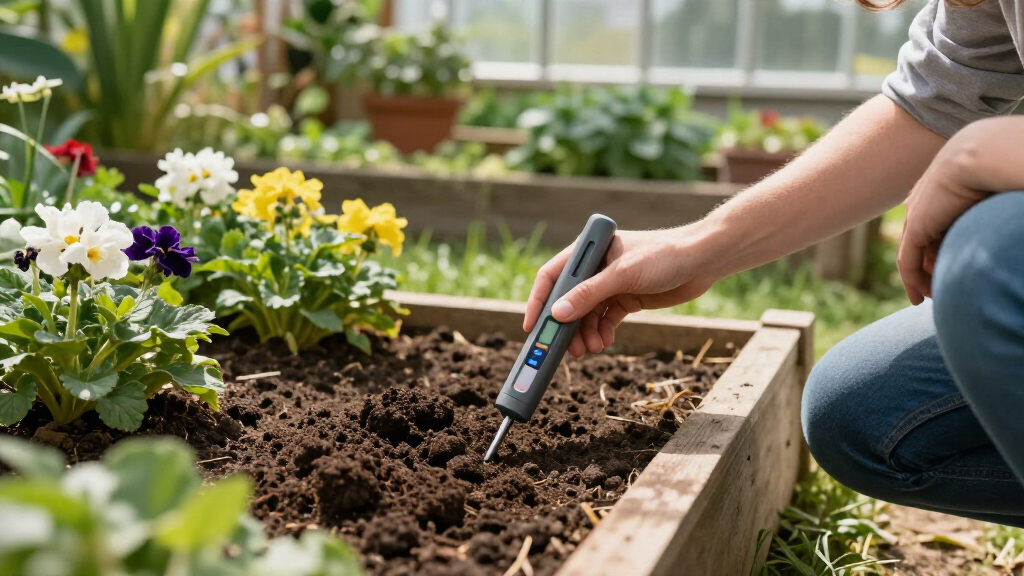
I evaluated these five testers against the criteria that actually decide a purchase: accuracy, cost per test, ease of use, and how long the product lasts. A probe meter that never runs out of tests competes differently than a chemical kit with a fixed count, so I calculated effective costs over a typical gardening season rather than just comparing sticker prices. I also weighed which parameters each method can realistically measure — inexpensive probes are reliable for moisture but weaker for pH and blind to nutrients, while chemical kits reverse that balance.
Beyond the numbers, I looked at the experience of using each product. Test kits with vague instructions or finicky color comparisons create frustration that makes gardeners stop testing altogether, so clarity of directions and the quality of included reference material factored heavily. Finally, I considered who each product serves best: a beginner with four houseplants and a small raised bed needs something entirely different from a homeowner managing a half-acre lawn. Every pick below occupies a distinct slot in that spectrum, and I’ve been explicit about who should skip each one.
| garden soil tester | Method | Skill Level |
|---|---|---|
| Soil Tester 3-in-1 Soil Moistu | — | — |
| Rapitest Soil Test Kit for Gar | Capsule dissolution with color comparator | Beginner to experienced |
| MySoil Soil Test Kit | — | Anyone — no interpretation required |
| Rapitest Soil Test Kit for Gar | Capsule dissolution with color comparator | — |
| Soil Test Kit 140 Tests | Chemical reagent with color comparison | Intermediate |
Factors to Consider When Choosing Garden Soil Testers
Choosing a soil tester comes down to one honest question: do you need quick signals, real nutrient numbers, or lab-grade certainty? Here’s how I’d work through the decision.Probe Meter vs. Chemical Kit vs. Lab Test
Probe meters (like the 3-in-1 Soil Tester) measure moisture reliably and pH adequately, need no consumables, and give instant readings — but they cannot measure nitrogen, phosphorus, or potassium, the nutrients fertilizers actually target. Chemical kits (all three capsule/reagent options here) measure those nutrients plus pH at home within minutes, at the cost of consumable test counts and some interpretive judgment. Lab kits like MySoil deliver accuracy and tailored recommendations neither other format can match, but you pay more per sample and wait days for results. Many serious gardeners eventually own one probe for weekly checks and one chemical or lab kit for seasonal baselines.
Know Which Parameters You Actually Need
If your plants wilt or yellow and you suspect watering, a moisture-focused probe answers that question for the least money and effort. If growth is slow despite good watering, you likely need N-P-K testing, which points you to a chemical kit or lab service. pH matters most for acid-lovers like blueberries, azaleas, and hydrangeas — every option here covers it, but only the lab result will be precise enough to guide a sulfur or lime application rate with confidence.
Cost per Test, Not Price per Box
A cheap 20-test kit can cost several times more per test than the 140-test kit, and a probe meter effectively costs nothing per reading after purchase. Multiply your realistic annual usage — beds tested, rechecks after amendments, lawn zones — by the per-test cost before comparing prices. For a single small garden, the 20-test Rapitest is plenty; for anything larger, the math swings hard toward the 140-test kit or a probe for monitoring plus one annual lab test.
Accuracy Expectations and Technique
Every at-home method rewards good technique. Probe pH readings need moist soil; chemical kits need clean containers, exact water volumes, and good lighting for color comparison; lab kits need a representative sample drawn from several spots in the bed, not one scoop. Test a day or two after watering, avoid freshly fertilized soil, and always run at least a duplicate if a result surprises you. Treat home readings as trends — ‘nitrogen is low and dropping’ — rather than decimals.
Frequently Asked Questions
How often should I test my garden soil?
For most home gardens, a full nutrient and pH test once per year — ideally in early spring before planting, or in fall when planning amendments — is the standard cadence, since soil chemistry changes slowly. In between those annual baselines, you can spot-check freely: moisture readings with a probe can happen weekly or even daily at no cost, and a quick pH recheck four to six weeks after adding lime or sulfur tells you whether the amendment is working. Heavy feeders like tomatoes and intensive vegetable beds benefit from one extra mid-season nitrogen check, which is exactly the kind of routine where a high-volume kit like the 140-test option pays off.
Are digital soil probe meters accurate for pH?
They’re directionally useful but not laboratory-accurate, and I’d set expectations accordingly. A well-maintained probe used in properly moistened soil will typically get you within a few tenths of a pH unit — enough to know whether you’re in the acidic, neutral, or alkaline range and whether a pH-sensitive plant will struggle. What probes can’t do is measure nutrients with any precision, regardless of what the dial labels claim; the fertility gauge on the 3-in-1 tester is a rough indicator, not a fertilizer prescription. For decisions involving lime or sulfur application rates, confirm with a chemical kit or a lab service like MySoil.
Why is my soil test showing different results each time I test?
Soil genuinely varies from spot to spot — the sample under your tomato cage can differ from soil two feet away — so small variation between tests is normal, especially with single-probe readings. Technique introduces variation too: dry soil skews probe pH readings, uneven mixing distorts chemical kit results, and color comparisons read differently under incandescent versus daylight. To reduce noise, test moist (not soggy) soil, pull samples from three or four spots and combine them for chemical tests, and always compare colors in natural light. If two careful tests still disagree sharply, trust the more rigorous method — a lab result over a home kit, a home kit over a probe.
Can I test soil from a pot or raised bed, or only in-ground gardens?
All of the testers in this lineup work in containers and raised beds — probes are actually easiest to use in loose, amended potting mix, and chemical kits just need a sample you can moisten and mix. Two caveats worth knowing: very peaty potting mixes can buffer pH readings differently than mineral garden soil, and fresh fertilizer charges in new potting soil can push nutrient readings into the ‘excess’ range without harming the plant. For raised beds filled with imported soil, one thorough lab test like MySoil at the start is a smart investment, followed by at-home monitoring in later seasons as the soil matures.
What should I do after I get my soil test results?
Start with pH, because it gates everything else: if pH is far outside your target plants’ preferred range, nutrients may be present but chemically locked away, and no amount of fertilizer fixes that. Raise pH with lime or lower it with elemental sulfur, applied gradually per the product’s rate chart. Then address nutrients in the order the test flags them — most home gardens are nitrogen-limited, while phosphorus and potassium accumulate over years of fertilizer use. The MySoil kit spells this out with personalized recommendations, which is precisely why it’s worth the premium for a first-time or renovation test. Retest the amended area after four to six weeks before adding anything more.
Conclusion
Matching the right tester to your situation is easier than it looks once you separate the three jobs these products do. If you monitor plants day to day — houseplants, containers, a vegetable bed you water on a schedule — the 3-in-1 Soil Tester probe is the tool you’ll actually reach for, with instant moisture readings and no consumables. If you’re establishing a soil baseline for the first time on a modest garden, the Rapitest 40-test kit hits the sweet spot of capacity and simplicity, while the 20-test version suits a single small bed on the tightest budget.
If you test frequently across multiple beds, a lawn, or a small market garden, the 140-test kit is the obvious economic choice — its per-test cost makes routine monitoring sustainable for a whole season. And if you’re making a big investment in soil — a lawn renovation, new raised beds, or a landscape that keeps underperforming — spend once on the MySoil lab kit and get numbers you can act on with confidence. Many gardeners land on a combination: a probe on the shelf for weekly checks, plus one thorough chemical or lab test per year for the chemistry that really drives growth.
Fall yard work Picks
leaf blowers
As an affiliate, we earn on qualifying purchases.