When urban foraging, respect private property by always asking permission before harvesting and building trust with landowners. Follow local laws and avoid overharvesting in public spaces, leaving no trace of your activity. Be considerate of other park users and adhere to signs and regulations to maintain public trust. Responsible foraging safeguards the environment and community relationships. Keep these guidelines in mind to ensure responsible foraging, and you’ll discover more about balancing nature and respect as you continue.
Key Takeaways
- Always seek permission from private landowners before foraging to respect property rights and build trust.
- Follow local laws and park regulations to avoid fines and protect shared natural resources.
- Practice sustainable harvesting by taking only what is needed and avoiding damage to plant populations.
- Leave no trace by cleaning up after foraging and minimizing environmental impact in public spaces.
- Be considerate of other park users and follow designated areas and signs to maintain community trust and access.
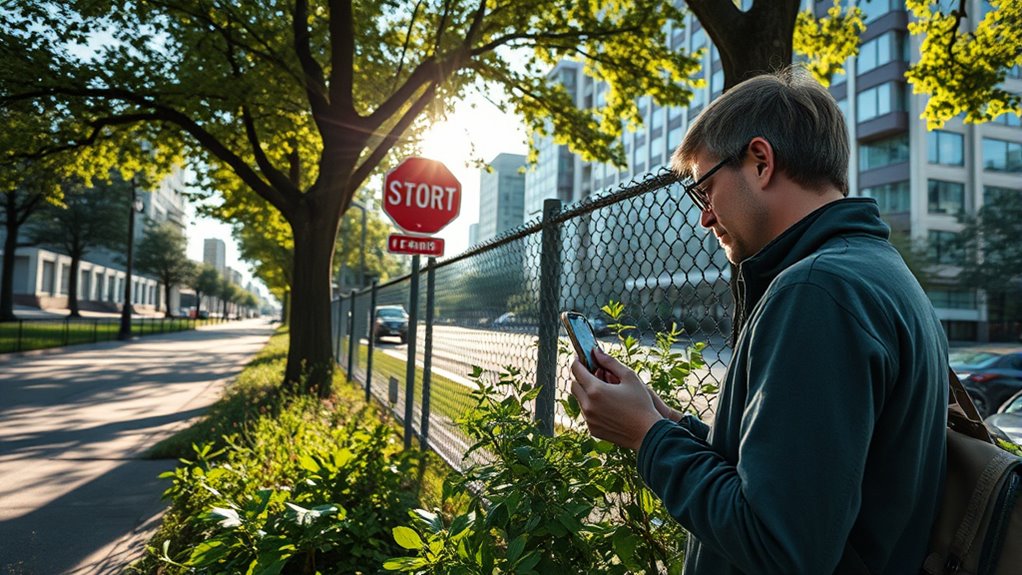
Urban foraging can be rewarding, but it’s vital to follow proper etiquette to respect the environment and community. When you venture into city parks, vacant lots, or even private yards, your goal should be sustainable harvesting—taking only what you need without harming the plant populations or disturbing the ecosystem. This approach guarantees that future foragers can also enjoy the bounty and that the environment remains vibrant and resilient. It’s about striking a balance between your desire to free yourself through foraging and your responsibility to protect these urban green spaces.
Legal considerations are a fundamental part of practicing respectful foraging. Before you start collecting, you need to be aware of local laws and regulations governing public and private land. Many city parks and green spaces have rules that prohibit removing plants or other natural resources. Ignoring these rules can lead to fines, confiscation of your foraged treasures, or even arrest. Respecting property boundaries is non-negotiable—if land is private, you must seek permission from the owner. Remember, just because a space looks accessible doesn’t mean it’s open for foraging. Doing your homework on legal restrictions allows you to forage freely without risking trouble.
Always check local laws and obtain permission before foraging on private land.
When it comes to private property, you must approach with respect and transparency. If you’re interested in harvesting on someone’s land, ask for permission first. Building trust with property owners not only keeps you within legal limits but also cultivates community bonds. Never assume that you have the right to forage on someone else’s land—overstepping boundaries can damage relationships and the community’s trust. If permission is granted, practice sustainable harvesting by taking only what you need and leaving enough behind to ensure the plant’s health.
Public spaces, on the other hand, require you to be extra mindful of rules and etiquette. Stick to designated areas, and avoid overharvesting. Leave no trace of your presence, and be mindful of other park users who may also want to enjoy the space. Remember, urban parks are shared resources, so your foraging should be unobtrusive and respectful. If there are signs prohibiting collection, respect them without exception. Additionally, understanding the support hours of nearby facilities can help you plan your visit to parks and recreational areas more effectively, ensuring a responsible and enjoyable experience.
Ultimately, urban foraging is about liberation—connecting with nature and reclaiming your food sources—but it must be done responsibly. By practicing sustainable harvesting and understanding legal considerations, you honor the environment, build trust within your community, and ensure that urban foraging remains a safe, enriching activity for everyone.

Foraging Washington (Foraging Series)
As an affiliate, we earn on qualifying purchases.
As an affiliate, we earn on qualifying purchases.
Frequently Asked Questions
Can I Forage in City Parks Without Permission?
You shouldn’t forage in city parks without permission because private property restrictions and park regulations often prohibit it. Even if it feels liberating to gather wild edibles, ignoring these rules can lead to fines or other penalties. Instead, seek out designated foraging areas or get official approval. Respecting park rules helps preserve public spaces for everyone to enjoy and keeps your foraging adventures safe and lawful.
How Do I Identify Which Plants Are Safe to Eat?
Imagine revealing nature’s secret treasures—first, master plant identification to distinguish edible from toxic plants. You’ll want to learn key features, like leaf shape, color, and growth patterns, from trusted guides or apps. Always double-check with reputable sources, and when in doubt, don’t take the risk. Empower yourself to forage safely, turning urban wilds into your personal pantry without harm or hesitation.
Are There Legal Penalties for Foraging on Private Land?
Yes, there are legal restrictions and trespassing penalties for foraging on private land. You could face fines or even criminal charges if you ignore “no trespassing” signs or enter property without permission. To enjoy foraging freely and legally, always seek permission from landowners or stick to public spaces. Respecting these boundaries keeps you safe from legal trouble and supports a responsible foraging community.
What Tools Are Best for Urban Foraging?
Did you know urban foragers often find over 100 edible plant species in city environments? For successful foraging, you’ll need essential tools like a good plant identification guide, sharp scissors, and a sturdy basket. A pocket knife and gloves also help with harvesting safely. With the right foraging tools, you can confidently explore city parks and alleyways, embracing your freedom to gather nature’s bounty wherever you go.
How Can I Minimize Environmental Impact While Foraging?
To minimize environmental impact, practice sustainable harvesting by taking only what you need and avoiding overharvesting. Focus on invasive species removal, which helps native plants thrive and supports local ecosystems. Be gentle with the environment, leave no trace behind, and respect wildlife. Your goal is to liberate nature, allowing plants to flourish while gathering responsibly. This balance ensures urban foraging remains beneficial and sustainable for everyone.
Conclusion
Remember, mastering urban foraging isn’t just a skill—it’s an epic adventure that could turn you into the ultimate city wilderness hero! Respecting private property and public trust is your secret weapon to avoid chaos, fines, or even a superhero showdown with irate neighbors. So, go forth confidently, gather those wild treasures responsibly, and become a legendary forager in your city. After all, you’re not just picking plants—you’re forging a legacy of respect and adventure!