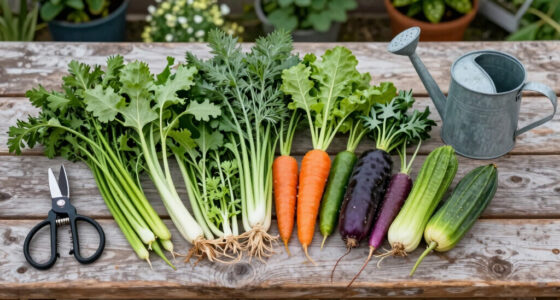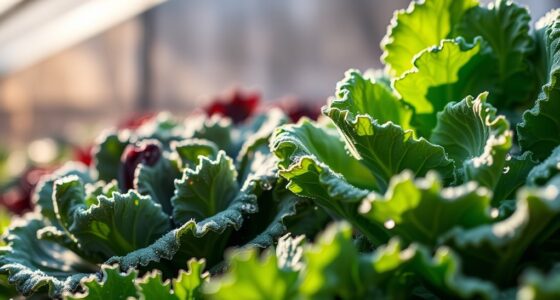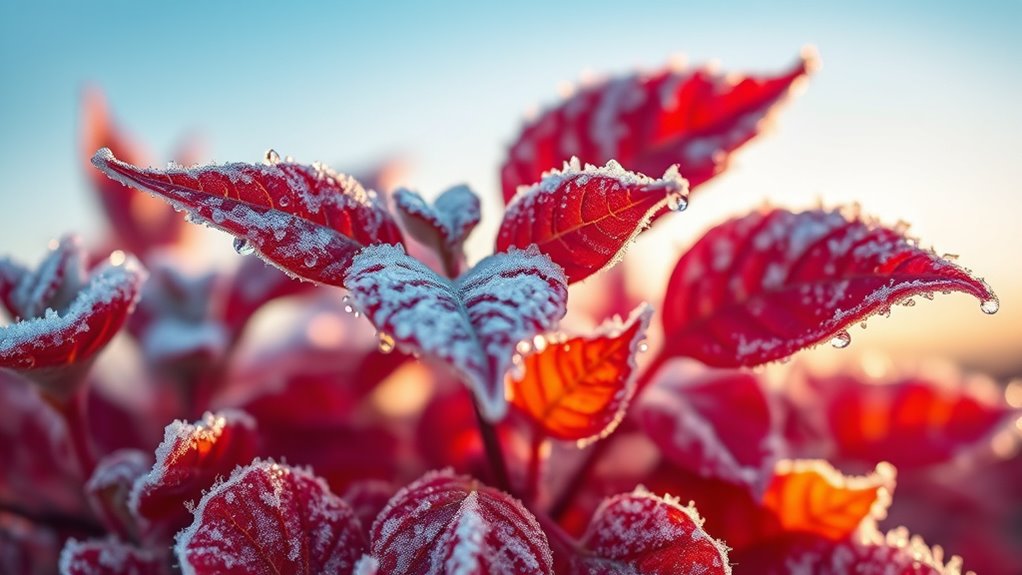

After the first frost, cold temperatures deepen the flavors of many crops, especially hardy greens and root vegetables. Frost triggers a natural process that intensifies sweetness and enhances flavor richness, making your harvest tastier. It also signals the best time to pick crops before cold damage occurs. Learning how frost affects flavors helps you plan your harvest better and enjoy the fullest taste. Keep exploring to discover how to harness these chilly changes to your advantage.
Open a free Amazon Business account
Business pricing, bulk buying and tax-exempt orders.
As an affiliate, we earn on qualifying purchases.
Key Takeaways
- Cold nights after frost deepen flavors in hardy greens and root vegetables through sugar accumulation and stress responses.
- Frost-sensitive crops may lose flavor or become damaged, emphasizing the importance of timely harvesting.
- Frost exposure enhances sweetness and complexity in certain crops, such as carrots and kale, due to metabolic changes.
- The cold snap signals a seasonal shift, prompting adjustments in harvest timing to maximize flavor before damage occurs.
- Embracing frost tolerance and protective strategies can extend harvests and improve overall flavor development.
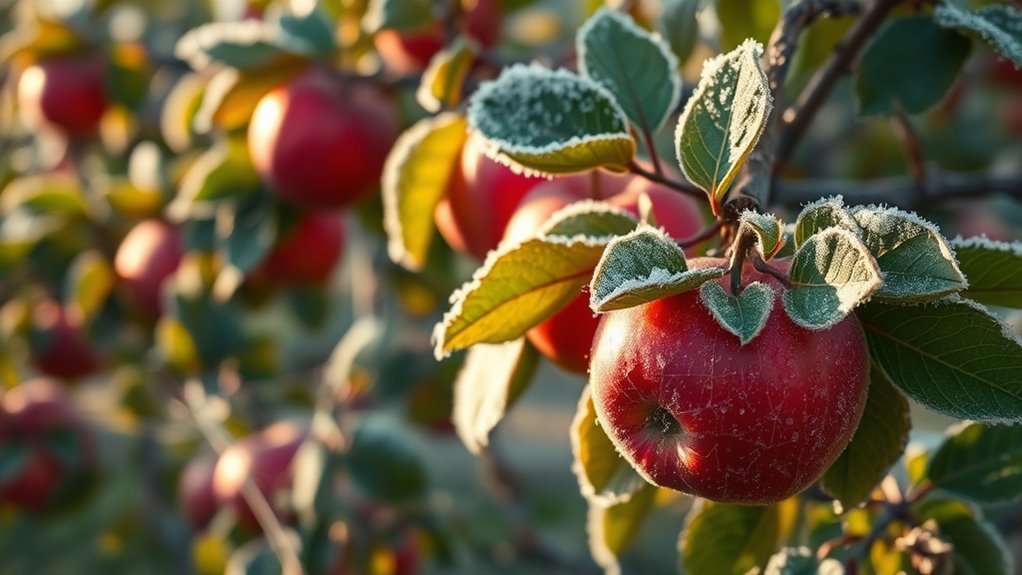
As the first frost blankets the landscape, it signals a turning point that transforms the familiar into something quietly, beautifully different. You feel it in the crisp air, a subtle reminder that the season’s rhythm is shifting. This frost is more than just a chill; it’s a signal to seize the moment, to harvest what’s ripe and ready before the cold tightens its grip. Your choices now hinge on understanding harvest timing—knowing exactly when your fruits and vegetables reach their peak flavor and ideal maturity. If you wait too long, the frost might damage delicate crops; if you harvest too early, you miss out on the full depth of flavor that cold nights can bring. The key lies in observing your plants’ frost tolerance—recognizing which varieties can withstand the early chill and which require protection or earlier harvesting.
As you navigate this shift, you realize that frost tolerance isn’t just a trait, but a pathway to liberation—freedom from the constraints of unpredictable weather. Some crops, like hardy greens or root vegetables, embrace the cold, their flavors intensifying with each frost, developing a sweetness and depth that can’t be achieved any other way. Others, more delicate, demand your quick action, their flavors diminishing with the first touch of frost. Your task becomes a dance of timing and knowledge, a delicate balancing act that allows you to harvest at the precise moment when flavors are richest. You learn to read the subtle signs: the color change, the firmness, the scent of ripeness. These clues guide your hand, helping you make decisions that maximize flavor and nutrition.
The cold snap changes everything, transforming the garden’s landscape and your approach. It pushes you to think beyond the immediate, to contemplate the long-term flavor and quality of your harvest. You realize that embracing frost-tolerance strategies—such as selecting hardy varieties or employing protective measures—gives you more freedom to plan your harvest without fear of losing flavor or crop viability. This liberation from uncertainty means you take control, timing your harvest for maximum flavor, trusting your instincts and knowledge. The frost may be a sign of the season’s end, but it’s also an invitation to celebrate the resilience of your plants and your own ability to adapt. It’s a quiet, powerful reminder that nature’s changes can open new opportunities, if you’re willing to listen and act with purpose. Recognizing the importance of biodiversity in selecting resilient crops can further enhance your gardening success and ecological health.
As an affiliate, we earn on qualifying purchases.
Frequently Asked Questions
How Does Frost Affect Soil Nutrient Levels?
Frost impacts soil nutrient levels by causing nutrient leaching, which washes away essential minerals. This process can lead to soil depletion, making it harder for plants to thrive. But don’t let that hold you back—embrace the challenge! You can combat nutrient loss with cover crops or mulching, reclaiming your soil’s liveliness. Take control of your garden’s future, and turn cold snaps into opportunities for growth and renewal.
Can Cold Snaps Improve Fruit Sweetness Naturally?
Did you know that cold snaps can naturally boost fruit sweetness? When temperatures drop suddenly, the sugar concentration in fruits increases, enhancing their flavor. This accelerates fruit ripening, making them sweeter without extra effort. So, embrace the chill—those cold snaps actually help you enjoy more delicious, naturally sweet fruit. You’re free to savor the juicy goodness, knowing nature’s own cold snap is working in your favor.
Do All Crops Respond the Same to Frost?
Not all crops respond the same to frost; their frost tolerance varies widely. You’ll find that some, like apples and grapes, show resilience and even thrive after a cold snap, enhancing flavor. Others, like tomatoes and peppers, have lower crop resilience and can suffer damage. Understanding each crop’s frost tolerance helps you harness the cold’s power, liberating your garden’s potential and encouraging natural flavor development without chemicals.
What Are the Best Storage Tips After a Frost?
After a frost, you should prioritize proper harvesting tips and refrigeration techniques to preserve your crops. Handle produce gently to avoid bruising and cool it quickly to maintain freshness. Store items in airtight containers or perforated bags in the fridge’s crisper drawer. Keep the temperature consistent, ideally around 32-40°F. This approach guarantees your harvest remains vibrant and flavorful, giving you the freedom to enjoy your bounty longer.
How Does Frost Influence Pollinator Activity?
Frost influences pollinator behavior by signaling the end of active foraging, causing many insects to retreat or become less active. This shift impacts flowering timing, as plants may bloom later or produce fewer flowers, reducing pollination opportunities. You can embrace this natural rhythm by planting hardy varieties that bloom after frost, aligning your garden with pollinator cycles and celebrating nature’s resilience amid changing conditions.
Conclusion
After the first frost, you’ll notice flavors deepen and sweeten, transforming your harvest. Did you know that a 5-degree drop in temperature can increase sugar levels in apples by up to 20%? So, embrace the chill—your garden’s flavors are about to reach their peak. As you harvest, savor the intensified tastes and the season’s magic. Frost isn’t just a chill; it’s a flavor booster, turning ordinary into extraordinary.
NFL season / tailgating Picks
team gear
As an affiliate, we earn on qualifying purchases.