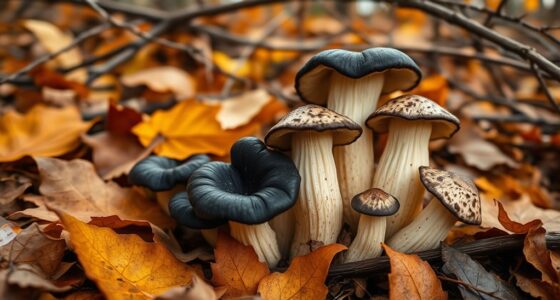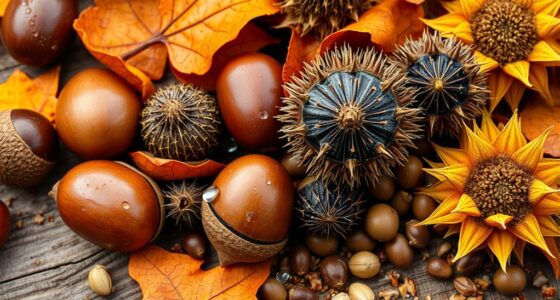

During fall, you can safely gather acorns, beech nuts, and hazelnuts by choosing mature, fallen nuts with dark shells and avoiding moldy or damaged ones. Use gloves to prevent bacteria transfer and be cautious of sharp shells or uneven terrain. Collect only what you need to support local wildlife and leave plenty for animals. Caring responsibly guarantees sustainability. Keep exploring to discover more tips on eco-friendly harvesting and protecting nature’s resources.
Key Takeaways
- Collect mature, fallen nuts with dark shells while avoiding mold, holes, or insect damage for safe, quality harvesting.
- Use gloves when gathering nuts to prevent mold transfer and handle shells carefully to avoid injury.
- Practice responsible foraging by gathering only what is needed and leaving plenty for wildlife.
- Process nuts by shelling and drying to ensure safe storage and future use.
- Respect ecological balance by harvesting sustainably and supporting the natural cycle of growth and renewal.
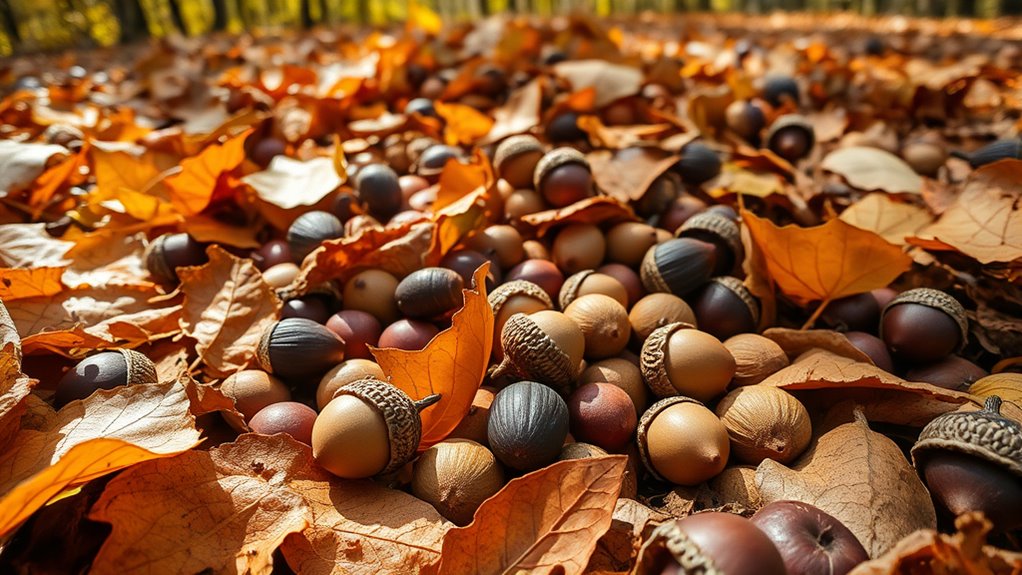
Have you ever wondered why fall is the prime season for nuts and mast? It’s a time when nature’s bounty is at its peak, offering you a chance to gather food in a way that reconnects you with the land. When you step into the woods during this season, you’re not just collecting food—you’re participating in a tradition of wildlife foraging and harvesting techniques that have sustained communities for generations. This period is a window of opportunity to gather acorns, beech nuts, and hazelnuts safely, respecting the balance of the ecosystem while enjoying the liberating act of foraging.
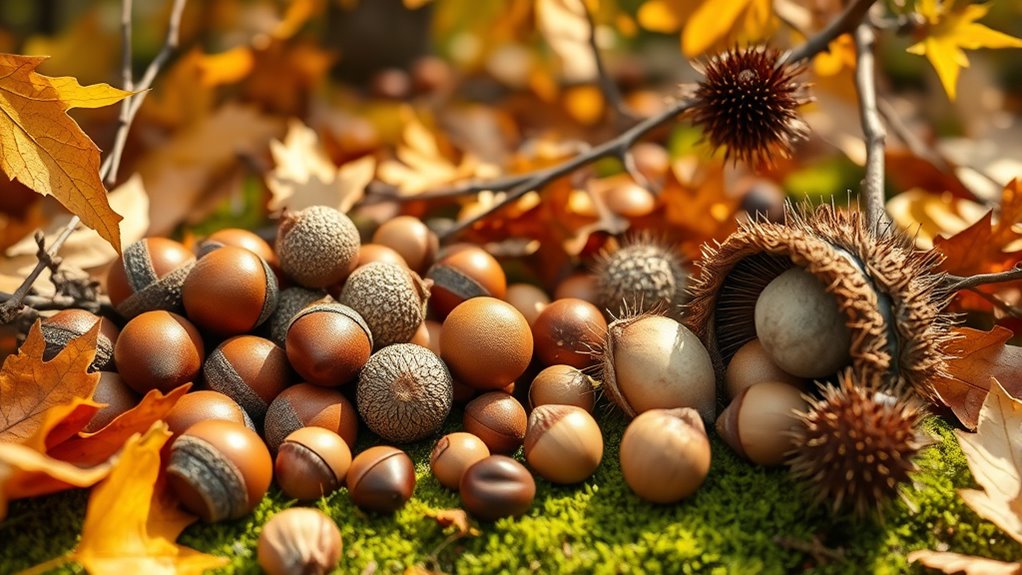
Your first step is understanding the harvesting techniques that maximize your success while minimizing ecological disruption. For acorns, look for mature, fallen nuts—these usually have a darker, hard shell and are free of mold or holes caused by insects. Gently rake or pick up the nuts from beneath oak trees, avoiding those that are cracked or freshly fallen, which might still be a part of the natural cycle of wildlife foraging. Beech nuts require a similar approach—look for husked, mature nuts that have naturally fallen and are free of mold or rot. Hazelnuts are easier to spot; find them clustered on the ground beneath hazel shrubs, and pick them up carefully to avoid damaging the shells or disturbing the surrounding habitat.
Engaging in wildlife foraging isn’t just about gathering food—it’s about understanding the role these nuts play in the local ecosystem. Many animals depend on these mast crops for sustenance, especially in hard winters. By harvesting wisely, you’re respecting this balance, ensuring that wildlife still has access to their natural food sources. Keep your foraging light; gather only what you need, and leave plenty behind for the creatures that rely on these nuts for survival. This mindful approach is key to sustainable harvesting and maintaining the health of the forest.
As you gather nuts, pay attention to the environment. Use gloves if necessary to avoid spreading mold or bacteria, and be cautious of hidden hazards like sharp shells or uneven terrain. Once collected, you can process the nuts by shelling or drying them, preparing them for future use or storage. This act of gathering becomes a form of liberation—an assertion of your ability to connect directly with nature, to source your own food, and to participate consciously in the natural cycle of growth and renewal. Recognizing the importance of proper harvesting techniques ensures you contribute to the sustainability of these resources for generations to come.

As an affiliate, we earn on qualifying purchases.
Frequently Asked Questions
When Is the Best Time to Start Gathering Fall Nuts?
You should start gathering fall nuts when seasonal variations signal ripeness, typically late summer to early autumn. Keep an eye on timing considerations like nut maturity and the first frost, which can affect quality. By syncing your harvest with nature’s cues, you gain the freedom to collect at peak freshness, ensuring the best flavor and nutrition. Don’t wait too long—once nuts fall naturally, it’s your window to gather and enjoy nature’s bounty.
Are There Any Legal Restrictions on Collecting Mast?
You can’t just pick whatever mast you see—most areas have legal regulations that restrict collection, especially on public land. In fact, only about 20% of state forests allow nut gathering without a permit. To stay free and avoid fines, you need collection permits where required. So, before you go, check local rules and secure permits if necessary—otherwise, you risk losing your bounty and your freedom.
How Can I Identify Edible Versus Toxic Nuts?
To identify edible nut varieties versus toxic ones, focus on nut toxin identification techniques like checking for distinctive shell patterns, smell, and taste. Edible nuts such as acorns, beech, and hazelnuts usually have specific, consistent features; learn these to confidently distinguish them from toxic varieties. Trust your knowledge, stay curious, and remember that safe foraging empowers your freedom to gather nature’s bounty without risk. Always verify before consuming any wild nuts.
What Tools Are Recommended for Safe Gathering?
For nut foraging and gathering safety, you should use a sturdy basket or mesh bag to carry your finds, ensuring proper ventilation and easy inspection. A small hand pruner or scissors helps collect nuts without damaging trees, while gloves protect your hands from splinters or irritants. A field guide enhances your knowledge, making your gathering more confident and freeing. Always bring a flashlight for low-light conditions and a knife for open shells.
How Should Nuts Be Stored After Collecting?
Did you know that properly stored nuts can last up to a year? After collecting, you should use nut storage methods that guarantee ideal storage conditions—cool, dry, and well-ventilated spaces. Keep nuts in airtight containers or mesh bags to prevent mold and pests. By maintaining these conditions, you free yourself from spoilage worries, allowing you to enjoy your bounty whenever you desire, with the liberation of freshness intact.
Conclusion
As you gather acorns, beech nuts, and hazelnuts, remember to identify, collect, and honor nature. Look for healthy, ripe nuts; handle them carefully; and store them properly. Respect the land, protect the wildlife, and enjoy the fall bounty responsibly. By following these simple steps—identify, collect, respect—you ensure a safe, sustainable, and enjoyable experience. So go ahead, embrace the season, and make your nut gathering both fun and mindful.