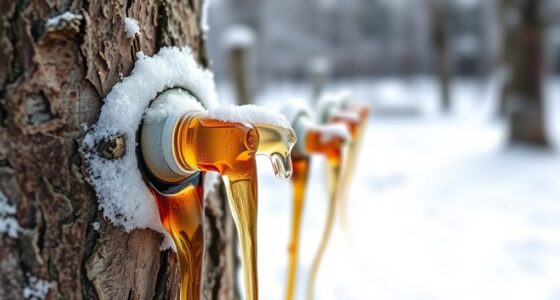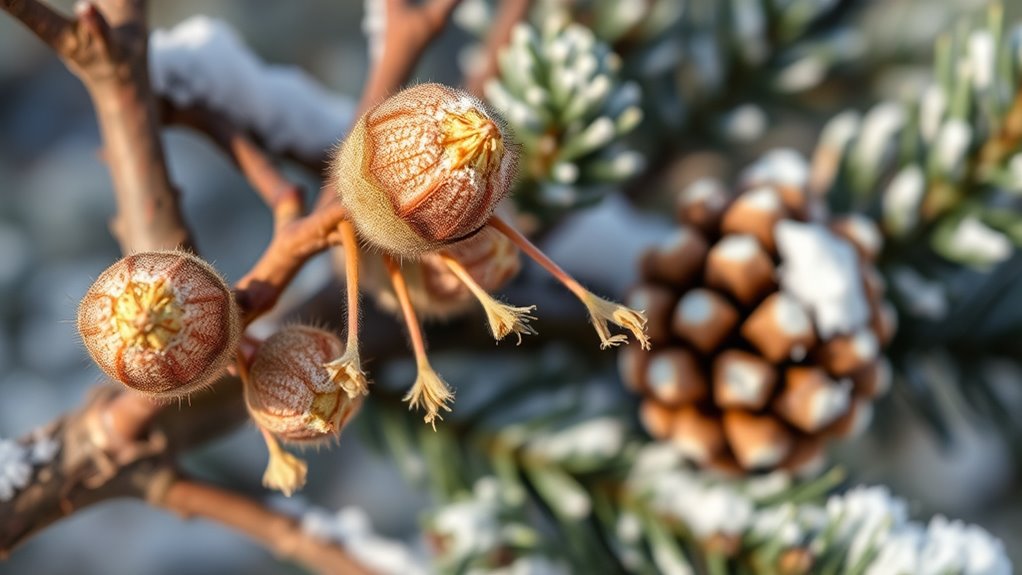

During winter, you can observe subtle signs of plant life like swelling buds, emerging catkins, and closed cones. These indicators show how trees and shrubs stay alive beneath the snow, conserving energy and preparing for spring. You’ll notice buds serve as tiny time capsules, while cones protect seeds until the weather warms. Keeping an eye on these signs reveals nature’s resilience, and ongoing observation uncovers even more about how plants quietly survive and prepare for renewal.

Get garden gear delivered free with Prime
- Fast, free delivery on millions of items
- Prime Video, Amazon Music and more included
- Member-only deals all year
Key Takeaways
- Observe subtle signs like swelling buds, emerging catkins, and opening cones to track plant activity during winter.
- Recognize that dormancy preserves buds and cones beneath snow, indicating upcoming growth and reproductive readiness.
- Monitor phenological changes as indicators of seasonal progression and resilience in plants during cold months.
- Understanding winter signs enhances appreciation of nature’s hidden activity and prepares for spring renewal.
- Tracking these structures deepens connection to plant cycles and highlights the importance of dormancy for future growth.
Have you ever wondered how plants and animals respond to winter’s chill? The answer lies in their remarkable ability to adapt and survive during the coldest months. When temperatures drop and snow covers the landscape, many species enter a dormant period, a state of suspended activity that helps them conserve energy and weather the harsh conditions. This pause isn’t just a lull; it’s a strategic retreat, allowing life to endure until the warmth of spring signals a new beginning.
During this dormant period, trees and shrubs shift their focus inward. Instead of growing leaves or flowers, they store nutrients and prepare for the eventual burst of activity. This is especially evident in the formation of buds, which are like tiny time capsules holding the promise of future growth. As snow covers the ground, these buds remain hidden and protected, waiting patiently through the winter months. The snow cover acts as an insulator, shielding the buds from extreme cold and desiccation, and helping to maintain a stable environment beneath the surface.
Trees and shrubs protect their buds with snow, conserving energy for spring’s renewal.
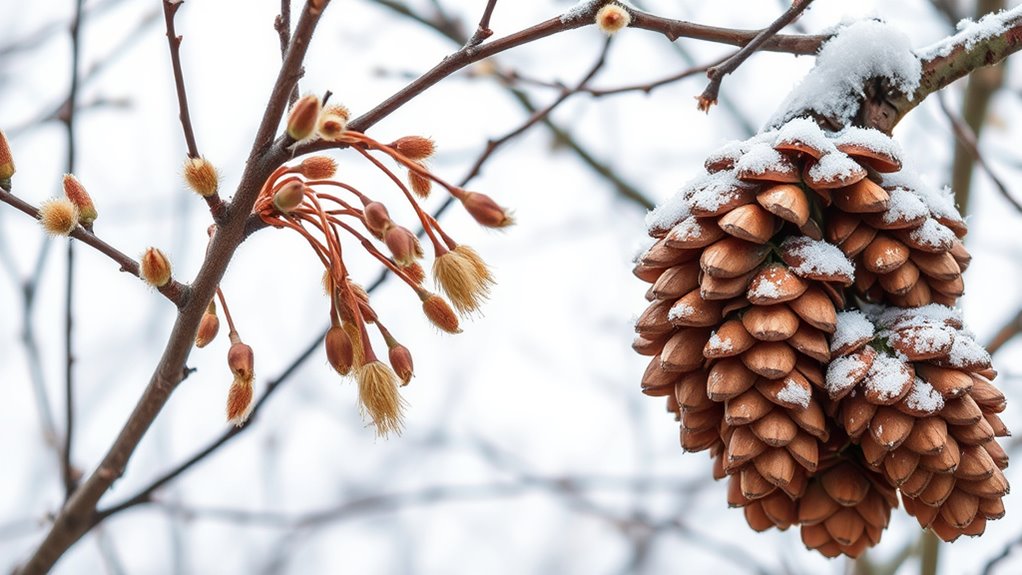
As winter progresses, you can observe subtle signs of life in the form of catkins and cones. Catkins, those fuzzy or scaly clusters hanging from trees like willows and alders, develop during the dormant period. They often appear before leaves emerge in spring, signaling that the tree is preparing for pollination and reproduction. Similarly, cones on conifers like pines and spruces serve as reproductive structures. They stay closed and dormant throughout winter, protecting the seeds inside from freezing temperatures and predators. When the weather warms, these cones open up, dispersing seeds and ensuring the continuation of the species.
Tracking these phenological changes—buds swelling, catkins emerging, cones opening—gives you a window into the resilience of nature. Even in the depths of winter, life is quietly preparing for renewal. Recognizing the signs of dormancy and understanding their purpose enhances our appreciation of the cycles of nature. Instead, it’s a time of hidden activity and potential, waiting for the right moment to burst forth. By observing how plants respond to snow cover and enter their dormant period, you gain a deeper appreciation for the cycles of nature and your own place within them.
In embracing this knowledge, you become part of the ongoing story of life’s resilience. Winter isn’t just a time of waiting; it’s a vital chapter of preparation and transformation, leading to the inevitable rebirth that follows. Tracking phenology in winter empowers you to see beyond the cold and recognize the persistent pulse of growth beneath the surface.
winter plant bud observation kit
As an affiliate, we earn on qualifying purchases.
As an affiliate, we earn on qualifying purchases.
Frequently Asked Questions
How Can I Identify Different Tree Species by Their Winter Buds?
You can identify tree species by examining their winter bud morphology, noting bud shape, size, and color. Look for distinctive features like the pointed, sticky buds of oaks or the rounded, clustered buds of maples. Cone identification is key for conifers—note the size, scale arrangement, and cone shape. By focusing on these traits, you gain the freedom to explore nature’s diversity and enjoy winter’s quiet beauty with confidence.
What Tools Are Best for Recording Phenological Data in Winter?
Perfect tools for tracking phenology in winter are digital recording devices and sturdy field notebooks. Digital tools, like apps or spreadsheets, make data collection quick and easily shareable, freeing you from paper chaos. Meanwhile, field notebooks offer tactile, timeless tracking—allowing you to jot notes and sketch buds on the spot. Combining both lets you liberate your observations, ensuring you capture seasonal shifts with clarity and confidence.
How Does Winter Weather Affect Bud Development Timing?
Winter weather slows bud development by maintaining trees in winter dormancy, but temperature fluctuations can break this dormancy unexpectedly. Cold snaps may delay bud swelling, while warming spells can trigger premature growth. You’ll see that unpredictable weather patterns keep you on your toes, revealing nature’s resilience and adaptability. Embrace the freedom to observe these natural responses, understanding that winter’s chill and fluctuating temps shape the timing of bud development in fascinating ways.
Can Phenology Help Predict Spring Flowering Times?
Like a crystal ball, phenology offers a glimpse into future spring blooms. By monitoring bud and catkin timing, you can predict flowering periods more accurately, despite climate change impacts that disrupt traditional patterns. This knowledge is ecologically significant, empowering you to adapt to shifting seasons and embrace nature’s rhythms. Phenology liberates you from guesswork, connecting you deeply to the environment and its delicate, ever-evolving dance toward renewal.
Are There Regional Differences in Winter Bud and Cone Development?
Yes, regional climate and genetic variation influence winter bud and cone development. You’ll notice that in milder areas, buds and cones develop earlier, while colder regions see delayed growth. Genetic differences also play a role, giving some trees resilience and unique responses to winter conditions. Embrace these differences as part of nature’s diversity, offering you a chance to observe and appreciate the unique rhythms of your local landscape.
Conclusion
Just like a watchful gardener tending to winter’s quiet garden, tracking phenology helps you read nature’s subtle signals. Each bud, catkin, and cone is a tiny chapter revealing the season’s story. By paying close attention, you become a storyteller of nature’s rhythms, uncovering the hidden dance of life even in the coldest months. Keep observing, and you’ll open the secret language that nature whispers beneath the winter’s hush.
Halloween Picks
halloween
As an affiliate, we earn on qualifying purchases.