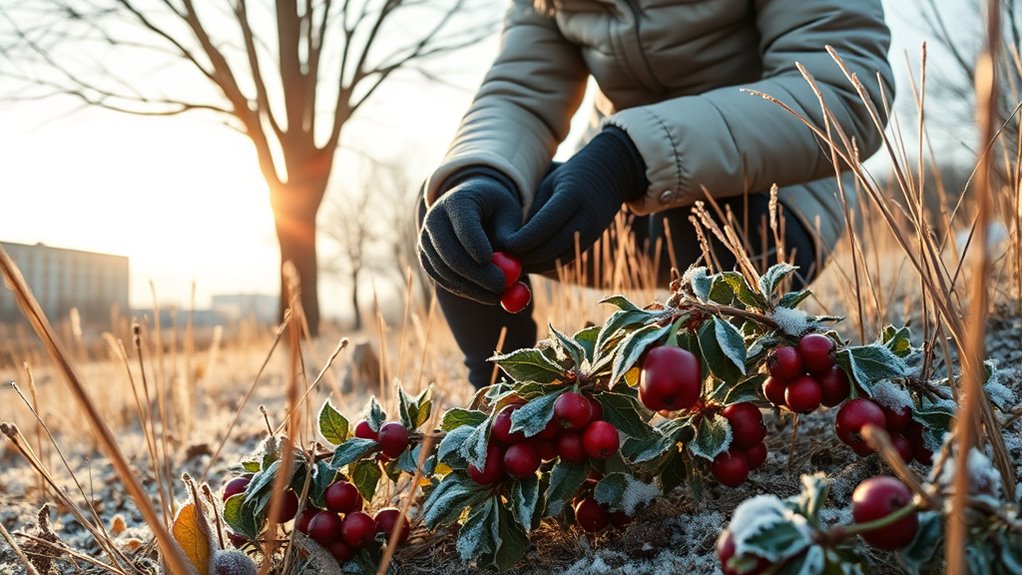

In winter parks, you can ethically forage for hardy, abundant plants like dandelions, wild greens, or rose hips, but only if regulations permit. Always pick sparingly, snip leaves or stems, and avoid uprooting entire plants, ensuring their survival. Be mindful of pollutants near busy streets, wash all foraged items thoroughly, and honor local rules and protected areas. If you want to discover more about responsible foraging practices, keep exploring these ideas further.

Get garden gear delivered free — and shop member deals
- Fast, free delivery on millions of items
- Access to Prime Big Deal Days deals on October 6–7
- Prime Video, Amazon Music and more included
Key Takeaways
- Collect only abundant, hardy plants like dandelions and wild greens, snipping leaves instead of uprooting entire plants.
- Follow park rules, signage, and support designated areas or community programs promoting sustainable foraging.
- Harvest minimally and responsibly, leaving enough for plant reproduction and local wildlife.
- Avoid foraging near busy streets, polluted areas, or microclimates with potential contaminants.
- Wash all foraged items thoroughly to ensure safety and prevent the intake of urban pollutants.
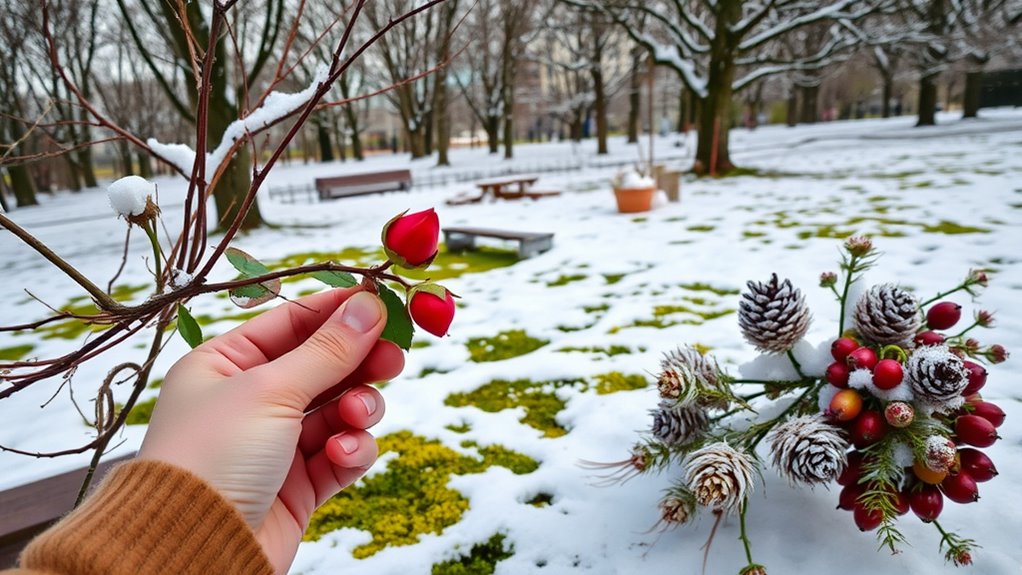
Winter in the city might seem like a barren landscape, but with a keen eye and some knowledge, you can find plenty of edible plants and foraging opportunities. Urban foraging isn’t just about gathering free food; it’s a way to reconnect with nature’s resilience amidst concrete and steel. As you venture into city parks, remember that your foraging choices have a direct impact on plant conservation. Respect the delicate balance of these ecosystems, guaranteeing that your harvest doesn’t harm the very plants you’re seeking to sustain.
Winter foraging in the city supports plant conservation and reconnects us with urban nature’s resilience.
The key to ethical foraging in urban settings lies in moderation and awareness. Pick only what you need, leaving plenty behind to allow plants to reproduce and thrive. Focus on abundant species that grow naturally in disturbed areas, such as dandelions, wild greens, or certain woody herbs. These hardy plants often flourish even in winter, especially in protected spots or sheltered microclimates. Avoid uprooting plants entirely; snip leaves or stems instead, minimizing disturbance. This approach helps maintain the health of urban plant populations, supporting plant conservation efforts while you gather what you need.
Be mindful of park regulations and signs that specify what’s allowed. Many city parks have restrictions to protect native flora and ensure that foraging doesn’t turn into overharvesting. If you’re unsure, seek out parks that promote community foraging programs or have designated wild areas where sustainable harvesting is encouraged. Remember that your actions set a precedent—by foraging responsibly, you promote a culture of respect for urban plant life and inspire others to do the same.
In addition, stay vigilant about potential contaminants. Urban plants can absorb pollutants from nearby roads, spills, or industrial areas. Wash everything thoroughly before consuming, and avoid plants growing near busy streets or shady, polluted spots. Your goal is to nourish yourself while honoring the environment, not to exploit it carelessly.
City foraging offers a chance to break free from consumerism and rediscover the wild abundance that surrounds you. It’s about reclaiming your right to gather sustenance from the land, even in small ways, without damaging the ecosystems you’re part of. By practicing ethical urban foraging and prioritizing plant conservation, you help sustain these essential green spaces for everyone. This act of mindful harvesting isn’t just about food; it’s a declaration of independence from waste and overconsumption, a step toward a more liberated, harmonious relationship with nature—even in the heart of the city. Recognizing the importance of wall organization systems can help you create a more organized and inviting outdoor space that supports sustainable foraging practices.
As an affiliate, we earn on qualifying purchases.
Frequently Asked Questions
Are There Any Legal Restrictions on Foraging in City Parks?
You need to check park regulations before foraging in city parks, as there are often legal restrictions. Some parks require foraging permits, and taking too much may be prohibited. To enjoy your foraging adventure freely, always respect local laws and avoid damaging ecosystems. By staying informed and following rules, you can freely explore and gather in parks while protecting nature’s balance and maintaining your rights to forage responsibly.
How Can I Identify Edible Versus Poisonous Plants Safely?
You must master plant identification before tasting anything wild. Suspense lurks in every leaf—mistake and danger strikes. To stay safe, use reliable field guides, consult experts, and compare multiple sources. Always test for edibility with caution, never assume based on looks alone. Safety precautions are your shield; they empower your exploration while protecting you from poisonous plants. Trust your knowledge, stay vigilant, and embrace your wild foraging adventure with confidence.
What Tools Are Recommended for Sustainable Foraging?
You should use essential foraging tools like scissors or a pruning knife to guarantee sustainable harvesting. These tools help you take only what you need, minimizing damage to plants and promoting regrowth. A small basket or mesh bag allows for gentle collection without crushing. Carry a field guide to identify plants accurately. With these tools, you embrace a responsible foraging attitude, respecting nature’s balance and securing fresh, wild edibles for future foraging adventures.
How Do I Ensure I Don’T Damage the Ecosystem?
You can guarantee you don’t damage the ecosystem by practicing plant conservation and ethical harvesting. Always pick only what you need, avoid uprooting plants, and leave plenty behind for nature to thrive. Stay on designated paths to minimize disturbance, and learn about local species to avoid rare or protected plants. By respecting these principles, you help preserve the environment’s balance while satisfying your foraging spirit.
Are There Seasonal Variations in Edible City Plants?
Think of urban foraging like chasing the moon’s phases; seasonal plant changes shape what you can sustainably harvest. In spring, tender shoots emerge, while summer brings abundant berries. Autumn offers root vegetables, and winter reveals hardy greens. By syncing with these urban foraging cycles, you embrace freedom from modern confines, harvesting nature’s gifts at their peak without overstepping. Respect these rhythms, and you’ll nourish both body and spirit, truly in tune with city’s wild heartbeat.
Conclusion
As you wander winter’s winding ways, remember to forage responsibly. Respect the rules, refrain from reckless picking, and prioritize plant preservation. By balancing boldness with boundaries, you’ll guarantee your foraging fosters a flourishing future. Practicing patience, protecting plants, and prioritizing permission keeps your foraging fair and friendly. Follow these focused, mindful measures, and you’ll foster a flourishing, friendly foraging future—fuelling your foodie adventures while safeguarding city parks and their pretty, precious plants.
Fall yard work Picks
leaf blowers
As an affiliate, we earn on qualifying purchases.