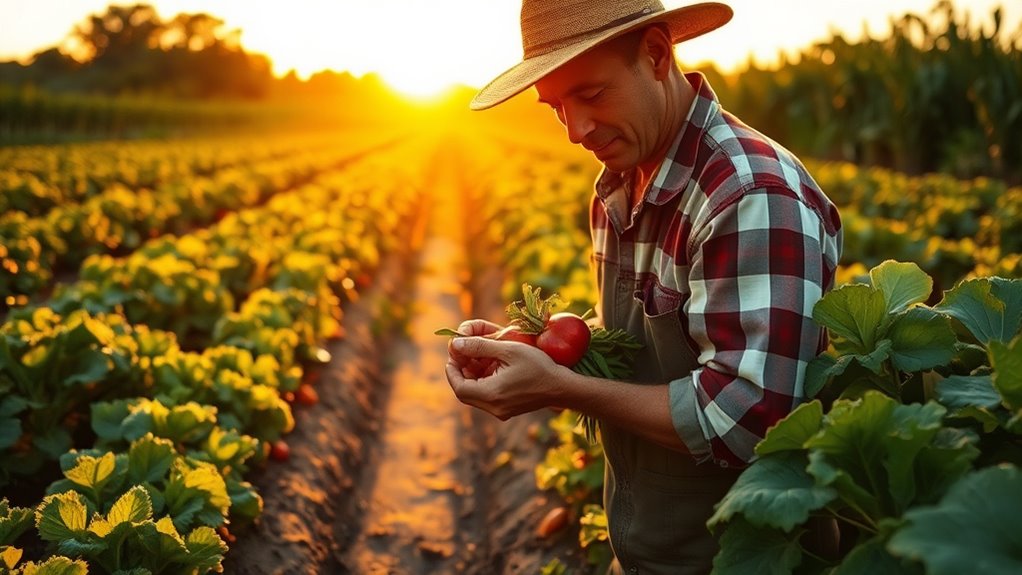

Responsible harvesting means taking only what’s necessary, respecting ecosystems, and ensuring fair treatment for communities involved. By choosing sustainable practices, you help protect the environment’s health and support fair trade. This approach promotes long-term resource availability, prevents exploitation, and encourages community empowerment. When you adopt these principles, you contribute to a more equitable and sustainable future. Staying mindful of these ethical choices can make a real difference, and if you look deeper, you’ll discover how much impact small actions can have.
Key Takeaways
- Prioritize sustainable harvesting to protect ecosystems and ensure resources remain available for future generations.
- Embrace responsible consumption by choosing products that are ethically sourced and environmentally friendly.
- Support fair trade practices that guarantee fair compensation and safe working conditions for harvesters.
- Recognize the finite nature of Earth’s resources and harvest only what is necessary to prevent overexploitation.
- Advocate for policies and practices that promote equity, transparency, and stewardship in resource use.

Have you ever considered the ethical questions behind how we harvest our natural resources? It’s an eye-opening inquiry that challenges you to think beyond convenience and profit. When you choose where and how your resources are sourced, you’re actively shaping a more just and equitable world. Instead of accepting the status quo, you can advocate for sustainable practices that prioritize long-term health over short-term gains. These practices ensure that ecosystems aren’t sacrificed for immediate harvests and that future generations will have access to the resources they need. It’s about recognizing that the earth’s bounty isn’t limitless, and harvesting it responsibly is an act of respect and stewardship.
Choosing sustainable harvesting respects the earth’s bounty and secures resources for future generations.
In this pursuit of ethical harvesting, fair trade plays a crucial role. When you support fair trade products, you’re championing a system that ensures producers receive fair compensation, work under safe conditions, and participate in decision-making processes. Fair trade isn’t just a label; it’s a movement toward equity that empowers communities and promotes sustainable practices. By choosing fair trade, you’re saying no to exploitation and yes to transparency, dignity, and sustainability. It’s about taking less than you could, so others can have more—more opportunity, more security, more freedom to thrive.
Taking less isn’t about deprivation; it’s about liberation. It’s a conscious act that counters the destructive cycle of overharvesting and environmental degradation. When you opt for sustainable products and support fair trade, you’re making a statement: You value the earth, its people, and their rights. This mindset shifts the power away from corporations driven solely by profit toward communities and ecosystems that deserve protection. Every purchase becomes a form of activism, a stand for ethical stewardship that respects the intrinsic worth of nature and human labor. Supporting hybrid bikes as an all-in-one solution for diverse cycling needs exemplifies how versatility can promote sustainable transportation options.
Moreover, embracing this ethic doesn’t mean sacrificing quality or your well-being. Quite the opposite—by choosing responsibly sourced goods, you gain access to products that are better for your health and the environment. You become part of a movement that prioritizes quality, fairness, and sustainability. This is your chance to challenge the dominant narrative of greed and extraction, replacing it with one of respect, balance, and liberation. The path toward ethical harvesting is clear: take less than you could, support sustainable practices, and uplift fair trade—because a truly free world is one where resources serve everyone, not just a few.

BELLANOMI African Exfoliating Net Sponge, Authentic, Ethically sourced from Nigeria, 45 inches Long, Back Scrubber for Daily use (Black)
Authentic & Ethical: Made with traditional West African mesh and ethically sourced from Nigeria, real Sapo performance without…
As an affiliate, we earn on qualifying purchases.
As an affiliate, we earn on qualifying purchases.
Frequently Asked Questions
How Do Cultural Differences Influence Harvesting Ethics?
Cultural differences deeply shape your harvesting ethics by influencing traditional practices and values. You may find that some cultures prioritize sharing and sustainability, guiding you to harvest responsibly, while others might emphasize abundance and individual gain. Embracing these diverse cultural traditions helps you respect local harvesting practices, fostering a sense of liberation through ethical stewardship. Recognizing and honoring these differences allows you to harvest consciously, aligning your actions with the community’s values and environmental well-being.
What Are Common Misconceptions About Ethical Harvesting?
Imagine a lush field, abundant yet respectful of its roots. Many believe ethical harvesting means taking only what’s necessary, but some think it’s about strict rules or limiting trade. In reality, it’s about embracing sustainable practices and fair trade, empowering producers and the environment. You can liberate yourself from greed by supporting these principles, ensuring that harvesting nurtures rather than depletes, creating balance for future generations.
How Can Farmers Balance Profit and Ethics?
You can balance profit and ethics by adopting sustainable practices that protect resources and guarantee long-term viability. Embrace fair trade principles to support fair wages and community development, empowering workers and fostering trust. Prioritize transparency and responsible harvesting, so your success doesn’t come at the expense of others. By doing so, you champion liberation for all involved, creating a business that’s both profitable and ethically sound, inspiring positive change in the industry.
Are There Legal Repercussions for Unethical Harvesting Practices?
Yes, there are legal repercussions for unethical harvesting practices. Laws like legal liability and regulatory enforcement hold farmers accountable for overharvesting or harming ecosystems. If you ignore these regulations, you risk fines, lawsuits, and loss of license, which can devastate your livelihood. Staying compliant not only protects you legally but empowers you to practice ethically, ensuring sustainable success and freeing you from potential penalties.
How Does Consumer Awareness Impact Harvesting Ethics?
Your awareness influences harvesting ethics considerably. When you stay informed about sustainable practices, you empower yourself to support responsible producers who prioritize ethical harvesting. Consumer responsibility means choosing products that respect environmental limits and fair labor practices, encouraging the industry to adopt more ethical methods. By making conscious choices, you help foster a system where harvesting respects nature’s boundaries, freeing you from guilt and promoting a more liberated, sustainable future for all.

Amazon Fresh, Organic Fair Trade Peru Whole Bean Coffee, Medium Roast, 12 Oz
Fragrant medium roast Peruvian coffee with a smooth finish
As an affiliate, we earn on qualifying purchases.
As an affiliate, we earn on qualifying purchases.
Conclusion
Remember, the true harvest lies not in how much you gather, but in how responsibly you nurture the land. When you take less than you could, you cultivate trust and respect, allowing the soil of ethics to grow deep roots. Like a careful gardener, let your actions reflect a gentle hand—sowing sustainability over greed. In this delicate balance, you’ll find that less truly yields more—more integrity, more harmony, and a future worth reaping.

Garden Silicone Thumb Knife, Harvesting Tools for Garden, Harvesting Knife with Cut Resistant Finger Cots, Garden Tool Set for Trimming Plant, Gardening Gifts and Kitchen Help
Our Harvesting tool set is designed for garden harvesting, also ideal for pruning and kitchen use. You can…
As an affiliate, we earn on qualifying purchases.
As an affiliate, we earn on qualifying purchases.

Simply Cool Reusable Grocery Bags Eco-Friendly – Large Reusable Shopping Bags, Heavy Duty Grocery Bags, 14.5"x14"x6.6" Foldable, Tote Bags Bulk (50 Pack, Cream)
✅50 PACK PREMIUM REUSABLE SHOPPING AND GROCERY BAGS: Do your part to help the environment by using our…
As an affiliate, we earn on qualifying purchases.
As an affiliate, we earn on qualifying purchases.