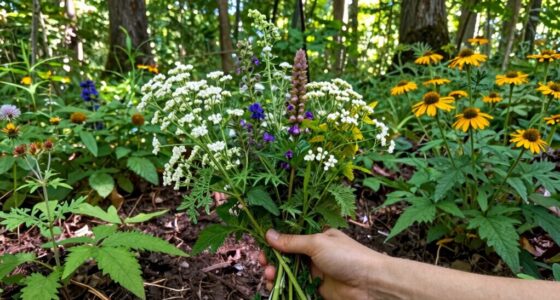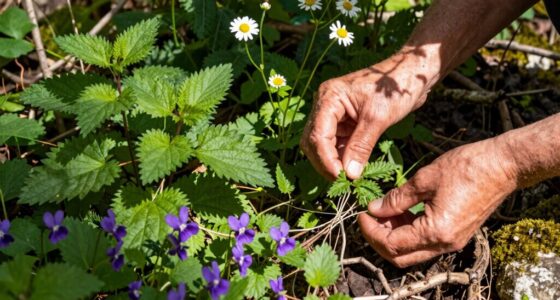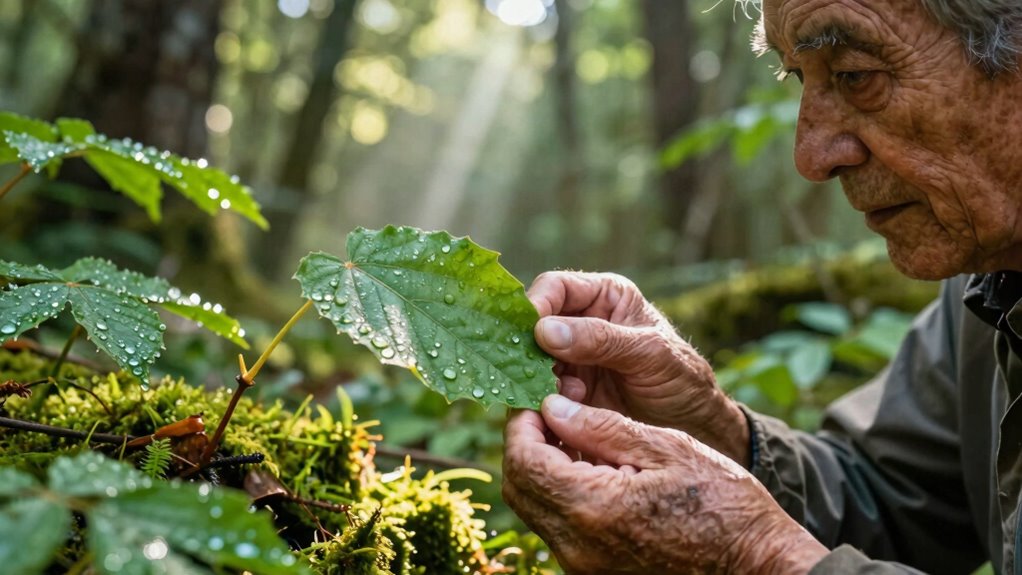

In traditional plant learning, observation is your most essential tool. You actively watch for subtle signs like leaf color, flowering times, and scent, guiding your understanding of when plants are ready for harvest or medicinal use. Your keen attention helps you interpret natural cues, connecting deeply with ecosystems and respecting seasonal cycles. By practicing patience and respect for nature’s rhythms, you build trust and sustainability. Keep exploring, and you’ll uncover how this mindful approach fosters a profound bond with the land.
Key Takeaways
- Observation serves as a vital means of passing down cultural knowledge through direct experience and oral tradition.
- It involves active, detailed monitoring of plant cues such as color, scent, and flowering time for optimal use.
- Observation helps interpret environmental and ecosystem signals, reflecting the interconnectedness of plants and their surroundings.
- Repeated attentive observation fosters a holistic understanding of seasonal cycles, ecological relationships, and sustainable practices.
- It cultivates patience, respect, and trust, reinforcing deep connections between people and the natural world.
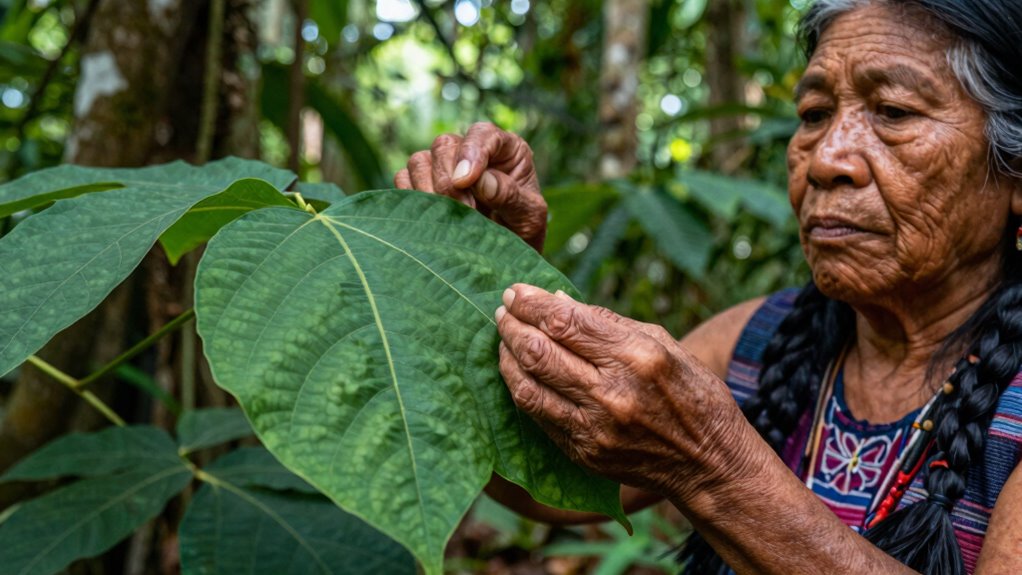
Have you ever wondered how traditional plant learning relies heavily on observation? In many Indigenous communities, this method isn’t just a way to gather information—it’s a crucial part of cultural practices that have been passed down through generations. When you immerse yourself in this way of learning, you quickly realize that understanding plants goes far beyond reading textbooks or scientific facts. Instead, it involves keenly watching the plants’ growth, behaviors, and interactions with their surroundings. This process allows you to develop a deep, intuitive connection with the natural world, rooted in Indigenous knowledge that has been refined over centuries.
Traditional plant learning emphasizes observation, cultural practice, patience, and deep connection with the natural world.
In these communities, observation isn’t a passive activity. It’s an active engagement where you pay close attention to details—such as the color of leaves, the time of flowering, or the scent of herbs. These subtle cues hold significant meaning, often linked to cultural practices like harvesting or medicinal use. For example, you might notice that a certain plant only blooms at dawn, which signals the right time for gathering. Such knowledge isn’t documented in books; it’s learned through direct experience and careful observation, passed down orally and through hands-on practice. This way of learning emphasizes patience, respect, and a deep understanding of the environment, reinforcing the interconnectedness of people and nature. Incorporating outdoor environments into learning enhances this process by providing real-time context for observations. Additionally, understanding the influence of local ecosystems deepens the insight gained from these observations. Recognizing the importance of environmental cues further enriches this traditional approach, as it highlights how subtle signals can guide decision-making in plant use. Recognizing the interdependence of species is also fundamental, as it helps interpret how plants relate to other organisms within their habitat. The process of observing and understanding these complex relationships is a vital aspect of Indigenous ecological knowledge.
Indigenous knowledge highlights the importance of context when observing plants. You learn to take into account seasonal changes, weather patterns, and local ecosystems, understanding that every detail influences a plant’s properties. Observation becomes a way to interpret these patterns and predict how plants will behave or when they’re most potent for use. This holistic approach ensures that knowledge isn’t fragmented but integrated into a broader worldview that respects the land and its cycles. Through repeated observation, you begin to recognize subtle signs—like the rustling of leaves or the shift in animal activity—that inform your decisions about gathering and using plants. This holistic worldview is essential for maintaining sustainable and respectful relationships with the environment.
Ultimately, the role of observation in traditional plant learning isn’t just about identifying plants; it’s about cultivating a relationship built on trust, patience, and respect. It’s a process that embodies Indigenous knowledge—knowledge that values the environment’s rhythms and the cultural practices that sustain it. When you embrace this way of learning, you tap into a wisdom that’s deeply rooted in centuries of experience, ensuring that the connection between people and plants remains vibrant, respectful, and sustainable.

Laminated Companion Planting Chart for Vegetables Herbs Organic Gardening Guide with Plant Pairings to Attract Beneficial Insects and Prevent Pests(Unframed,12x18inch(30x45cm))
- Framing Margin: Includes 0.6in white border for framing
- Durable Material: Canvas resists humidity and environmental damage
- Color Variations: Colors may vary slightly due to monitor differences
As an affiliate, we earn on qualifying purchases.
As an affiliate, we earn on qualifying purchases.
Frequently Asked Questions
How Do Different Cultures Interpret Plant Behaviors Through Observation?
You see that different cultures interpret plant behaviors through observation by drawing on ethnobotanical insights and cultural symbolism. For example, some cultures see certain plants as spiritual messengers, interpreting their movements or growth patterns as signs or messages. Others associate specific plant traits with cultural values or stories, using these observations to guide medicinal practices, rituals, or storytelling. These diverse interpretations reflect deep cultural connections and traditional knowledge passed through generations.
What Tools Assist in Observing Plants in Traditional Learning Methods?
Think of tools as your guiding stars in understanding plants. You use sensor techniques to detect subtle changes in moisture, temperature, or light, making the unseen visible. Recording methods, like journals or digital logs, help track these observations over time. Together, these tools act as a bridge, connecting you to the plant’s secret language, enhancing your ability to learn from nature’s silent, yet eloquent, conversations.
How Does Observation Influence Traditional Plant Harvesting Practices?
You depend on observation to determine the right time for harvesting by noticing plant growth patterns and soil moisture detection. By paying close attention to changes in leaf color, stem firmness, and fruit ripeness, you decide when plants are ready. Monitoring soil moisture helps guarantee plants have reached ideal hydration, influencing harvest timing. This hands-on observation technique ensures you harvest at peak quality, maximizing plant health and yield.
Are There Specific Seasons Best Suited for Plant Observation in Tradition?
You’ll find that spring and early summer are the best seasons for observing plant phenology, aligning with the peak of seasonal cycles. About 80% of traditional plant knowledge relies on noticing changes during these times. During these seasons, plants reveal their most telling signs, like blooming or fruiting, helping you understand the ideal harvest periods and deepen your connection to nature’s rhythms.
How Is Observation Integrated With Storytelling in Plant Knowledge Transmission?
You integrate observation with storytelling by sharing plant symbolism through sensory techniques that engage your senses, like smelling, touching, or tasting. As you observe plant behaviors and features, you weave these insights into stories that highlight cultural meanings and traditional uses. This approach helps you remember details more vividly, making plant knowledge memorable and meaningful. Sensory experiences deepen your understanding, creating a rich connection between observation and storytelling in learning about plants.
Conclusion
So, remember, your eyes are like the roots of a tree, anchoring your understanding deep into the soil of tradition. By actively observing, you become a living bridge between ancient wisdom and modern practice. Embrace this silent teacher, for it whispers secrets of the plants that no book can capture. Keep your gaze steady and your mind open—through observation, you’ll nurture a connection that blossoms into knowledge, much like a garden thriving under careful watch.