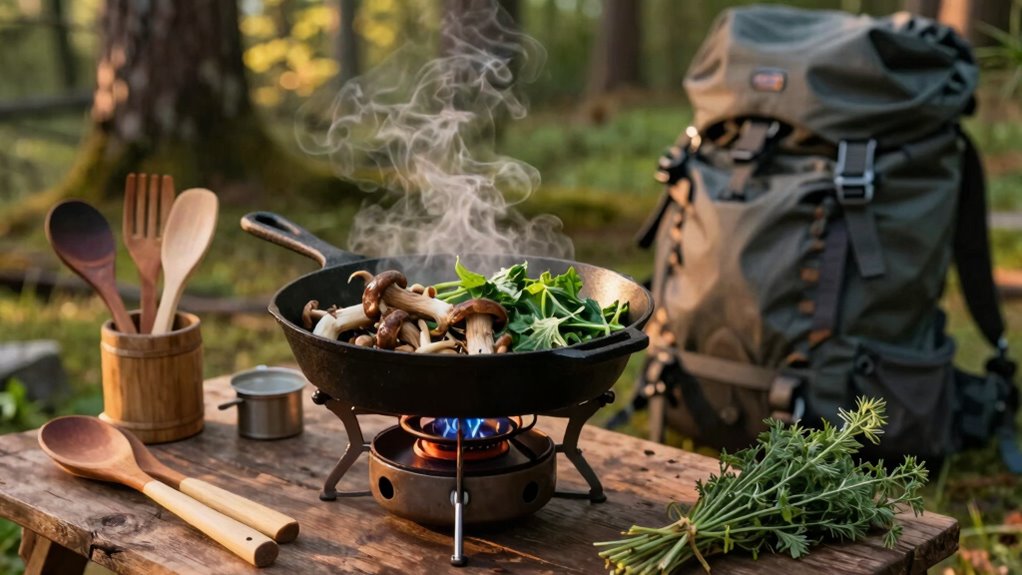
Mastering basic camp cooking skills helps you prepare wild harvests safely, efficiently, and sustainably. By managing fire safely, organizing your tools, and planning meals ahead, you guarantee delicious, nutritious outcomes while protecting the environment. These skills also make cooking more enjoyable and less stressful, so you can focus on your outdoor experience. Keep exploring to discover how these foundational techniques can turn your wild foods into memorable meals.

Get garden gear delivered free — and shop member deals
- Fast, free delivery on millions of items
- Access to Prime Big Deal Days deals on October 6–7
- Prime Video, Amazon Music and more included
Key Takeaways
- Ensuring safe handling and preparation of wild-harvested ingredients for nutritious meals.
- Facilitating efficient meal planning to minimize waste and optimize foraged food use.
- Managing outdoor cooking tools and fire safety to prevent accidents and environmental damage.
- Enhancing flavors and nutritional value through proper ingredient pairing and cooking techniques.
- Promoting responsible, sustainable cooking practices aligned with Leave No Trace principles.
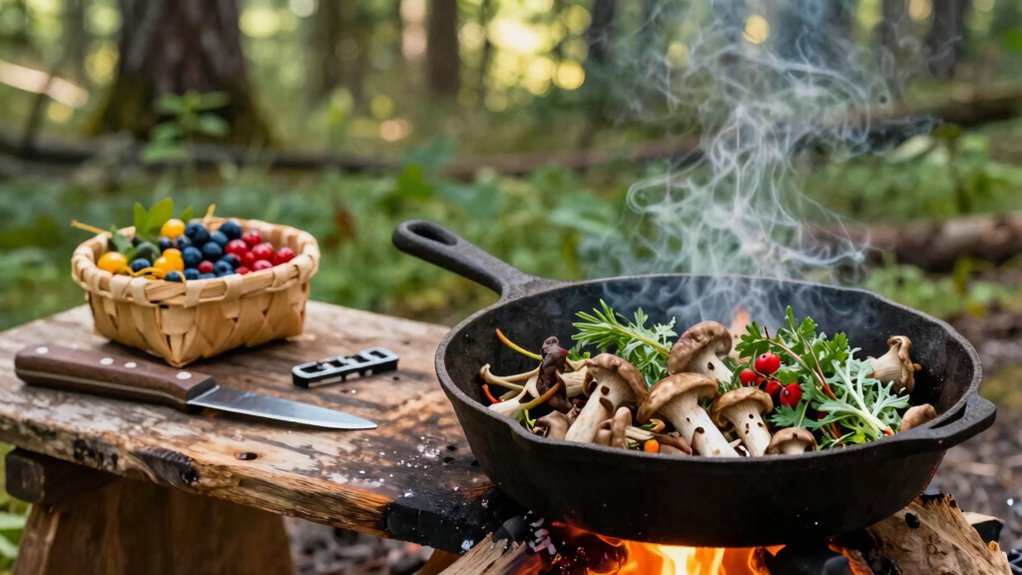
Cooking at camp can be simple and enjoyable if you master some basic skills. When you’re out in the wild, your ability to prepare meals efficiently and safely makes the experience more rewarding. One of the key skills is understanding fire safety. Campfires are essential for cooking, but they also pose risks if not managed properly. You need to keep a safe distance from flammable materials, never leave the fire unattended, and make sure it’s fully extinguished before leaving. Carrying a shovel or water source nearby allows you to control the fire and put it out quickly if needed. Learning how to build a proper fire—using the right kind of wood, arranging it for good airflow, and maintaining a manageable size—guarantees you can cook safely without risking wildfires or accidents. Incorporating fire safety into your routine can also help prevent unintended wildfires and protect the environment. Practicing these techniques enhances your overall understanding of fire safety and environmental responsibility.
Meal planning is another vital skill that elevates your wild harvesting experience. When you plan your meals ahead of time, you reduce waste, avoid carrying unnecessary supplies, and streamline cooking in the wild. Think about what ingredients pair well with the foraged foods you find and how they can be prepared with limited tools. Creating a simple menu that balances nutrients, flavors, and cooking times helps you stay organized and avoids last-minute hassles. Additionally, understanding how to manage your outdoor cooking supplies ensures a smoother experience when preparing your meals. It’s also helpful to familiarize yourself with Leave No Trace principles to minimize your impact on the environment while camping and cooking.
Combining these skills with your wild harvesting efforts adds a layer of confidence to your outdoor cooking. Knowing how to handle fire safely lets you focus on enjoying your meal rather than stressing over accidents. Well-thought-out meal planning ensures you’ll have what you need to cook your foraged finds properly, maximizing their flavors and nutritional value. When you approach camp cooking with these foundational skills, you turn what could be a chaotic or risky task into a smooth, enjoyable part of your adventure. You’ll find that preparing meals becomes a satisfying part of your outdoor experience instead of a chore. Plus, these skills help build respect for the environment and the resources you’re using, promoting sustainable harvesting and responsible camping habits. Ultimately, mastering fire safety and meal planning enhances not just your cooking but your entire wild harvesting journey, making it safer, more efficient, and truly enjoyable.
As an affiliate, we earn on qualifying purchases.
Frequently Asked Questions
What Are Essential Safety Precautions for Camp Cooking?
You need to prioritize campfire safety by keeping fires controlled and fully extinguished when unattended. Always wash your hands and utensils thoroughly to prevent food poisoning. Use a food thermometer to guarantee meats are cooked to safe temperatures, and avoid cross-contamination by keeping raw and cooked foods separate. Store perishable items in a cooler, and never leave food out, to reduce risks of food poisoning and keep everyone safe during your camp cooking adventures.
How Do I Store Perishable Ingredients While Camping?
To store perishable ingredients while camping, focus on food preservation and refrigeration methods. Keep perishable items in a cooler with plenty of ice or ice packs, ensuring it stays cold enough to prevent spoilage. Use airtight containers to protect your food from dirt and insects. If refrigeration isn’t available, consider using natural cooling methods like burying food underground or using snow, if accessible, to maintain freshness longer.
What Are Quick Cleanup Tips for Camp Cooking?
Don’t worry about messy cleanup—just master simple campfire techniques and utensil management. Rinse dishes with a bit of water over the fire or use biodegradable soap, then wipe down surfaces with a cloth or sponge. Keep utensils organized in a bag or container to avoid clutter. This way, you’ll enjoy quick, efficient cleanup, leaving your campsite tidy and ready for the next adventure.
How Do I Adapt Recipes for Limited Camp Stove Options?
To adapt recipes for limited camp stove options, focus on simple, one-pot meals using portable cookware. Master campfire techniques like indirect heat and managing flames to cook efficiently. Opt for versatile ingredients that require minimal prep and cook quickly. You’ll find that improvising with available tools and adjusting recipes on the fly enhances your camping experience, making delicious meals possible even with limited stove options.
What Are Tips for Cooking With Wild Ingredients Safely?
To cook with wild ingredients safely, always start with proper wild ingredient preparation—wash thoroughly and identify edible parts. Use flavor enhancement techniques like seasoning carefully to avoid overpowering natural tastes. Cook wild ingredients to the right temperature to eliminate bacteria or parasites. Keep your workspace clean, store wild foods properly, and avoid foraging from contaminated areas. These steps help guarantee safe, tasty meals from your wild harvest.
Conclusion
Mastering basic camp cooking skills transforms wild harvesting into a rewarding adventure. With these skills, you can turn freshly foraged ingredients into delicious, nourishing meals, making your outdoor experience even more memorable. Isn’t it satisfying to cook a meal from nature’s bounty right there in the wilderness? So, next time you head out, remember that a little preparation in the kitchen can elevate your entire camping trip—turning simple ingredients into unforgettable flavors.
Fall yard work Picks
leaf blowers
As an affiliate, we earn on qualifying purchases.