A good daypack for foraging has well-organized compartments for different gear, with quick-access side pockets for tools and waterproof sleeves for guides. It should be lightweight, comfortable, and adjustable to keep you balanced and agile. Include safety essentials like a first aid kit, flashlight, whistle, and multi-tool. Store harvested items carefully in reusable bags or containers to keep everything tidy. Keep nutrition and hydration within easy reach to stay energized. For tips on optimizing your setup, keep exploring.

Get garden gear delivered free — and shop member deals
- Fast, free delivery on millions of items
- Access to Prime Big Deal Days deals on October 6–7
- Prime Video, Amazon Music and more included
Key Takeaways
- Organize gear into dedicated compartments for quick access and to prevent unnecessary bulk during foraging.
- Include safety essentials like a first aid kit, flashlight, whistle, and emergency blanket for preparedness.
- Use lightweight, accessible containers and side pockets for hydration and nutritious snacks.
- Ensure the pack has adjustable straps and proper weight distribution for comfort and stability.
- Allocate specific storage for harvested items to keep them safe and organized while maintaining pack tidiness.
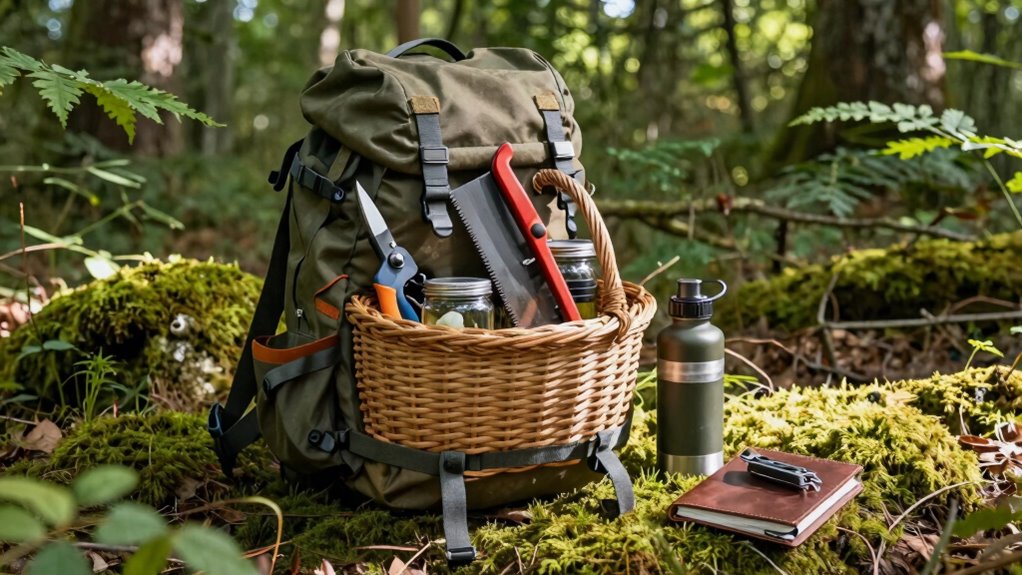
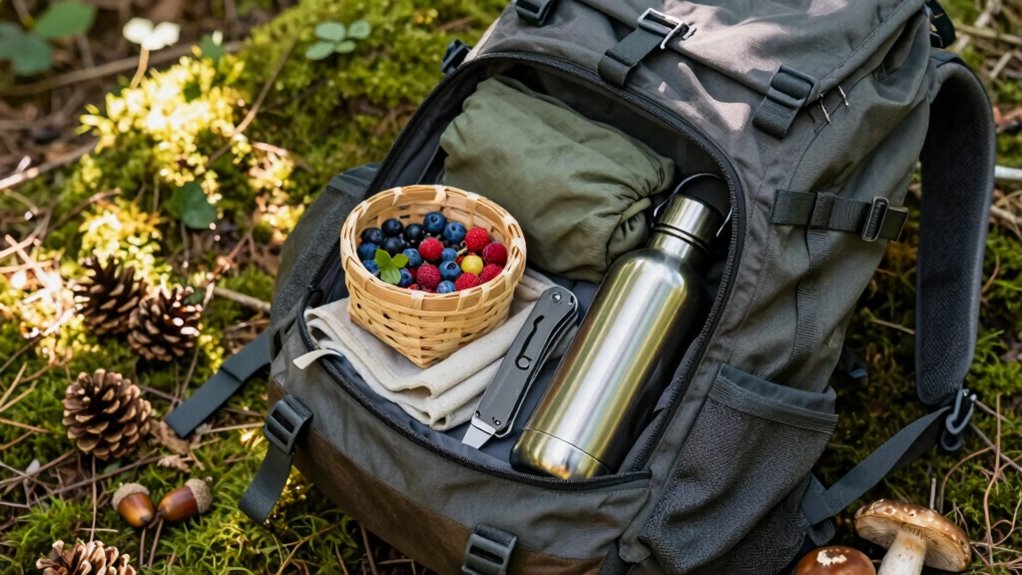
A well-organized daypack is essential for successful foraging, ensuring you have quick access to all your tools and supplies without unnecessary bulk. When you pack efficiently, you can focus on the hunt rather than digging through your bag. Start by dedicating specific compartments or sections for different gear organization needs. For example, keep your knife, scissors, or pruning shears in a side pocket or a small, easily accessible section so you can grab them swiftly when needed. Your field guides, maps, or identification books should be stored in a waterproof pocket or sleeve to protect them from the elements. This way, you won’t waste time searching or worry about damaging delicate materials.
Organize your pack with dedicated compartments for quick access and protection from the elements.
Safety essentials are a non-negotiable part of your pack. Always have a small first aid kit readily accessible, containing bandages, antiseptic wipes, and any personal medications. A compact flashlight or headlamp is invaluable, especially if you find yourself out longer than expected or in low-light conditions. A whistle can be a crucial safety tool to alert others if you get into trouble. Carry a multi-tool or a small set of pliers—these can be lifesavers whether you need to cut a vine or repair gear on the spot. Remember, safety essentials aren’t just about gear; include a lightweight, emergency blanket or poncho to stay warm or dry in sudden weather changes.
Your water supply should be lightweight and easy to reach. Consider a collapsible water bottle or a small hydration bladder that won’t take up much space. Nutrition is equally important, so pack energy bars or trail mix in a side pocket for quick snacks during your foraging excursions. To keep your hands free and your pack balanced, opt for adjustable straps and a snug fit that distributes weight evenly across your shoulders and hips. This prevents fatigue and keeps you agile while moving through rugged terrain.
Finally, a compact container or bag for your harvested items keeps your finds safe and organized. Whether it’s a small basket or a reusable cloth bag, it helps prevent damage and keeps your gear tidy. With these elements in place, your daypack becomes a well-oiled tool that maximizes efficiency, safety, and comfort. When everything has its place, you can focus on the thrill of foraging, confident that all your essentials are within reach and well-protected.
foraging daypack with multiple compartments
As an affiliate, we earn on qualifying purchases.
As an affiliate, we earn on qualifying purchases.
Frequently Asked Questions
How Do I Choose the Right Size Daypack for Foraging?
You should choose a daypack that fits your foraging needs by considering packing techniques and backpack ergonomics. Opt for a size that comfortably holds your tools, foraged items, and essentials without feeling bulky. A pack around 15-20 liters usually works well. Make certain it distributes weight evenly to prevent strain, and test its fit to avoid discomfort during long walks. Proper size and ergonomic design boost your efficiency and comfort.
What Materials Are Best for a Durable Foraging Backpack?
You should choose a durable foraging backpack made from eco-friendly materials like recycled polyester or organic cotton, which resist wear and tear while being environmentally conscious. Look for reinforced stitching to guarantee the seams hold up during rugged use. These materials balance durability and sustainability, making your foraging trips reliable and eco-friendly. With reinforced stitching, your pack stays intact, even when carrying heavy or rough items like branches or wild harvests.
How Can I Organize My Gear Efficiently in a Daypack?
Think of your daypack as a well-organized treasure chest, where every item has its own secret nook. Use smart packing techniques like stacking lightweight gear at the bottom and placing frequently used tools near the top. Keep your essentials accessible by compartmentalizing gear, ensuring you don’t have to dig through layers. This setup boosts gear accessibility, letting you swiftly respond to the wild’s whispers and find your treasures with ease.
Are There Lightweight Options for Long Foraging Trips?
Yes, you can find lightweight options for long foraging trips. Focus on essential packing by choosing compact, multi-purpose items, and prioritize lightweight safety gear like a slim first aid kit, a small knife, and a whistle. Use a streamlined daypack with good support to keep weight down. This way, you stay prepared without excess bulk, making your trip more comfortable and efficient.
How Do I Prevent My Gear From Getting Wet or Damaged?
To prevent your gear from getting wet or damaged, you need rain protection and gear waterproofing. Use a durable, waterproof backpack or rain cover, and pack your essentials in sealed, waterproof bags or containers. Keep electronics and valuables in dry pouches, and apply waterproof sprays to non-waterproof gear. By combining rain protection, gear waterproofing, and strategic packing, you guarantee your equipment stays dry, functional, and ready for any weather.
Conclusion
As you zip up your well-packed daypack, you realize it’s almost like it was made just for today’s foraging adventure. Everything fits perfectly—your tools, snacks, and a little surprise or two. Coincidentally, that unexpected find in your pack matches the thrill of discovering a new patch of wildberries. With your gear ready and your spirits high, you’re all set to enjoy the day’s bounty, making every moment feel just right—like it was meant to be.
Fall Picks
fall essentials
As an affiliate, we earn on qualifying purchases.