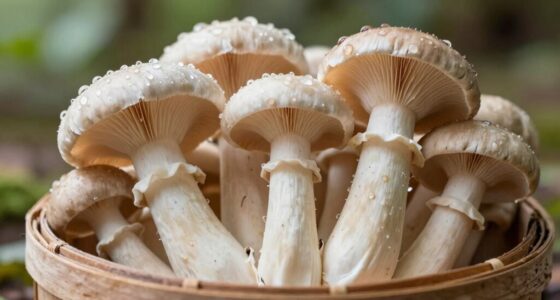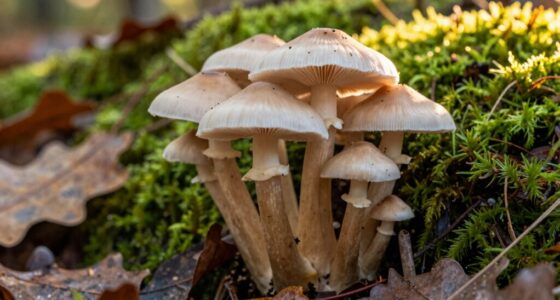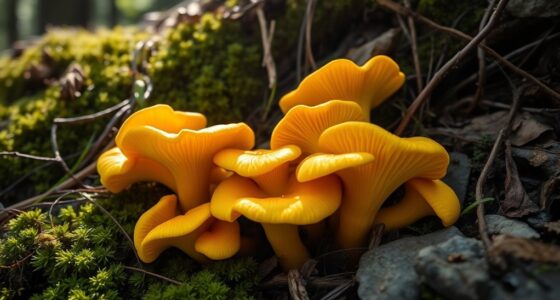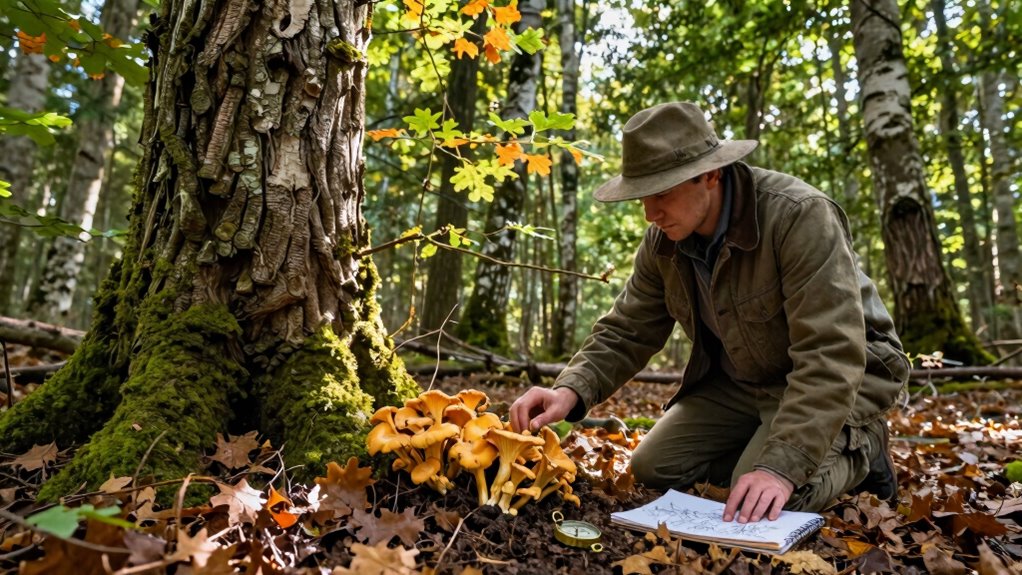
Learning to identify trees and understand weather patterns boosts your success in mushroom hunting because these factors influence where and when mushrooms grow. Trees create specific microhabitats and relationships with fungi, guiding you to prime spots. Weather conditions like rain and temperature changes trigger mushroom fruiting. Recognizing these clues helps you plan better hunts and find more mushrooms. Stick with it, and you’ll discover how nature’s signals can make your hunts more rewarding.

Get garden gear delivered free — and shop member deals
- Fast, free delivery on millions of items
- Access to Prime Big Deal Days deals on October 6–7
- Prime Video, Amazon Music and more included
Key Takeaways
- Understanding tree species helps target specific fungi that thrive in certain microhabitats.
- Recognizing weather patterns predicts optimal mushroom fruiting times.
- Microclimate knowledge guides hunters to areas with ideal moisture and temperature conditions.
- Tree and weather cues together enhance the accuracy of foraging predictions.
- Deep ecological knowledge increases success and safety in mushroom hunting.
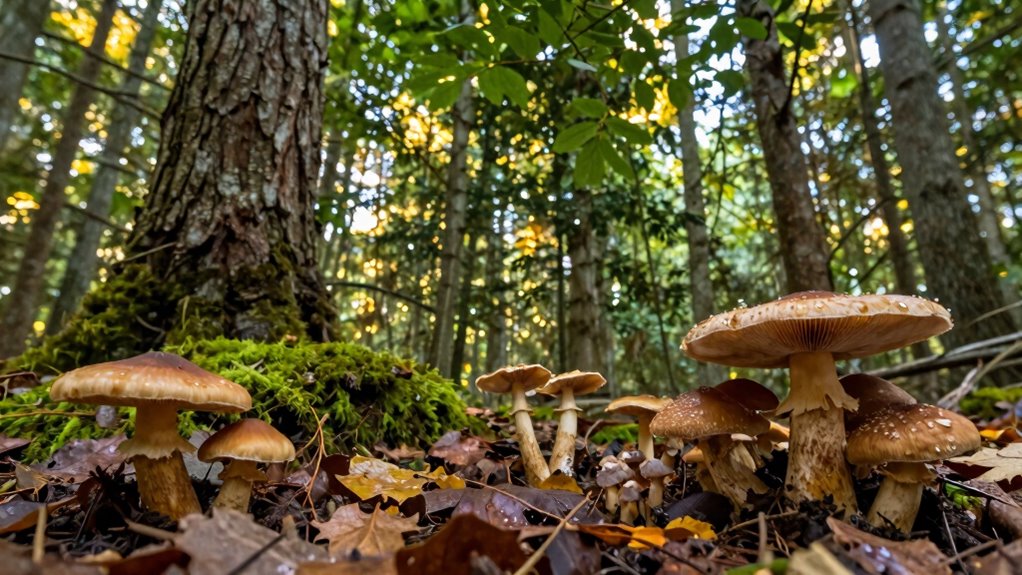
If you want to become a successful mushroom hunter, understanding the relationship between trees and weather is vital. Mushrooms don’t just appear randomly; they thrive based on the intricate web of forest ecology and seasonal patterns. Recognizing how trees influence their environment gives you a better grasp of where and when certain fungi are likely to grow. Different tree species create unique microhabitats, affecting soil composition, moisture levels, and nutrient availability—all essential factors for mushroom development. For example, some fungi prefer the roots of hardwoods like oaks, while others thrive under conifers such as pines. By learning which trees grow in your area and their associated fungi, you can target your foraging efforts more effectively.
Understanding tree types and weather patterns helps target mushroom foraging more effectively.
Seasonal patterns play a significant role in mushroom fruiting. As the weather changes throughout the year, so do the conditions that trigger mushrooms to emerge. During wet springs or after heavy rains, soil moisture increases, creating ideal conditions for mycelium to produce fruiting bodies. Similarly, fall often produces a surge in mushroom activity because of cooler temperatures combined with increased moisture from seasonal rains. Paying attention to these patterns helps you anticipate mushroom fruiting seasons. If you understand the typical timing of certain species, you can plan your hunts accordingly, increasing your chances of success.
In the context of forest ecology, you should observe how trees influence microclimates within the forest. For instance, dense canopies provide shade, retaining soil moisture longer and creating cooler, damp environments perfect for many fungi. Meanwhile, open areas with less canopy cover tend to dry out faster, favoring different species. Recognizing these microhabitats helps you identify prime spots for mushroom hunting based on the type of trees and the prevailing weather conditions. Keep track of recent weather patterns—extended dry spells can reduce mushroom activity, while periods of consistent rain can lead to abundant growth. Additionally, understanding tree-root relationships can help you pinpoint fungi that associate with specific tree species. This connection underscores the importance of understanding the biological and environmental factors influencing mushroom growth.
Ultimately, your ability to read the subtle cues from trees and weather patterns transforms mushroom hunting from guesswork into a strategic pursuit. By understanding forest ecology and seasonal patterns, you develop a deeper knowledge of where mushrooms are likely to appear and when. This knowledge not only boosts your success but also deepens your appreciation for the complex relationships within the forest ecosystem. The more you observe and learn, the more intuitive your foraging becomes, turning mushroom hunting into a rewarding and informed adventure.
Frequently Asked Questions
How Can I Identify Different Tree Species Easily?
You can identify different tree species easily by paying attention to tree bark and leaf shape. Examine the bark’s texture and color, noting whether it’s smooth, rough, or scaly. Look at the leaves’ shape, edges, and arrangement on branches. Comparing these features helps distinguish one tree from another. Practice regularly, and you’ll quickly improve your ability to identify trees, making your mushroom hunting more successful and enjoyable.
What Weather Conditions Are Best for Mushroom Foraging?
The best weather for mushroom foraging involves moist, mild conditions, typically after rainfall. Fungal ecology thrives in these environments, especially during spring and fall when climate variations bring consistent moisture. Avoid hot, dry spells or freezing temperatures, as they hinder mushroom growth. Cloudy days with high humidity promote spore dispersal and mycelium activity, making them ideal for hunters to find a diverse range of edible and medicinal fungi.
Do All Mushrooms Grow on Specific Types of Trees?
Not all mushrooms grow on specific types of trees, but many participate in fungus ecology and tree symbiosis. Certain species, like shiitake or maitake, prefer hardwoods, while others thrive on conifers. By understanding these relationships, you can target your foraging efforts more effectively. Recognizing which mushrooms associate with specific trees gives you an advantage, helping you find more fungi and appreciate their ecological roles within forest ecosystems.
How Do Seasonal Changes Affect Mushroom Growth?
Seasonal changes considerably impact mushroom growth through soil moisture and temperature fluctuations. As seasons shift, soil moisture levels vary, encouraging or hindering mushrooms’ development. Cooler temperatures in fall promote spore germination, while hot summer weather can dry out soil, stopping growth. You’ll notice more mushrooms after rain or snowmelt when moisture is high, and growth slows during droughts or extreme cold. Monitoring these seasonal patterns helps you find more mushrooms effectively.
Can Weather Forecasts Accurately Predict Mushroom Availability?
Weather forecasts can sometimes seem like crystal balls, but they’re only partially accurate when predicting mushroom availability. Rapid climate change and shifting weather patterns make it even trickier. You might see a forecast predicting a mushroom bonanza, but sudden rain or drought can spoil the party. So, while forecasts help, your best bet is to learn local weather quirks and track seasonal changes, giving you a better shot at hunting success.
Conclusion
By understanding trees and weather patterns, you can markedly improve your mushroom hunting success. Many believe that certain trees and weather conditions signal the best times and spots for foraging. While some theories are debated, the consensus is clear: knowledge of your environment boosts your chances. So, trust your observations, stay curious, and keep learning. The more you know, the better your chances of finding those elusive, prized mushrooms. Happy hunting!
Fall yard work Picks
leaf blowers
As an affiliate, we earn on qualifying purchases.