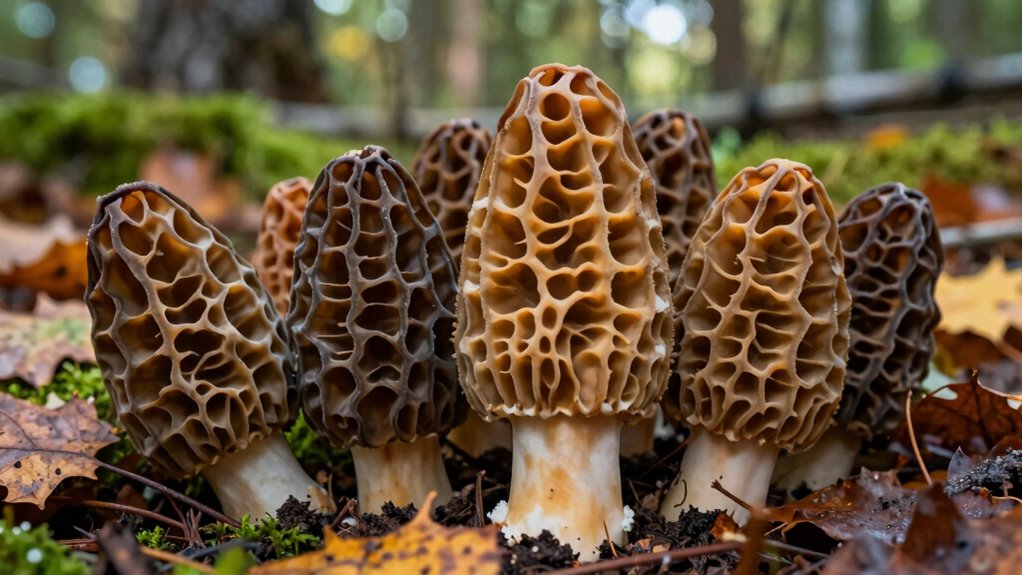
You find morels popular because they have a distinctive honeycomb cap and hollow stem that makes them easy to identify when you know what to look for. Their rich, earthy flavor adds a special touch to dishes, making them highly valued in cooking. The thrill of hunting in natural forests and successfully identifying these elusive mushrooms adds a sense of adventure. Curious about the secrets behind their allure? Keep exploring to discover more about their unique appeal.
Key Takeaways
- Their distinctive honeycomb caps and hollow stems make morels easy to identify and unique among wild mushrooms.
- The rich, earthy flavor enhances a variety of culinary dishes, increasing their desirability.
- The thrill of the hunt and the challenge of proper identification appeal to foragers’ sense of adventure.
- Foraging morels promotes sustainable harvesting and a connection with nature.
- Their popularity is boosted by educational resources and community groups emphasizing safe foraging practices.
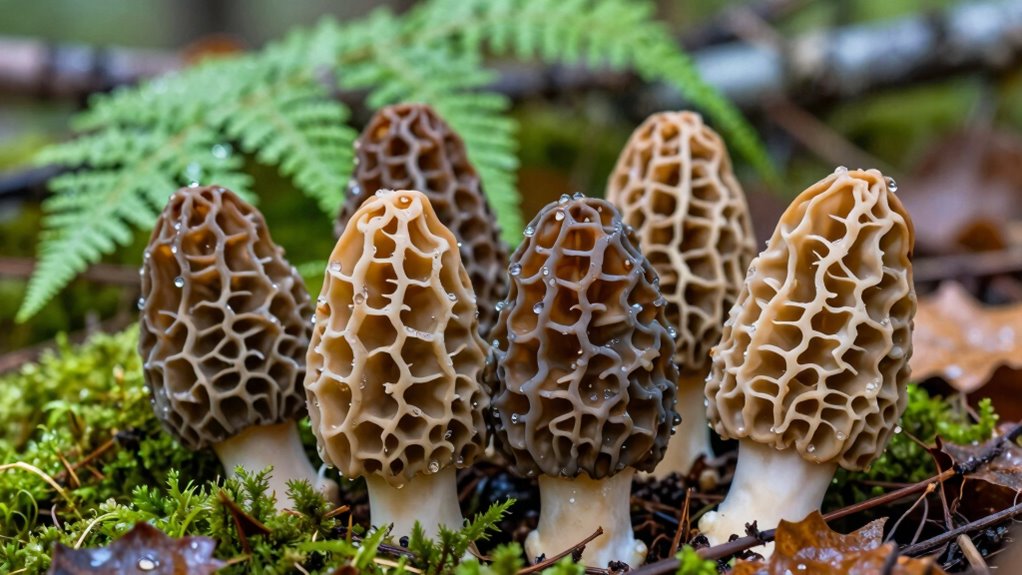
Many foragers avidly seek out morels because of their unique flavor and prized status among wild mushrooms. Their distinctive honeycomb caps and hollow stems make them easy to recognize once you know what to look for, but proper wild mushroom identification is vital to avoid confusion with toxic look-alikes. Morels are lauded for their rich, earthy taste, which elevates any dish, making them a favorite among both amateur and seasoned foragers. The thrill of discovering these elusive fungi adds to their allure, turning mushroom hunting into an exciting outdoor adventure.
However, despite their popularity, foraging safety tips are essential to guarantee your experience remains safe and rewarding. Always double-check your wild mushroom identification skills before harvesting. Many edible mushrooms have toxic counterparts that can look surprisingly similar, so take the time to learn key identifying features. For example, true morels have a completely hollow interior from top to bottom, unlike false morels, which often have a chambered or cottony center. Double-check the caps, stems, and overall shape, and consult reputable field guides or join local foraging groups to sharpen your skills. Never consume a mushroom unless you’re 100% certain of its identification.
Foraging safety tips also include being mindful of where you collect your morels. Avoid gathering near heavily polluted areas, such as roadsides or industrial zones, since mushrooms can absorb toxins from their environment. Stick to clean, undisturbed natural habitats like hardwood forests, especially in the spring when morels are most abundant. Always use a basket or mesh bag to carry your harvest. This allows spores to disperse as you walk, helping to guarantee future growth in the area. Additionally, understanding the market demand for wild mushrooms can motivate sustainable foraging practices to ensure the longevity of mushroom populations.
Another safety tip involves knowing your limits. Morels are delicious, but consuming large quantities of any wild mushroom without proper preparation can cause stomach upset. Cook your foraged morels thoroughly to break down any potential toxins and improve digestibility. It is also wise to familiarize yourself with mushroom habitat, as different species tend to thrive in specific environments, aiding in safer identification. Recognizing the vulnerabilities in devices used during foraging, such as mobile apps or GPS tools, can also assist in accurate location tracking and safety. Staying informed about foraging regulations in your area is crucial to avoid legal issues and ensure sustainable harvesting practices. If you’re new to wild mushroom foraging, consider going with an experienced guide or taking a class to learn safe harvesting practices. Remember, the goal is to enjoy the bounty of nature while staying safe. Additionally, using reliable identification resources can greatly reduce the risk of misidentification. Ultimately, the reason for the soaring popularity of morels among foragers hinges on their unique flavor, the challenge of wild mushroom identification, and the importance of following foraging safety tips. When you approach mushroom hunting with knowledge and care, you not only enjoy a delicious reward but also cultivate a deeper appreciation for the natural world.
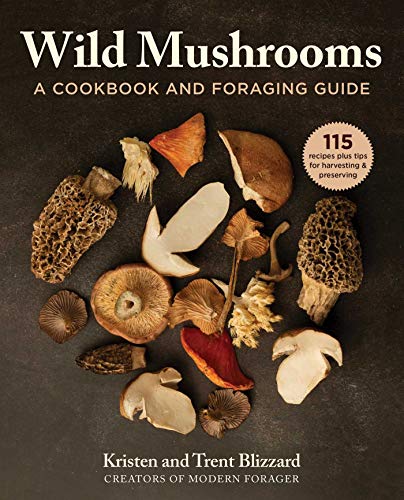
Wild Mushrooms: A Cookbook and Foraging Guide
As an affiliate, we earn on qualifying purchases.
As an affiliate, we earn on qualifying purchases.
Frequently Asked Questions
Are Morels Safe to Eat Raw?
No, you shouldn’t eat morels raw. They contain small amounts of toxins that can cause stomach upset or worse if eaten uncooked. Cooking enhances their nutritional benefits and makes them safe to consume. You can enjoy morels in various culinary uses, like sautéed, stuffed, or in sauces. Always cook morels thoroughly to release their full flavor and guarantee you avoid any potential health risks.
How Can I Distinguish True Morels From Look-Alikes?
Think of true morels as the wise old lighthouse guiding you through foggy waters. You distinguish them by examining mycelium identification—look for honeycomb caps that are deeply pitted, with a hollow stem, unlike look-alikes which often have solid stems. Mushroom habitat preferences also help; true morels thrive in deciduous forests during spring, nestled among specific trees. Trust your instincts, but always double-check to avoid dangerous look-alikes.
When Is the Best Time to Forage for Morels?
You should forage for morels in spring, typically from late March to early June, depending on your region. Focus on seasonal timing, as morels appear after the last frost when soil warms up. Use effective foraging techniques like checking burned areas, old orchards, and around dead or decaying trees. Patience and careful observation are key—you’ll find these prized mushrooms when conditions are just right.
Do Morels Grow in Specific Soil Types?
Did you know morels thrive in specific soil types? You’ll want to look for areas with well-drained soil, rich in organic matter. They prefer soil composition with a pH level between 6.8 and 7.1, which helps them grow best. These fungi often grow near certain trees like elms and ash, where soil conditions align with their pH and nutrient needs. Finding these spots increases your chances of a successful forage.
Can Foraging for Morels Be Done Sustainably?
Yes, you can forage for morels sustainably by practicing responsible harvesting techniques. Focus on sustainable harvesting by leaving some mushrooms behind to allow spores to disperse, which helps maintain local populations. Avoid overharvesting to minimize ecological impact, ensuring the forest ecosystem remains balanced. Be mindful of surrounding plant life and avoid damaging the soil or roots. By doing so, you support the health of morel populations and preserve their environment for future foragers.
Conclusion
You forage for the thrill, you hunt for the taste, and you cherish the rarity of morels. Their distinct appearance, rich flavor, and seasonal availability make them a sought-after treasure. You seek the adventure, you embrace the challenge, and you savor the reward. Morels aren’t just fungi; they’re a passion, a pursuit, and a delight. So, keep exploring, keep searching, and keep celebrating the magic of these extraordinary mushrooms.