Using laminar flow hoods in mushroom labs is essential for maintaining a sterile environment. They create a continuous flow of filtered air, removing bacteria, mold spores, and particles that could contaminate your cultures. Proper handling techniques, like disinfecting surfaces and sterilizing tools, combined with organized workspaces, help prevent contamination. Ensuring stable airflow and following sterile procedures keep your mushroom cultivation successful. Keep exploring to discover more tips for ideal clean work practices.
Key Takeaways
- Laminar flow hoods provide a sterile environment by continuously filtering and directing purified air over the workspace.
- HEPA filters in hoods trap 99.97% of airborne particles, preventing contamination during mushroom cultivation.
- Proper handling techniques, including disinfecting surfaces and flaming tools, ensure sterile conditions inside the hood.
- Maintaining organized, uncluttered workspaces minimizes turbulence and airborne contaminants.
- Regular inspection and replacement of filters are essential for optimal airflow and contamination prevention.
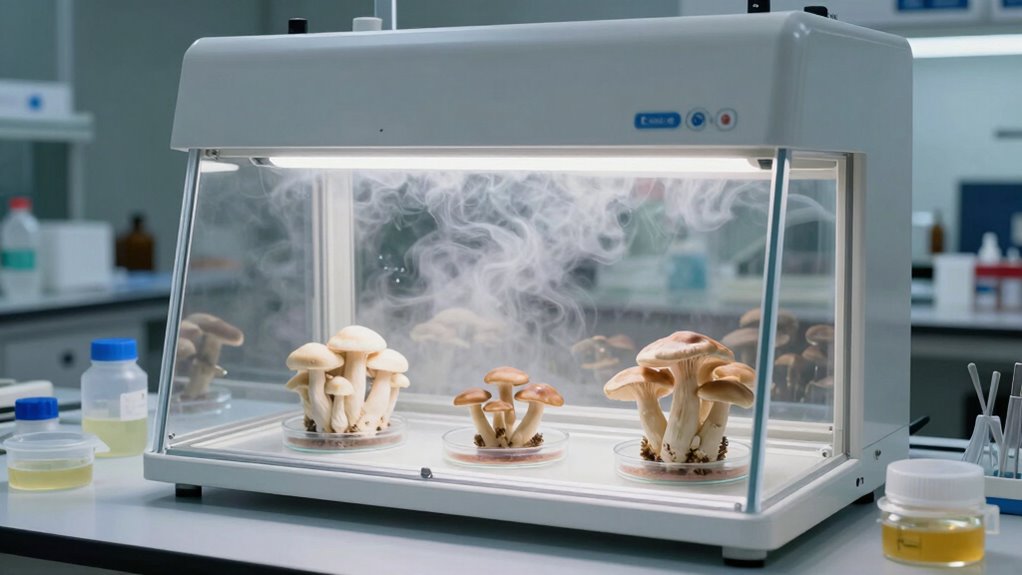
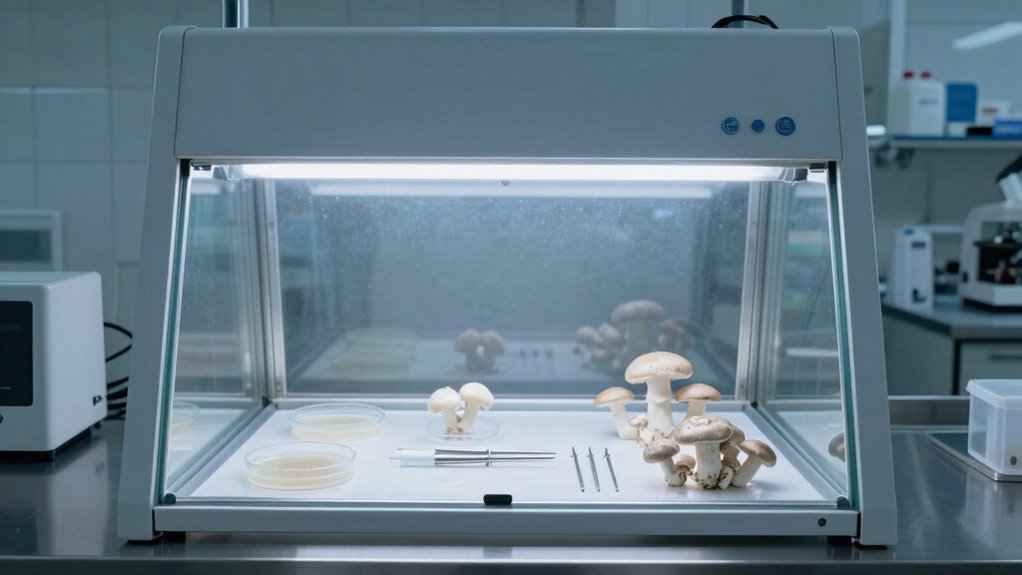
When working in mushroom labs, maintaining a sterile environment is essential for successful cultivation, and laminar flow hoods play a key role in achieving this. These hoods utilize advanced air filtration systems, typically HEPA filters, to create a continuous flow of purified air that pushes contaminants away from your work surface. This constant flow ensures that airborne particles, bacteria, and mold spores are kept at bay, considerably reducing the risk of contamination. As you work inside the hood, you’ll notice how the sterile environment is maintained, giving you confidence that your mushroom cultures remain pure and healthy. Proper air filtration is fundamental to maintaining this sterile environment and preventing contamination.
Using a laminar flow hood effectively requires practicing strict sterile techniques. Before starting, you need to thoroughly disinfect the work surface with alcohol or an appropriate sterilizing agent. This initial step is critical because it reduces the likelihood of introducing contaminants into your cultures. When handling tools and samples, you should always work in a methodical manner, minimizing unnecessary movements that could disturb the airflow or create turbulence, which might allow unwanted particles to settle. Wearing gloves, masks, and clean lab coats further reinforces your sterile environment, preventing the transfer of germs from your skin or clothing to your work area. Ensuring consistent airflow management helps sustain the sterile conditions necessary for successful cultivation. Additionally, understanding airborne contamination and how to prevent it is crucial for maintaining a pristine environment. Proper air filtration systems also play a vital role in continuously removing potential contaminants from the environment.
Thoroughly disinfect surfaces and handle tools carefully to maintain a sterile environment inside your laminar flow hood.
The air filtration system in the laminar flow hood is designed to pull air through the HEPA filter, which captures 99.97% of particles as small as 0.3 microns. This ensures that the air flowing over your work surface remains free of contaminants. You should regularly check and replace filters as needed to maintain peak performance. When working with mushroom cultures, you might also use flame sterilization for tools like scalpel blades or inoculation loops. Passing tools through a flame before and after contact with cultures kills any lingering microbes, further improving your sterile techniques.
Another important aspect is keeping the environment inside the hood uncluttered and organized. Cluttered workspaces increase the chance of accidental contamination and disrupt airflow. As you handle cultures or transfer media, do so swiftly but carefully, maintaining focus on sterile procedures. The combination of effective air filtration and disciplined sterile techniques creates a controlled environment, which is essential for producing healthy, contaminant-free mushroom strains.

Laminar Flow Hood with H13 HEPA Filter Mushroom Inoculation & Cultivation Fan Filter Unit for Mycology Supplies Laboratory Clean Room Dual-Fan Air Filtration System
【HEPA Filter with H13 Class】Our laminar flow hood equipment adopts dual-fan continuous air supply method and uses HEPA…
As an affiliate, we earn on qualifying purchases.
As an affiliate, we earn on qualifying purchases.
Frequently Asked Questions
How Often Should Laminar Flow Hoods Be Sterilized?
You should sterilize your laminar flow hood at the start and end of each work session to prevent contamination. Regular sterilization, ideally after every use, is essential for contamination prevention and maintaining a sterile environment. Additionally, if you notice any spills or debris, sterilize immediately. Consistent sterilization guarantees that your workspace stays clean, reduces the risk of contamination, and promotes healthy mushroom growth.
What Are Common Mistakes When Working in a Clean Mushroom Lab?
You often make mistakes that compromise contamination prevention, like neglecting sterile techniques or rushing your work. You might forget to disinfect your tools properly or fail to keep your workspace clean, leading to possible contamination. Always double-check that your work area is sanitized, gloves are sterile, and you follow strict sterile techniques. Avoiding these common errors helps maintain a clean environment, ensuring healthy mushroom growth and successful cultivation.
Can Laminar Flow Hoods Be Used for Other Types of Cultivation?
Think of a laminar flow hood as a versatile guardian, like a shield that can adapt to different battles. Yes, you can use it for alternative applications and different cultivation methods beyond mushrooms. It provides a sterile environment, making it suitable for growing herbs, bacteria, or other delicate cultures. Just make certain the hood’s filtration system and workspace are compatible with your specific needs, and you’ll expand your cultivation possibilities effectively.
What Safety Precautions Are Necessary Besides Using a Laminar Flow Hood?
Besides using a laminar flow hood, you need to prioritize personnel training to guarantee proper handling and reduce contamination risks. Always wear appropriate protective gear like gloves and masks, and work in a clean environment. Regularly sterilize work surfaces and tools, and follow strict protocols for contamination prevention. Keep the workspace organized and avoid talking or sneezing over your work area to maintain a sterile environment and safeguard your cultivation.
How Do You Troubleshoot Airflow Issues in Laminar Flow Hoods?
Oh, the irony of airflow issues—sometimes it’s just a simple fix. Start by checking airflow calibration; if it’s off, your hood’s not doing its job. Also, inspect and replace filters regularly, as clogged filters can sabotage airflow. Make sure vents are unobstructed and fans are functioning properly. These quick steps help restore the perfect environment for your mushroom work, avoiding contamination and ensuring safety.
sterile workbench for mushroom labs
As an affiliate, we earn on qualifying purchases.
As an affiliate, we earn on qualifying purchases.
Conclusion
Imagine confidently working in a mushroom lab, knowing your environment stays sterile thanks to a laminar flow hood. For instance, a small-scale grower used one to prevent contamination during spore inoculation, leading to a successful harvest. By maintaining clean workspaces, you reduce risks and boost yields. So, investing in a laminar flow hood isn’t just about cleanliness; it’s about giving your mushroom cultivation the best possible start and ensuring healthy, thriving fungi.

All American 75X Mushroom Farming Cultivation Electric Autoclave Sterilizer
As an affiliate, we earn on qualifying purchases.
As an affiliate, we earn on qualifying purchases.

Lab Infrared Sterilizer with 14/35mm Loop – 400°C/825°C Dual Temp, 150W/240W, Fast Sterilization for Scalpel, Needle & Lab Instruments – CE Certified, for Biology, Mycology & Clinical Labs (ds900)
🧪 Dual Temperature Sterilization System Adjustable 400°C/825°C settings for precise control—400°C for gentle glassware preheating, 825°C for 5-second…
As an affiliate, we earn on qualifying purchases.
As an affiliate, we earn on qualifying purchases.