TL;DR

Get garden gear delivered free — and shop member deals
- Fast, free delivery on millions of items
- Access to Prime Big Deal Days deals on October 6–7
- Prime Video, Amazon Music and more included
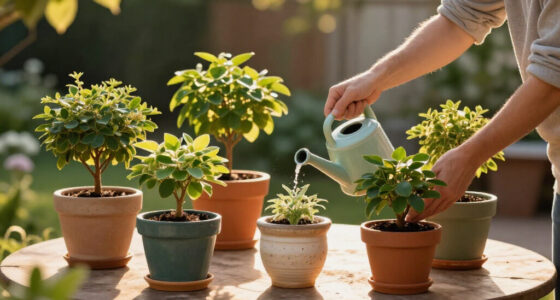
A Gardening Know How report warns that fall rain may wet the surface without thoroughly moistening the root balls of trees and shrubs planted within the past 6–12 months. Gardeners should check moisture around the root ball and keep newly planted plants watered as needed until the soil freezes, rather than relying on drizzle or damp mulch.
A Gardening Know How report says autumn rain may not be enough to water trees and shrubs planted in the past 6–12 months, because showers can dampen the soil surface while leaving the root ball dry. The guidance matters as gardeners prepare plants for winter: it recommends checking moisture near the roots and continuing to water when needed until the ground freezes.
The report distinguishes newly planted trees and shrubs from established plants with extensive roots. Established trees and shrubs can draw moisture from a wider area of native soil, while a recently transplanted plant may still depend on a relatively confined root ball. The report says the growing medium in nursery containers can differ from surrounding clay or loam, making it harder for water to move across the boundary between the two.
Rainfall can also be misleading. A light shower may wet mulch and the top layer of soil, but some water can evaporate or run off before it reaches the roots. The report adds that dense evergreen foliage may redirect rain away from the base. It does not supply a universal rainfall amount that guarantees a new plant has received enough water.
According to the report, roots may continue growing in fall while soil temperatures remain above 40°F (4°C). Adequate moisture supports that establishment, while dry root balls can leave plants more vulnerable to winter stress. The article advises gardeners to keep watering as needed until the soil freezes, rather than stopping just because days are cooler or surfaces look wet.
Why Root-Ball Moisture Matters
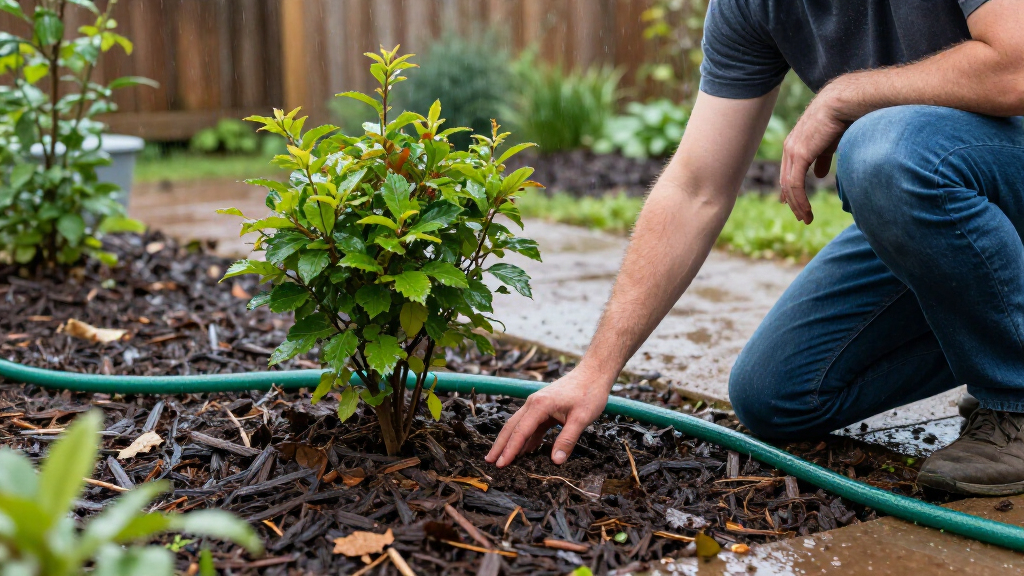
The practical risk is a mismatch between what a garden looks like and what a new plant’s roots are receiving. Wet pavement, damp mulch or a gray, drizzly day does not establish that the root ball is thoroughly moist. Checking the soil around the plant can help gardeners avoid relying on surface appearance alone.
The report links dry conditions before winter with possible root injury, frost-heaving and winter desiccation. Evergreens may be particularly exposed because their foliage continues to lose water during bright or windy winter weather. If frozen or dry roots cannot replace that lost moisture, foliage damage can follow. The report also says effects may not become visible immediately: a stressed plant might leaf out in spring before struggling later, making the original cause less obvious.
This is guidance for a specific group, not a blanket instruction to water every garden through winter. The report’s focus is on trees and shrubs planted within the previous 6–12 months. Their needs depend on soil, rainfall, plant type and local freeze conditions, so a moisture check is more informative than a calendar rule.
As an affiliate, we earn on qualifying purchases.
New Plantings Face Different Conditions
Cooler fall temperatures can reduce water loss from leaves, and established plants often have root systems spread well beyond their original planting area. Those conditions help explain why gardeners may reduce watering as the season changes. The report argues that the same assumption does not necessarily apply to recent plantings, whose roots have had less time to move into surrounding soil.
It describes a possible boundary between lightweight nursery potting media and heavier garden soil. If those materials hold or transmit water differently, moisture in the surrounding soil may not tell a gardener whether the original root ball is wet. The report also notes that roots can continue growing after leaves drop, provided soil remains warm enough, making fall moisture relevant to establishment.
The article discusses potential winter effects, including frost-heaving, root damage and browning known as winter burn. These are risks described by the source, not outcomes for every plant or every dry spell. Local weather, species, planting conditions and soil type affect how a plant responds.
“The gap between a wet surface and a thoroughly soaked root ball is where countless fall plantings quietly fail.”
— Gardening Know How report
Rainfall Needs Local Checking
The report does not give a single weekly watering schedule or rainfall threshold for all new trees and shrubs. It also does not specify how much water an individual plant needs, how often a gardener should apply it, or how those decisions should change across different soils and climates. Those details depend on local conditions and the plant’s size and type.
Its guidance should not be read as a claim that all autumn rain is ineffective, or that established plants need the same attention as recent transplants. The key point is that a wet-looking surface alone cannot confirm root-ball moisture. The report also describes winter injury as a risk, not a certainty, and does not quantify how often the listed problems occur.
Check Soil Before Watering
For gardeners with recent plantings, the next step is to inspect moisture around the root ball after rain rather than judging by the appearance of mulch or nearby pavement. If the root zone remains dry, water as needed and continue checking as fall progresses. The report’s endpoint is when the soil freezes; it does not recommend a fixed watering routine regardless of weather.
As temperatures fall, local soil and weather conditions will determine when watering is no longer practical. Gardeners should also watch the plant and the ground around it for signs of drying or heaving, while recognizing that damage may not appear right away. The article provides no further scheduled update or local forecast; its recommendation is to base fall watering on moisture at the roots.
Key Questions
Is fall rain enough for a newly planted tree or shrub?
Not necessarily. The report says a shower can wet the surface without soaking the root ball. Check moisture near the roots before deciding that rainfall has met the plant’s needs.
Which plants does this advice focus on?
The report focuses on trees and shrubs planted in the previous 6–12 months. Established plants with broad, developed root systems are less central to its warning.
How long should new plantings be watered in fall?
The report advises watering as needed until the soil freezes. It does not set a universal schedule; rainfall, soil conditions and plant type affect how often watering is needed.
Why can the surface look wet when roots are dry?
Light rain can wet mulch and shallow soil while evaporating or running off before reaching the root ball. The report also says the nursery growing medium and surrounding soil may handle water differently, and evergreen foliage can deflect rain.
What winter problems can dry root balls contribute to?
The report identifies possible root injury, frost-heaving and winter desiccation. These are risks, not guaranteed outcomes, and may depend on plant, soil and weather conditions.
Source: rss
Fall yard work Picks
leaf blowers
As an affiliate, we earn on qualifying purchases.