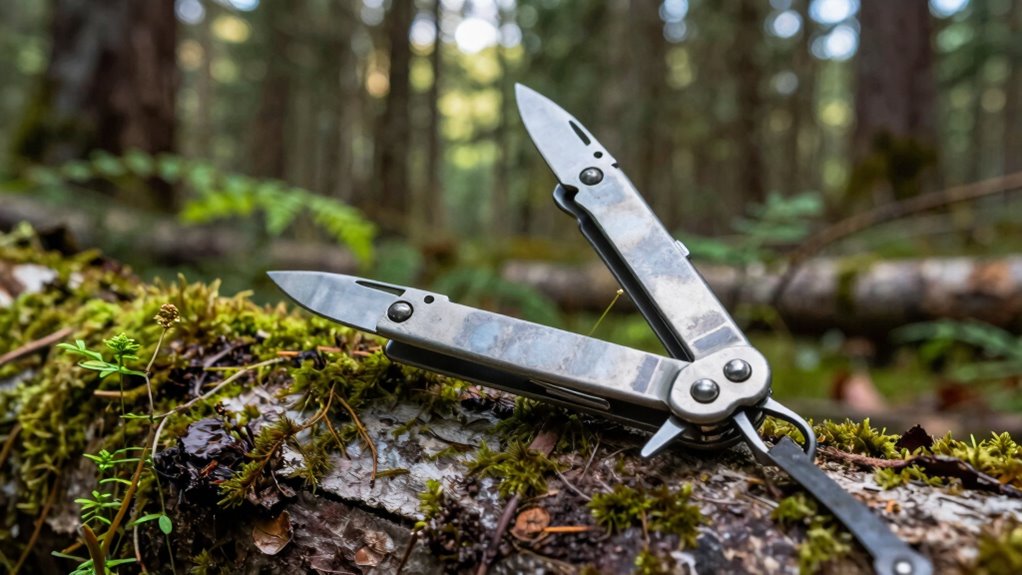

When you’re outdoors, simple tools often outperform complex ones because they’re more reliable, durable, and safer to use. They require less maintenance, are less prone to malfunction, and handle harsh conditions better. Plus, their straightforward design helps you focus on your environment rather than gear. They’re easier to carry, quick to troubleshoot, and safer in emergencies. Keep going to discover how these benefits can make your outdoor adventures smoother and more enjoyable.

Get garden gear delivered free — and shop member deals
- Fast, free delivery on millions of items
- Access to Prime Big Deal Days deals on October 6–7
- Prime Video, Amazon Music and more included
Key Takeaways
- Simple tools require less maintenance and are less prone to malfunction in outdoor conditions.
- They enhance safety by minimizing hazards and reducing mechanical or electrical failure risks.
- Easy-to-use designs improve focus and efficiency during critical moments outdoors.
- Durability and weather resistance make simple tools reliable in harsh environments.
- Their portability and practicality allow for easier carrying and quick repairs during outdoor activities.

When you’re outdoors, simplicity in your tools often leads to better results and less frustration. In the wilderness or on a camping trip, complex gadgets and high-tech gear might seem tempting, but they can quickly become liabilities. Relying heavily on technology can create more problems than it solves, especially when conditions change unexpectedly or when your equipment malfunctions. Simple tools, on the other hand, tend to be more reliable—they require less maintenance, fewer batteries, and less troubleshooting. When you’re focused on the task at hand, these straightforward tools let you concentrate on your environment rather than fighting with complicated devices.
One of the biggest advantages of keeping your tools simple is the safety consideration. High-tech tools often come with sharp edges, moving parts, or electrical components that could pose hazards if not handled properly. In outdoor settings, where help might be hours away, safety becomes even more critical. A basic knife, a sturdy fire starter, or a reliable flashlight can often do the job better and safer than a multi-functional gadget that might malfunction or be difficult to operate under stress. Simplicity minimizes the chances of accidents caused by confusion or malfunction, giving you peace of mind to focus on your surroundings instead of worrying about your gear. Additionally, simple tools are often more durable and weather-resistant, ensuring they perform well even in harsh outdoor conditions. Incorporating durability standards into your selection process can enhance the longevity of your gear. Moreover, selecting tools with simple designs can reduce the learning curve, enabling quicker and more confident use in critical moments.
Simple tools enhance safety, reduce accidents, and keep you focused on your environment in outdoor adventures.
Furthermore, simple tools often have fewer parts, which reduces the likelihood of breakage or failure and makes repairs more straightforward when needed. This is especially important when you’re miles from assistance or supplies. Plus, they tend to be lighter and more portable, which can make a significant difference during extended outdoor activities. Additionally, choosing tools with high contrast ratios can improve visibility in low-light conditions, aiding safety and efficiency.
As an affiliate, we earn on qualifying purchases.
Frequently Asked Questions
How Do Simple Tools Improve Safety in Outdoor Activities?
Simple tools improve safety in outdoor activities because they are easier to use and less likely to malfunction, helping you follow safety protocols effectively. By minimizing complexity, you reduce the risk of errors and accidents, enhancing risk management. When tools are straightforward, you can quickly identify issues and respond efficiently, ensuring your safety and that of others. This simplicity keeps you focused and prepared, making your outdoor experience safer and more enjoyable.
Can Simple Tools Handle All Types of Outdoor Tasks Effectively?
Simple tools, especially multifunctional tools and lightweight equipment, can handle many outdoor tasks effectively. They’re versatile enough to tackle various needs without the bulk of complex gear. However, for highly specialized or heavy-duty tasks, you might need more advanced equipment. Overall, their ease of use and portability make simple tools a reliable choice for most outdoor activities, ensuring you stay prepared without overloading yourself.
What Are Common Mistakes When Using Complex Outdoor Tools?
Using complex outdoor tools can turn into a disaster if you’re not careful. You might underestimate the importance of multitool versatility, leading to frustration when tools don’t suit the task. Ignoring ergonomic design can cause fatigue or injury. A common mistake is overcomplicating tasks, forgetting that simple, well-designed tools often do the job better. Focus on tools that are easy to handle and versatile, and you’ll avoid unnecessary mishaps in the wild.
How Does Tool Simplicity Impact Outdoor Gear Maintenance?
Tool simplicity makes outdoor gear maintenance easier because simple tools tend to have fewer parts, reducing potential breakdowns. When your gear is straightforward, you quickly understand its tool versatility and how to care for it. Your user familiarity increases, leading to faster repairs and less frustration. This simplicity minimizes the risk of mistakes during maintenance, ensuring your outdoor tools stay reliable and ready for your next adventure.
Are Simple Tools More Durable Than Complex Ones Outdoors?
Like a Swiss Army knife, simple tools tend to be more durable outdoors. Their straightforward design withstands harsh conditions better, reducing breakage. You’ll find that simple tools often offer better tool versatility, handling multiple tasks efficiently. Their design elegance means fewer parts to fail, making them more reliable over time. So, in outdoor settings, simplicity generally leads to greater durability, giving you peace of mind during your adventures.
Conclusion
So, next time you’re out in the wild, don’t overcomplicate things with fancy gadgets. Sometimes, the simplest tools—like a trusty knife or a sturdy rope—are all you really need. Ironically, the more high-tech and complex your gear gets, the more likely it is to fail when you need it most. Remember, in the great outdoors, it’s often your straightforward, uncomplicated tools that save the day—proof that simple truly is better.
Halloween Picks
halloween
As an affiliate, we earn on qualifying purchases.