Implementing advanced harvest crate systems can profoundly improve your field-to-pantry workflow by automating sorting, tracking, and quality control. Sensors and AI help you quickly assess produce, ensuring only the best reaches consumers. Real-time data provides insights to optimize harvest schedules and reduce waste. These technologies streamline operations, lower costs, and boost traceability, giving you a competitive edge. If you keep exploring, you’ll discover how such systems can transform your farm’s efficiency and sustainability.
Key Takeaways
- Automated sorting and sensors improve produce quality and consistency from harvest to packing.
- Real-time data tracking enhances inventory management and optimizes harvesting schedules.
- Streamlined workflows reduce delays, mislabeling, and increase traceability for better quality control.
- Automation lowers operational costs, minimizes waste, and supports sustainable farming practices.
- Digital systems provide strategic insights, boosting farm efficiency and market competitiveness.
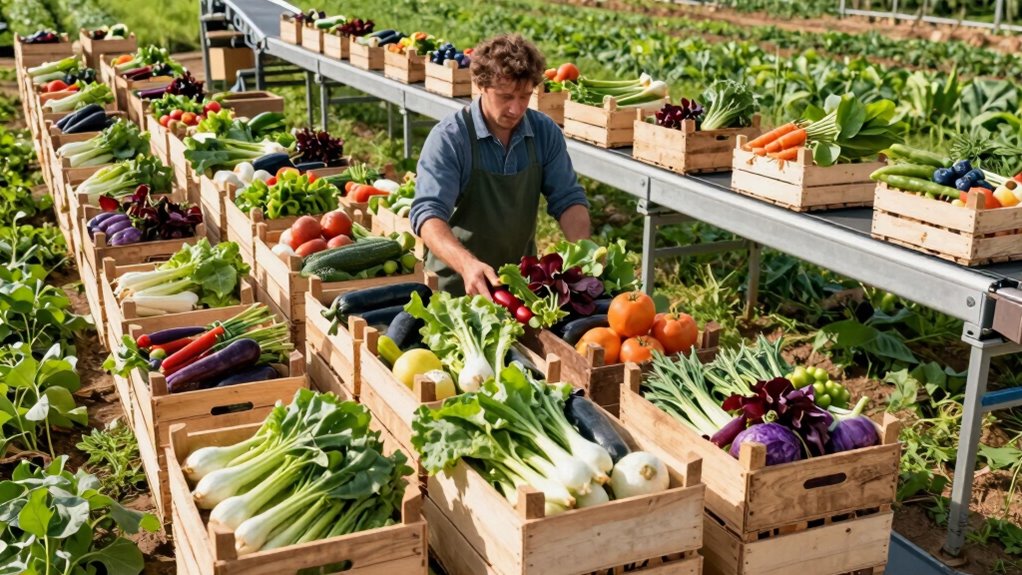
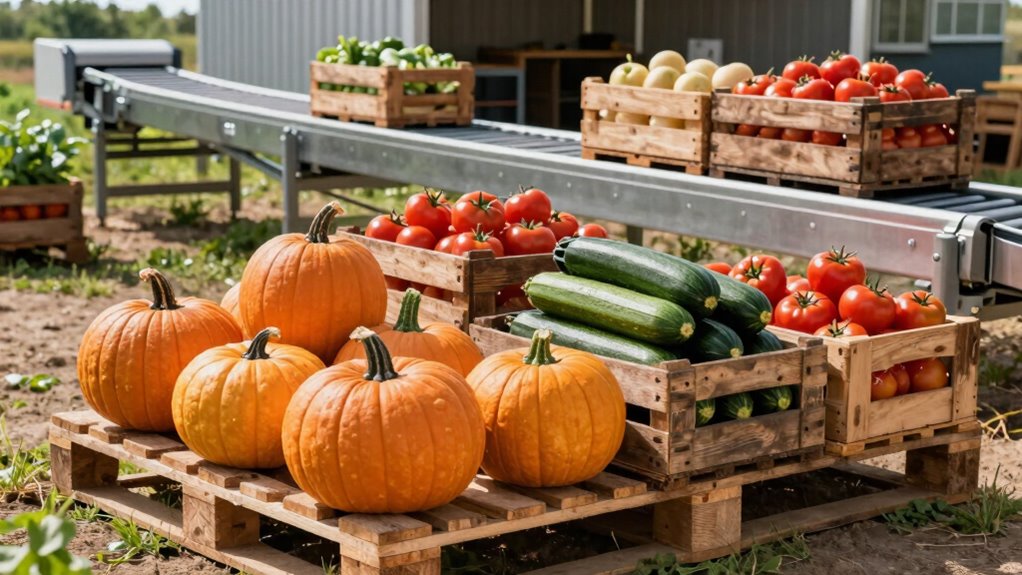
Efficient harvest crate systems are transforming how farms move produce from the field to the pantry, ensuring fresher goods and smoother workflows. These systems streamline the entire process, reducing manual handling and minimizing delays that can compromise produce quality. One of the key innovations driving this change is automated sorting, which allows you to quickly and accurately categorize fruits and vegetables based on size, ripeness, or quality. Instead of laboriously inspecting each item by hand, automated sorting machines use sensors and AI to make split-second decisions, freeing up your workers for more critical tasks. This not only speeds up the sorting process but also improves consistency, ensuring only the best produce reaches the market. When combined with data tracking, automated sorting becomes even more powerful. Data tracking systems record detailed information about each batch—such as harvest time, sort quality, and destination—giving you real-time insights into your operations. This data helps you identify bottlenecks, track inventory levels, and make smarter decisions about harvesting schedules or distribution, ultimately reducing waste and increasing profitability. As you adopt these integrated systems, you’ll notice a smoother flow from field to pantry, with fewer misplaced crates or mislabeled products. Data tracking allows you to monitor the entire lifecycle of your produce, from picking to packaging, so you always know where your goods are and their condition. This transparency makes it easier to coordinate logistics, plan deliveries, and meet customer demands efficiently. Additionally, the use of automated sorting can significantly reduce labor costs and improve overall operational efficiency. Automated sorting and data tracking also reduce the risk of human error, which can lead to costly mistakes such as wrong labeling or missed products. With these tools, you’re creating a more reliable and traceable supply chain, boosting consumer confidence and compliance with safety standards. Plus, the digital records you generate can be invaluable for future planning, quality control, and audits. Incorporating cryptid mysteries and folklore into storytelling can also engage consumers more deeply with your brand’s narrative. You’ll find that integrating these advanced technologies doesn’t just improve speed and accuracy; it also enhances overall farm management. By automating routine tasks, you gain time and resources to focus on quality improvements or expanding your operations. The data collected becomes a strategic asset, helping you optimize harvest timings, reduce waste, and better respond to market trends. Additionally, understanding the importance of digital transformation can help you stay competitive in today’s evolving agricultural landscape. Recognizing the significance of content quality and topical authority in communicating your innovations can also strengthen customer trust and brand loyalty. Ultimately, these systems empower you to deliver fresher, higher-quality produce, while maintaining a leaner, more efficient workflow from field to pantry. Advances in technology integration are essential for modern farms aiming to stay ahead in a competitive landscape. In today’s competitive agricultural landscape, leveraging automated sorting and data tracking isn’t just a technological upgrade—it’s a necessary step toward a more sustainable and profitable future.
automated harvest crate sorting system
As an affiliate, we earn on qualifying purchases.
As an affiliate, we earn on qualifying purchases.
Frequently Asked Questions
How Do Harvest Crate Systems Impact Overall Farm Profitability?
Harvest crate systems boost your farm profitability by streamlining harvesting and transportation, reducing labor costs, and minimizing crop damage. They support effective crop rotation, ensuring healthier soil and better yields over time. Additionally, these systems improve pest control by making it easier to identify and address infestations quickly. Overall, they enhance efficiency, reduce waste, and increase your crop quality, leading to higher profits and a more sustainable farming operation.
What Training Is Needed for Workers to Adapt to New Crate Systems?
You need to provide workers with training focused on worker safety and skill development to help them adapt to new crate systems. Teach proper handling techniques to prevent injuries and guarantee safe operations. Offer hands-on practice sessions to build confidence and proficiency. Regularly update training as systems evolve, emphasizing safety protocols. This approach helps workers efficiently integrate new crate systems, minimizing accidents and boosting productivity on the farm.
Are Harvest Crate Systems Environmentally Sustainable?
Yes, harvest crate systems can be environmentally sustainable when they incorporate eco-friendly packaging and recycling initiatives. By choosing biodegradable or reusable materials, you reduce waste and lessen environmental impact. Implementing recycling programs guarantees crates are reused or properly recycled, minimizing landfill contributions. Your efforts in adopting sustainable practices help protect the environment, promote responsible resource use, and support a greener supply chain from field to pantry.
How Do Crate Systems Integrate With Existing Supply Chain Technology?
Think of crate systems as the backbone connecting your supply chain’s heartbeat. You’ll find digital integration seamlessly syncing with existing technology, turning raw data into a clear roadmap. This boosts logistics optimization, making deliveries smoother and faster. Crate systems effortlessly weave into your current setup, transforming scattered processes into a synchronized symphony. With this harmony, you gain real-time insights, reduce waste, and elevate your overall efficiency from field to pantry.
What Maintenance Is Required for Long-Term Crate System Durability?
To guarantee long-term crate system durability, you need to follow specific maintenance protocols. Regularly inspect crates for cracks, warping, or damage that could compromise crate durability. Clean them thoroughly to prevent buildup of debris and pests. Lubricate hinges and moving parts if applicable, and store crates properly when not in use. Consistent maintenance helps extend their lifespan, maintains efficiency, and ensures reliable performance across your supply chain.
Conclusion
Think of your harvest process as a well-tuned symphony, where each crate system and workflow step acts as an essential instrument. When harmony is achieved from field to pantry, every note plays seamlessly, delivering fresh, vibrant produce. By fine-tuning your approach, you become the conductor, guiding your team toward efficiency and quality. Embrace these improvements, and watch your harvest flourish like a masterpiece—beautiful, balanced, and ready to nourish.