TL;DR

Get garden gear delivered free with Prime
- Fast, free delivery on millions of items
- Prime Video, Amazon Music and more included
- Member-only deals all year
Amateur Gardening has published advice from horticulture expert Simon Wilkinson on planting gravel gardens with colour and texture while keeping upkeep low. His five choices are Mexican feathergrass, English lavender, catmint, Adam’s needle and creeping thyme; success depends on good drainage and choosing plants suited to the site.
Amateur Gardening has published five plant recommendations from RHS award-winning horticulture expert Simon Wilkinson for adding colour, texture and movement to gravel gardens. The advice focuses on plants suited to free-draining conditions, offering gardeners options that can be relatively low-maintenance once established.
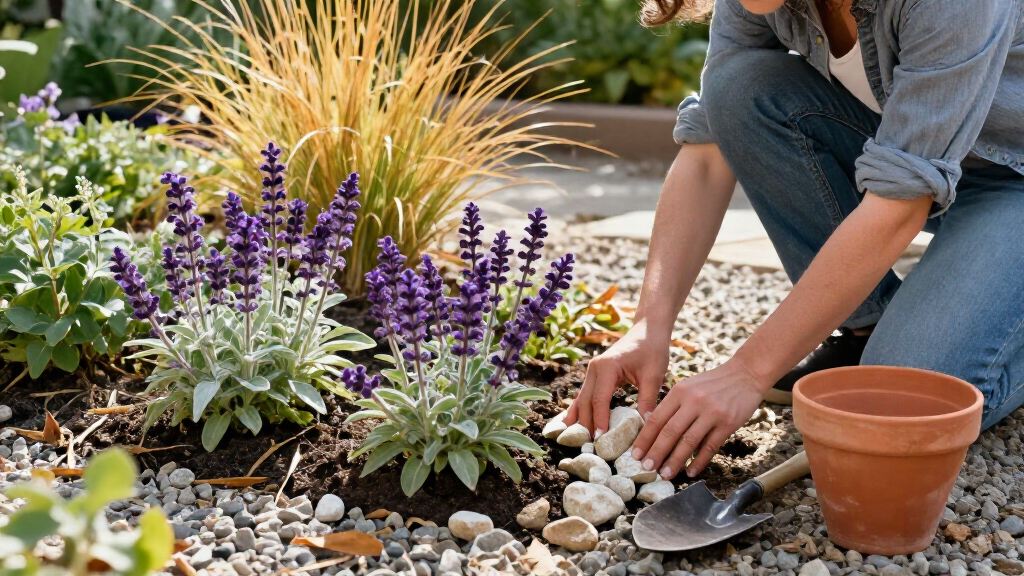
Wilkinson, managing director of Wilkinsons Landscapes, recommends Mexican feathergrass (Stipa tenuissima) for its fine, wind-responsive foliage, which can soften the look of stone. He also suggests English lavender, whose purple flowers attract pollinators and whose drought tolerance suits sunny, free-draining sites. The report advises pruning lavender after flowering to keep it compact.
Catmint (Nepeta ‘Walker’s Low’) is presented as another source of pale blue and purple flowers and a companion to lavender. Wilkinson also recommends Adam’s needle (Yucca filamentosa), an evergreen plant that produces tall white flower spikes, while warning that it needs good drainage and does not tolerate sitting in wet soil.
For ground-level planting and paths, the fifth choice is creeping thyme, which can grow between stepping stones and rocks. The report also mentions flaky juniper ‘Holger’ as an example of steel-blue foliage that can contrast with warmer brown or caramel gravel. These are recommendations, not a guarantee of performance in every garden; local conditions and care affect results.
Plant Choices Shape Gravel Gardens
The recommendations address a common design concern: gravel planting need not mean a bare, uniform area of stone. Combining grass-like movement, flowering perennials and evergreen structure can create visual variety while retaining the open, free-draining conditions these plants prefer.
There is also a practical consideration for gardeners choosing plants in response to hot or changeable weather. Wilkinson’s advice centres on species that tolerate drier conditions, but the report does not suggest gravel gardens suit every site. Drainage, sunlight and plant selection remain central, and a damp, low-lying garden may need a different planting plan.
The wildlife value is another point raised in the report: lavender and catmint flowers can attract pollinators. That potential depends on the plants establishing and flowering; a gravel surface alone does not guarantee a wildlife-friendly space.
Popular right now

Dyson V8 Cordless Vacuum

Shark AI Ultra Robot Vacuum with Self-Empty Base

Vitamix 5200 Professional-Grade Blender, 64 oz. Container, Black
As an affiliate, we earn on qualifying purchases.
Design Advice Behind the List
The report frames gravel gardens as an option some UK gardeners are considering after a period of unusually hot weather. It says interest in them is growing as people look for lower-maintenance ways to manage outdoor spaces, but provides no survey or figures to measure that trend.
Wilkinson says a gravel garden can be planted in different styles, rather than being limited to sparse planting and grey stone. His key principle is to select plants that suit free-draining soil. The report’s basic setup advice is to choose a sunny location where appropriate, clear weeds, consider weed membrane, spread about two inches of gravel and use brick or wood edging to contain it.
He also advises checking the site’s natural drainage before work begins. If an area is damp or low-lying, the report recommends working with those conditions and choosing plants that tolerate them, rather than assuming drought-tolerant species will thrive. Repeating a smaller selection of plants, instead of overcrowding the space with many varieties, is suggested as a way to create a more consistent design.
“The absolute key to a successful gravel garden is choosing plants that are happy in free-draining conditions.”
— Simon Wilkinson, speaking to Amateur Gardening
Site Conditions Still Matter
The report does not provide comparative trials, planting densities or detailed care schedules for the five recommended plants. It also does not specify how each will perform across different UK regions, soil types or levels of exposure. Local climate and drainage can affect whether a plant establishes and how much maintenance it needs.
The source describes gravel gardens as increasingly popular but gives no data to quantify that claim, and it does not date the hot-weather period it references. The advice should be read as expert guidance rather than a measured assessment of water use, maintenance time or wildlife impact.
Check Drainage Before Planting
For gardeners using the advice, the next step is to assess the site’s sunlight, soil and drainage before buying plants or laying gravel. The report suggests clearing weeds, deciding whether membrane is appropriate and planning edging, then choosing plants matched to those conditions. Gardeners should leave enough room for growth and consider repeating varieties for a coherent layout.
There is no further event or follow-up date announced in the source. Plant performance will become clearer as gardens establish, and the report does not offer outcome data or a schedule for future updates.
Key Questions
Which five plants does the report recommend?
It lists Mexican feathergrass, English lavender, catmint, Adam’s needle and creeping thyme.
What is the most important condition for a gravel garden?
Wilkinson identifies good drainage as key. The plants should also be matched to the site’s sunlight and soil conditions.
Does every gravel garden need to be sunny?
The report recommends a sunny, open location for many drought-tolerant plants, but says gardeners with damp or low-lying areas should work with those conditions and select suitable plants.
How can a gravel garden attract pollinators?
The report says lavender and catmint flowers attract pollinators. Their presence does not guarantee a particular wildlife outcome, which can depend on the garden and local conditions.
How much gravel does the report suggest?
Its basic setup advice is to spread about two inches of gravel after clearing weeds, with membrane considered if required. It does not give a universal specification for every site.
Source: amateurgardening.com