
TL;DR

Get garden gear delivered free with Prime
- Fast, free delivery on millions of items
- Prime Video, Amazon Music and more included
- Member-only deals all year
A plant sold as a Christmas cactus may be a Thanksgiving type, a Christmas type or a hybrid, and its label alone is not a reliable guide. Check mature stem segments and, before changing care, see whether flower buds have already formed: budded plants generally need stable conditions, while unbudded plants may respond to a consistent autumn routine.
A Planet Natural report advises checking a holiday cactus’s mature stem segments and looking for buds before changing its care, because retail labels can be imprecise and many plants are hybrids. The distinction matters most in autumn: a plant that already has buds generally needs steady light, temperature and watering, while an unbudded plant may benefit from a consistent routine that supports bud formation.
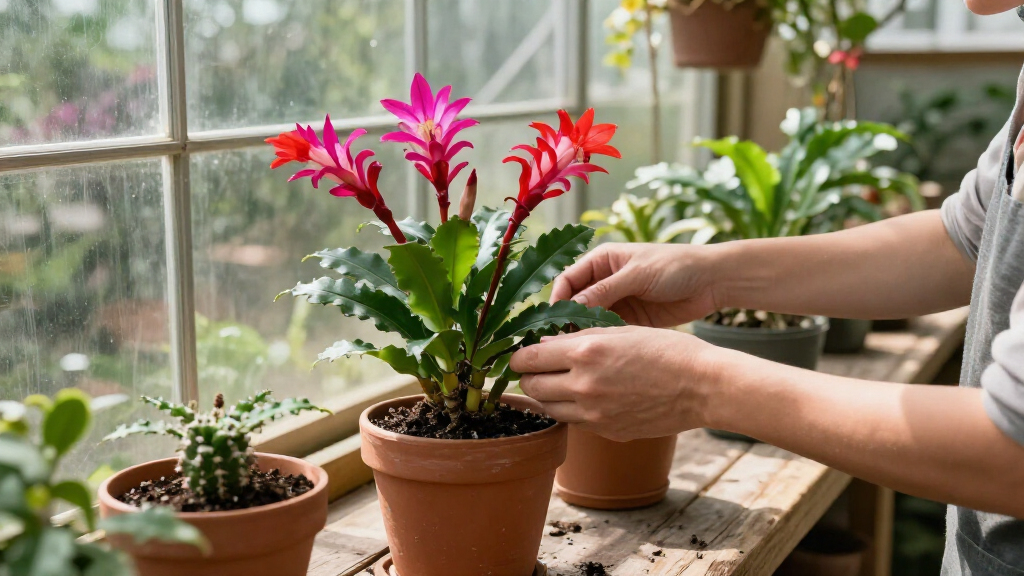
According to Planet Natural’s identification guidance, inspect several mature, undamaged stem segments in good light. Thanksgiving-type cacti, associated with Schlumbergera truncata and related cultivars, tend to have distinct pointed teeth along the margins. Christmas-type plants, generally identified as Schlumbergera × buckleyi, tend to have rounded scallops. The flat green pieces commonly called leaves are stem segments. A close-up photograph can help with comparison without repeated handling.
Planet Natural cautions that these traits are clues, not a guarantee of exact identity. Hybrids may have intermediate margins, so the report recommends keeping the identification qualified rather than trying to make a plant fit its store label. Flower shape and a plant’s repeated flowering pattern can add evidence, but one bloom date is less reliable because indoor conditions and commercial production can shift flowering. The report also distinguishes Easter cactus, which may have rounded segments with small bristles at the tips and star-shaped flowers; it belongs to a spring-flowering group and should not be given a Christmas deadline.
Before trying to influence flowering, Planet Natural advises checking the segment ends for developing buds. If they are present, avoid elective repotting, pruning or repeated moves. Keep the plant in bright, indirect daytime light and away from heater airflow, cold window glass and frequently opened exterior doors. Water when the surface of the potting mix begins to dry, then water thoroughly and let excess drain. Do not leave the root ball severely dry or the pot waterlogged, and empty water from saucers or decorative covers.
Care Depends on Buds and Conditions
Planet Natural’s guidance emphasizes that its current stage of flowering is the more immediate care signal. A budded plant has already begun its flowering response; trying to force a different schedule with abrupt changes may put those buds at risk. The report says changes in light, temperature and moisture can contribute to bud loss, though a fallen bud alone does not establish why it happened or prove the plant was mislabeled.
For a plant without buds, the report says a consistent autumn environment may support bud initiation. It describes bright indirect daytime light, uninterrupted nights and cooler nighttime conditions as helpful for Thanksgiving and Christmas types. That is not a promise of flowers by a specific holiday: starting a routine shortly before a date cannot reliably produce blooms by then. The report also cautions that treating a forest cactus like a desert cactus can lead to poor watering decisions.
Popular right now

Dyson Ball Animal 2 Plus Corded Vacuum

Breville Bambino Espresso Machine, Brushed Stainless Steel

Samsung 48-Inch S90H OLED 4K Smart TV (2026)
As an affiliate, we earn on qualifying purchases.
Labels, Species and Flowering Clues
Planet Natural reports that holiday cacti are commonly sold under familiar seasonal names, but retail names are loose, growers can affect flowering, and many plants are hybrids. For a general home-care decision, a qualified description such as “Thanksgiving-type holiday cactus” may be more accurate than assigning a precise cultivar based on one feature. If exact botanical identity matters, supplier records or a specialist may help.
Segment margins offer a practical starting point, while flower shape and repeated bloom timing are supporting clues. Planet Natural cites Illinois Extension’s holiday-cactus identification guide as a visual reference for comparing segments and flowers. Neither a store label nor a single flowering date should outweigh the plant’s visible traits and current condition.
Identity and Bloom Timing Vary
The source material does not establish the identity of any particular reader’s plant, and it supplies no named cultivar or supplier records. As Planet Natural notes, intermediate segment shapes may reflect hybrid traits, so visual inspection may support only a broad identification. A plant’s flowering date can also shift with indoor conditions and commercial production; one bloom is not definitive evidence of type.
The timing of bud formation and opening is not guaranteed. The report notes that extension recommendations for uninterrupted darkness vary by temperature and cultivar, and does not provide a single schedule that works for every plant. If buds fall, the cause remains uncertain: changing conditions, watering problems or other factors may be involved. Check the plant’s environment and potting mix rather than assuming it needs more water or that its label is wrong.
Keep a Stable Autumn Routine
For a budded plant, Planet Natural advises settling on a suitable place with bright, indirect daytime light, protecting it from cold transport and drafts, and checking soil moisture regularly. Move it if its current position is harmful, then avoid repeated trial placements. For a healthy plant without buds, choose a location with useful daytime light and nights free of routine artificial light. The report gives a practical autumn target of about 14 hours of uninterrupted darkness nightly for several weeks, alongside cooler nights around 55–65°F and somewhat warmer days. Use a thermometer near the plant, keep it away from frost, and do not put it outdoors to seek cooler temperatures.
The report advises against using continuous darkness or a hot cupboard as a substitute for a repeated day-night cycle. It recommends keeping a brief record of the plant’s location, nighttime conditions and when buds appear; that history can inform next autumn’s care. Planet Natural also advises leaving major projects such as repotting until after flowering. No specific plant diagnosis, flowering result or further update is provided in the source.
Key Questions
How can I tell a Thanksgiving cactus from a Christmas cactus?
Planet Natural advises looking at several mature stem segments. Pointed teeth along the edges suggest a Thanksgiving type; rounded scallops suggest a Christmas type. Hybrids can show intermediate traits, so the identification may not be exact.
Should I change care if my cactus already has buds?
According to Planet Natural, generally avoid elective repotting, pruning and repeated moves. Keep the plant in a suitable place with bright, indirect daytime light, protect it from drafts and temperature extremes, and water when the surface of the mix begins to dry.
Can I make an unbudded plant flower by Christmas?
Planet Natural says there is no reliable guarantee. A consistent autumn routine may support bud formation, but buds and open flowers do not appear on a guaranteed holiday schedule. Results can vary with cultivar and growing conditions.
Does a cactus need to dry out completely between watering?
No. Planet Natural cautions that holiday cacti should not be treated like desert cacti. Let the surface begin to dry, then water thoroughly and drain the pot; avoid both a severely dry root ball and waterlogged mix.
Could my plant be an Easter cactus?
Possibly. Planet Natural describes Easter cactus segments as rounded with small bristles at the tips, with star-shaped flowers. It belongs to a spring-flowering group, so it should not be assigned a Christmas flowering deadline.
Source: planetnatural.com