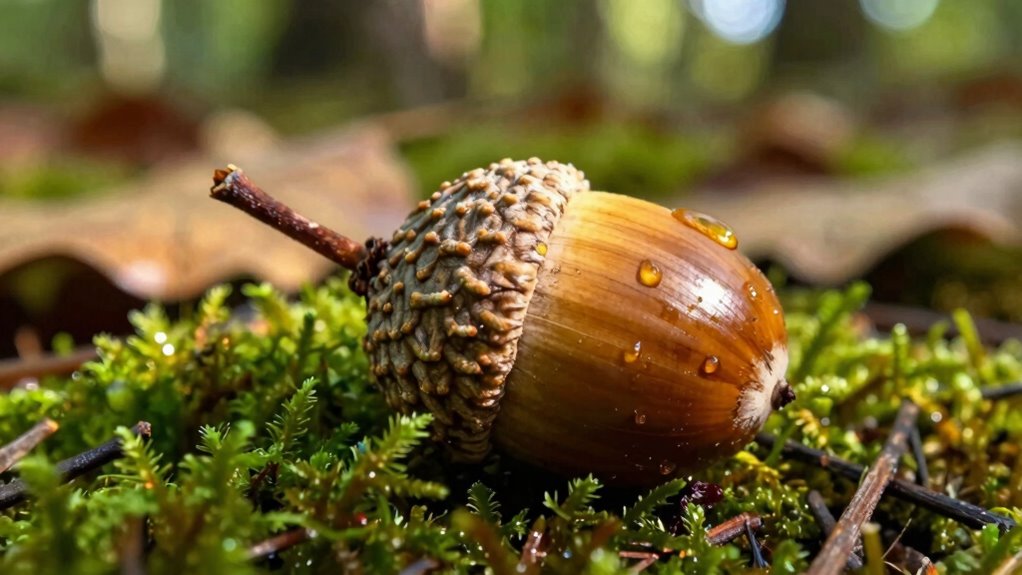

You might not realize that acorns are a highly nutritious and sustainable wild food source often overlooked. They’re packed with healthy fats, protein, vitamins, and minerals, making them a versatile and resilient staple. Despite their benefits, many pass them by because of the tannins and processing required. However, with simple techniques, you can reveal their full potential. Stay tuned—there’s more to discover about turning acorns into a valuable, eco-friendly resource.

Get garden gear delivered free with Prime
- Fast, free delivery on millions of items
- Prime Video, Amazon Music and more included
- Member-only deals all year
Key Takeaways
- Acorns are highly nutritious, offering healthy fats, protein, fiber, and essential vitamins and minerals.
- Proper processing removes tannins, making acorns safe, palatable, and comparable to mainstream nuts.
- They are a sustainable, low-impact foraging option with minimal environmental disruption.
- Acorns are versatile, usable in various recipes, and can be stored long-term for off-season nutrition.
- Despite their benefits, lack of awareness and preparation knowledge keep acorns underrated.
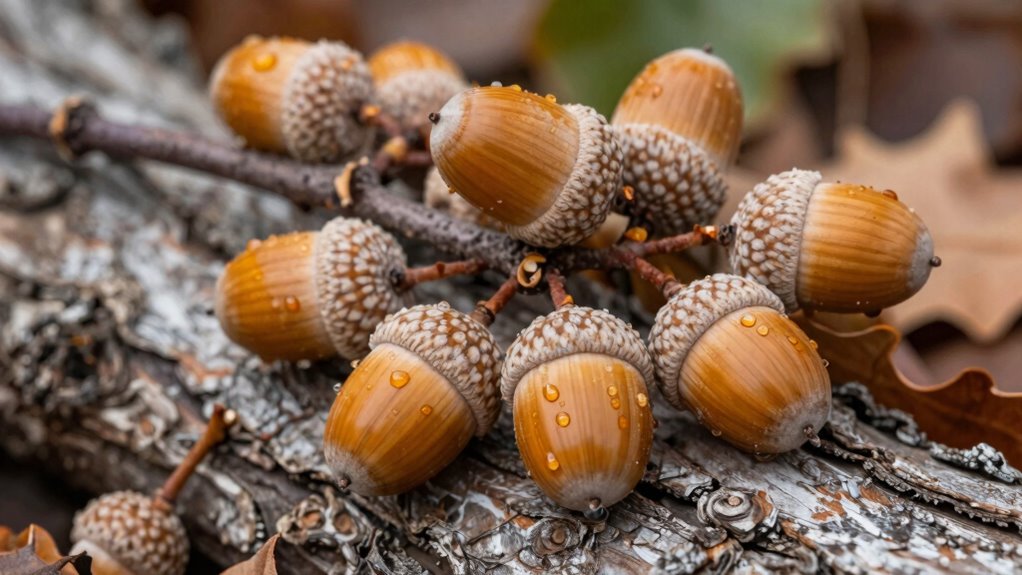
While acorns might not be the first wild food that comes to mind, they’re an underrated staple with incredible potential. Many overlook these hardy nuts, but with the right foraging techniques, you can turn acorns into a nutritious and versatile food source. To start, you need to identify oak trees, which are widespread and easy to spot in forests, parks, and even urban areas. When foraging, look for acorns that are free of mold, cracks, or holes caused by pests. Harvest them in the fall when they’ve ripened and fallen naturally to the ground. Once collected, you’ll want to process them properly, as raw acorns contain tannins that give them a bitter taste and can be toxic if consumed in large quantities. To remove these tannins, you can shell the acorns and then soak them in water, changing the water regularly until it runs clear. This traditional method is effective and straightforward, making acorns safe and palatable. Additionally, understanding the contrast ratio of your processing methods can help preserve the flavor and nutritional integrity of the acorns. Being aware of the nutritional benefits can motivate more foragers to give acorns a try, as they are a rich source of essential nutrients often lacking in modern diets. Incorporating proper storage techniques can also extend the shelf life of processed acorns, making them an even more reliable food source during off-seasons.
Furthermore, experimenting with different processing techniques can help optimize both flavor and nutrient retention, making acorns a more appealing addition to your diet. The nutritional benefits of acorns are impressive, often surpassing those of many common nuts and grains. Acorns are rich in healthy fats, including monounsaturated and polyunsaturated fatty acids, which support heart health. They also pack a good amount of protein, essential for muscle repair and overall energy. Additionally, acorns contain complex carbohydrates, fiber, and antioxidants, contributing to sustained energy levels and immune support. Their vitamin content includes vitamin A, E, and some B-vitamins, which play vital roles in maintaining your skin, vision, and nervous system. Minerals such as magnesium, potassium, and calcium further enhance their nutritional profile, helping with bone health and muscle function. For those interested in sustainable and local food sources, acorns are a resilient option that can be foraged with minimal environmental impact.
As an affiliate, we earn on qualifying purchases.
Frequently Asked Questions
Are Acorns Safe to Eat Raw?
You shouldn’t eat acorns raw because they contain tannins, which can be toxic and cause stomach upset. When wild foraging, focus on proper nut identification to guarantee safety. Always process acorns by leaching out tannins through soaking or boiling before consuming. This step is essential to enjoy acorns safely and release their nutty flavor, making them a nutritious addition to your wild foraging adventures.
How Do I Properly Prepare Acorns for Consumption?
You might coincidentally find acorns during a walk, and now you wonder how to prepare them. First, harvest using proper techniques—look for fallen, mature nuts. To remove bitterness, soak the acorns in water, changing it daily until the tannins leach out. Then, shell and grind them into flour or roast for a nutty flavor profile. Proper prep reveals acorns’ delicious potential, making them a versatile wild ingredient.
Can Acorns Be Used in Baking Recipes?
Yes, acorns can be used in baking recipes. You’ll want to grind prepared acorns into acorn flour, which makes a great gluten-free baking substitution for traditional flours. Use acorn flour in muffins, bread, or cookies to add a nutty flavor and nutritional boost. Just remember to adjust your recipes since acorn flour behaves differently than wheat flour, but it’s a versatile, underrated ingredient in wild baking adventures.
What Nutrients Do Acorns Provide?
Ever wondered what nutrients acorns pack? They offer a rich nutrient profile, including carbs, healthy fats, protein, and minerals like magnesium, calcium, and potassium. These nutrients contribute to various health benefits, such as supporting bone strength, boosting energy, and improving digestion. Incorporating acorns into your diet can be a smart move, as they provide essential nutrients naturally, making them a versatile and nourishing wild food source.
Are Acorns Sustainable to Harvest Regularly?
Yes, acorns are sustainable to harvest regularly if you follow proper harvesting guidelines. By collecting only what you need and avoiding overharvesting, you minimize environmental impact. Always harvest from healthy, abundant oak trees and leave enough acorns for wildlife and seed dispersal. This responsible approach guarantees acorns remain a renewable resource, supporting local ecosystems and your foraging efforts without harming the environment.
Conclusion
You might never have thought acorns would become your go-to foraging find, yet here you are, discovering their overlooked potential. Sometimes, nature’s most underrated treasures reveal themselves when you least expect it—just like finding that rare acorn among a sea of leaves. As you embrace these wild staples, you’ll realize that the simplest things often hold the greatest surprises. In the end, it’s a small coincidence that can transform your appreciation for this humble, yet mighty, nut.
Fall yard work Picks
leaf blowers
As an affiliate, we earn on qualifying purchases.