TL;DR

Get garden gear delivered free with Prime
- Fast, free delivery on millions of items
- Prime Video, Amazon Music and more included
- Member-only deals all year
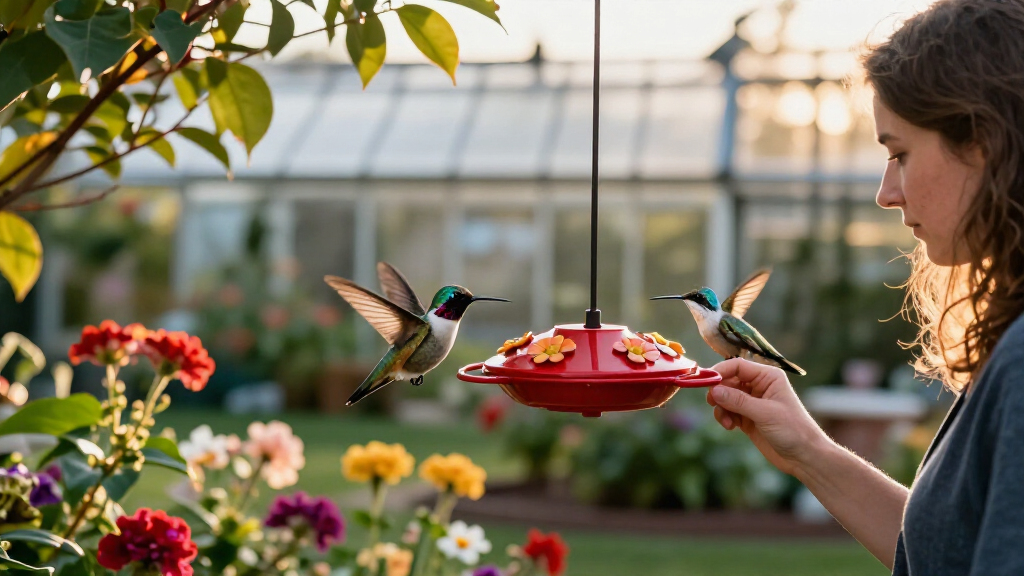
A Country Living report outlines three clues for distinguishing male and female hummingbirds: plumage, size and behavior. Males are generally brighter and perform courtship displays, while females are often slightly larger and handle nesting and chick-rearing; juvenile males can resemble females.
A Country Living report describes three clues that may help observers tell male and female hummingbirds apart: color, size and behavior. The distinctions are general rather than definitive, the report says, and young males can look like females before developing adult plumage.
Plumage is one visible clue. Males usually have brighter feathers, particularly on the head and the throat patch known as the gorget. Depending on the species, their feathers may show red, pink, purple or green iridescence. Females tend to be more subdued, with throats that are often white or lightly speckled. The report notes that females may still have iridescence on their backs, but it is generally less vivid.
Size offers a second clue. Females are often slightly larger than males, though the difference may be difficult to judge when a bird is seen only briefly. The report links the extra body mass to the demands of nesting and raising young, including energy needs during egg-laying and incubation. It also says females of some species have slightly longer beaks, which may help them reach nectar in deeper flowers.
Behavior can add context. During courtship, males may display bright feathers and perform flight patterns. Females build nests, incubate eggs and raise chicks, according to the report. A hummingbird sitting on a nest is therefore likely to be female, but a single observation is not a substitute for identification based on several clues.
Clues for Backyard Birdwatchers
For people watching hummingbirds in gardens, recognizing these patterns can make a fleeting visit easier to interpret. Color and courtship behavior may be visible without approaching or disturbing a bird, while a nest offers information about parental roles. The report’s guidance is most useful as a set of clues—not a guarantee—because individual birds, age and species can affect what an observer sees.
The distinctions also help explain why a brightly colored visitor is not necessarily representative of every hummingbird in the area. Females and immature birds may have less conspicuous plumage, and a quick view can conceal differences in body size. Patient observation across multiple visits may provide a more reliable picture than relying on one trait.
As an affiliate, we earn on qualifying purchases.
How Plumage and Parenting Differ
The Country Living report frames the differences as common patterns among hummingbirds. It says showier male plumage can play a role in attracting mates, while females’ muted colors may help them blend into their surroundings and avoid drawing attention to nests. These are explanations offered in the report, rather than a guarantee that every species or individual follows an identical pattern.
Age matters, too. Juvenile males may resemble females during their first month or two, before brighter adult feathers develop, according to the report. The article also describes females as responsible for nest-building, incubation and raising chicks, while males perform courtship displays. These behaviors can help distinguish sexes when plumage alone is inconclusive.
“Males usually have much brighter feathers than females—especially on their gorget and head.”
— Country Living report
Limits of Visual Identification
The report presents general tendencies, not a species-by-species identification guide. It does not specify which hummingbird species are covered, how large the average size differences are, or how often the described traits vary. No measurements or research citations are included in the supplied material.
It may also be difficult to identify a bird from a brief glimpse: lighting affects how iridescent feathers appear, and young males can resemble females. A bird perched on a nest is described as likely female, but the report does not provide a method for confirming sex from appearance alone. Species, age and viewing conditions remain relevant uncertainties.
What to Watch on Future Visits
The report does not announce a new study, policy or planned follow-up; it offers identification guidance for garden observers. Readers can watch for several clues together on later visits: the throat and head color, relative body size, courtship flights and whether a bird is tending a nest. The source material does not provide a timeline for further reporting or additional expert comment.
Key Questions
What is the clearest clue that a hummingbird is male?
Brighter plumage, especially on the head and throat gorget, is a useful clue, according to the report. Color varies by species and may be hard to judge in changing light.
Are female hummingbirds larger?
Females are often slightly larger, the report says. It gives no measurements, and size may be difficult to assess from a brief sighting.
Can a young male look like a female?
Yes. The report says juvenile males can resemble females during their first month or two, before adult-colored feathers develop.
Which hummingbird parent cares for the chicks?
According to the report, females build nests, incubate eggs and raise the chicks. Males perform courtship displays.
Can these clues identify every hummingbird with certainty?
No. The report describes general patterns and does not provide species-specific measurements or a definitive test. Age, species and viewing conditions can affect identification.
Source: rss
Columbus Day / Indigenous Peoples' Day Picks
long weekend sales
As an affiliate, we earn on qualifying purchases.