
To safely process beech nuts, start by harvesting them when they ripen in late summer or early fall, handling them carefully to avoid shell damage. Remove bitter tannins by soaking the nuts in water, changing the water multiple times until it darkens, indicating tannins are leaching out. Proper drying afterward makes shells easier to crack, revealing their nutritious potential. Keep exploring to learn more tips on turning wild beech nuts into a safe, tasty snack.
Key Takeaways
- Collect beech nuts promptly when they fall naturally to ensure freshness and prevent spoilage.
- Handle nuts carefully to avoid damaging shells, which facilitates easier cracking and processing.
- Soak nuts in water multiple times over several days to leach out tannins and reduce bitterness.
- Observe water color change during soaking; darker water indicates effective tannin removal.
- Dry nuts thoroughly after soaking to make shells easier to crack and ensure safe, nutritious consumption.
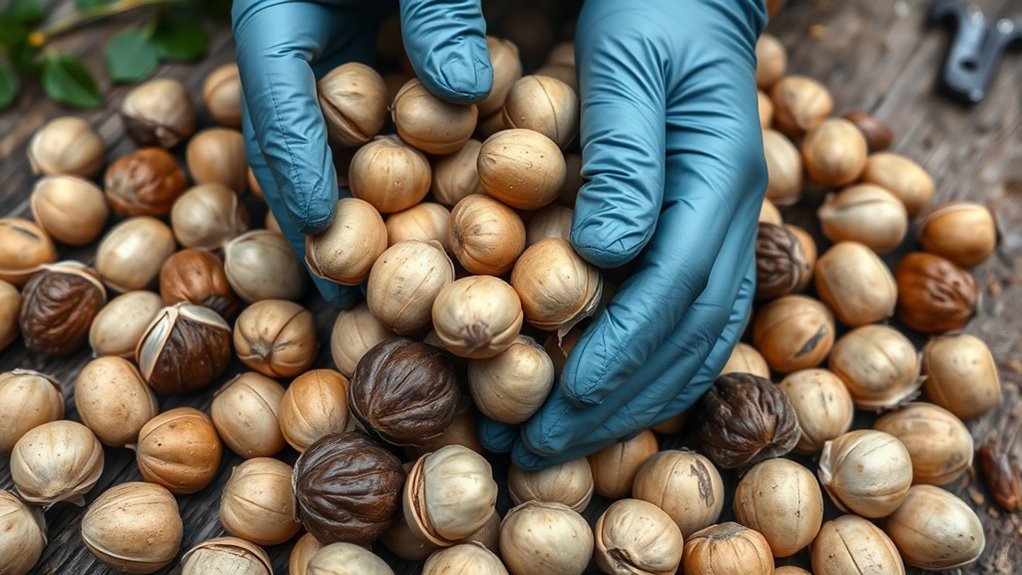
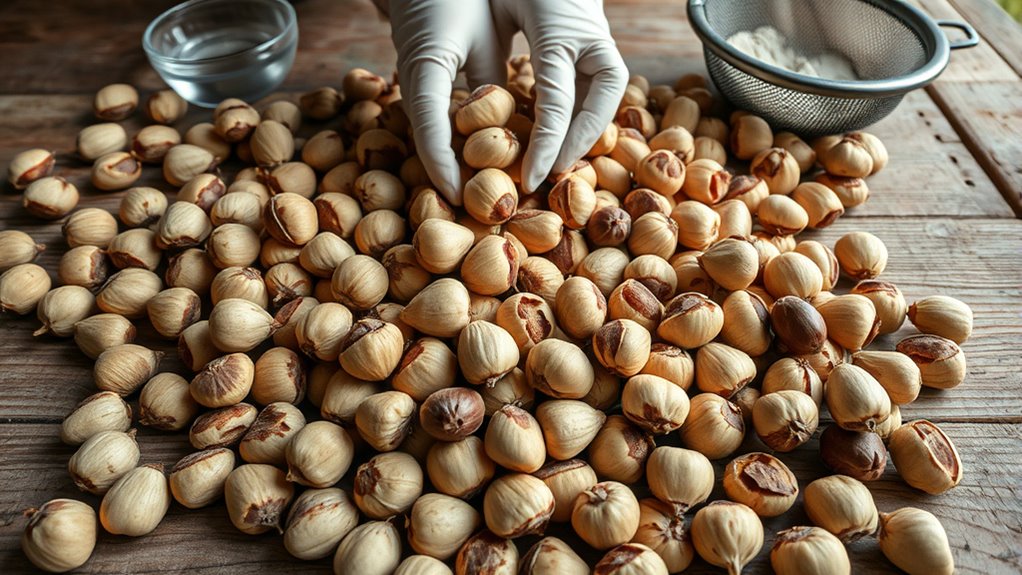
Have you ever wondered what makes beech nuts a nutritious snack or a valuable resource? It all starts with understanding how to properly harvest and process these tiny treasures. Nut harvesting involves more than just picking beech nuts off the ground; it’s about timing, technique, and knowing how to prepare them for safe consumption. Beech nuts ripen in late summer to early fall, falling naturally when they’re ready. To maximize your yield and guarantee quality, you need to collect them promptly and handle them carefully to avoid crushing or damaging the shells. Once collected, the real work begins: tannin removal. Beech nuts contain tannins—bitter compounds that can cause stomach upset and interfere with nutrient absorption. These tannins are present in the shells and sometimes in the nutmeat itself, and removing them is essential to unseal the nuts’ full nutritional potential and make them safe to eat.
Tannin removal is a straightforward process, but it requires patience and attention. One effective method is to soak the nuts in water, changing the water multiple times over several days. This leaching process draws out the tannins, reducing bitterness and toxicity. During soaking, you’ll notice the water turning dark as the tannins dissolve out of the shells. After soaking, you can dry the nuts thoroughly, either by air or in a low-temperature oven. Once dried, the shells become easier to crack open, revealing the nutmeat inside. The key is to be gentle during shelling to preserve as much of the nut as possible. When properly processed, beech nuts become a tasty and nutritious snack, rich in fats, proteins, and minerals. Additionally, understanding the significance of tannin removal can help prevent potential health issues associated with bitter compounds.
Understanding the importance of tannin removal empowers you to take control of your food sources. It transforms beech nuts from wild, potentially bitter foragers into a healthy, sustainable resource. This liberation from dependency on store-bought snacks allows you to reconnect with nature and harness its bounty safely. Nut harvesting and tannin removal are not just about sustenance—they’re acts of reclaiming your autonomy over food. By mastering these steps, you turn nature’s little gifts into nourishing fuel that sustains your body and spirit. It’s empowering to know that with a few simple techniques, you can enjoy this wild resource freely, without the bitterness or risks associated with unprocessed nuts. So, embrace the process, educate yourself, and enjoy the liberation that comes with harvesting and preparing beech nuts on your own terms.
beech nut cracking tools
As an affiliate, we earn on qualifying purchases.
As an affiliate, we earn on qualifying purchases.
Frequently Asked Questions
How Can I Identify Harmful Tannin Levels in Beech Nuts?
You can identify harmful tannin levels in beech nuts by performing tannin testing, which reveals bitterness caused by high tannin content. If the nuts taste excessively bitter, it’s a sign of elevated tannins, and you should process them further to reduce this bitterness. Liberate yourself from the unwanted tannin grip by properly testing and preparing your nuts, ensuring they’re safe and enjoyable to eat without the overpowering bitterness.
Are There Specific Regions Known for Safer Beech Nut Harvesting?
Certain regions have safer beech nut harvesting due to regional variations and strict harvesting guidelines. You should focus on areas known for healthy ecosystems, like parts of the northeastern United States, where tannin levels are naturally lower. Follow local harvesting guidelines to make sure you’re collecting nuts from mature trees and avoiding overharvested zones. This approach helps you enjoy beech nuts freely, confidently, and safely, embracing nature’s bounty without worry.
What Tools Are Best for Processing Beech Nuts?
Did you know that cracking beech nuts can yield up to 50% edible kernel? To process them, use a nutcracker or a sturdy hammer for shell removal, making the task easier and more efficient. A small, fine-tooth saw can help if nuts are tough to crack. You’ll find that these tools empower you to liberate the tasty nut meat, turning a challenging task into an enjoyable, rewarding experience.
Can Beech Nuts Be Safely Stored Long-Term?
Yes, you can safely store beech nuts long-term if you perform tannin testing first to guarantee they’re properly prepared. Store them in airtight containers in a cool, dry place to prevent spoilage. Regularly check for mold or rancidity, and consider freezing for extended preservation. With proper beech nut storage, you free yourself from seasonal limitations and enjoy these nutritious treasures anytime you desire.
Are There Health Risks Associated With Tannin Consumption?
You might find tannin consumption a bit tricky, as excessive intake can lead to tannin toxicity, affecting your digestion and nutrient absorption. While moderate tannin levels generally pose minimal health implications, overindulgence could cause discomfort or other issues. Embrace the joy of tasting beech nuts, but stay mindful of tannin levels to keep your health on the bright side. Balance is key to enjoying nature’s bounty safely.
tannin removal soaking basket
As an affiliate, we earn on qualifying purchases.
As an affiliate, we earn on qualifying purchases.
Conclusion
Now that you know how to safely process beech nuts and stay alert to tannin levels, you’re better equipped to enjoy this natural snack. Remember, knowledge is power—don’t let the tannins catch you off guard, like a wolf in sheep’s clothing. With careful preparation, you can savor beech nuts without worry. Keep your eyes open and your wits about you, and you’ll find these nuts can be a tasty treat rather than a hidden danger.
nut drying racks
As an affiliate, we earn on qualifying purchases.
As an affiliate, we earn on qualifying purchases.
wild nut processing kit
As an affiliate, we earn on qualifying purchases.
As an affiliate, we earn on qualifying purchases.