Eating dandelions year-round is safe and nutritious if you know how to identify, harvest, and prepare different parts of the plant properly. In spring, enjoy tender greens in salads, while late summer and fall are great for mature leaves and flowers. Dried roots can be brewed into tea any time of year. By following foraging tips and proper preparation methods, you can enjoy dandelions safely throughout the seasons—there’s much more to discover on how to incorporate them into your diet.
Key Takeaways
- Dandelions are safe to eat year-round when properly foraged and prepared, offering consistent nutritional benefits.
- Seasonal harvesting ensures optimal flavor and nutrient content of different plant parts.
- Spring greens are tender and ideal for salads, while roots and flowers are better in later seasons.
- Proper identification and safe foraging practices are essential to avoid pollution or chemical exposure.
- Incorporating all parts of the plant throughout the year maximizes health benefits and culinary variety.
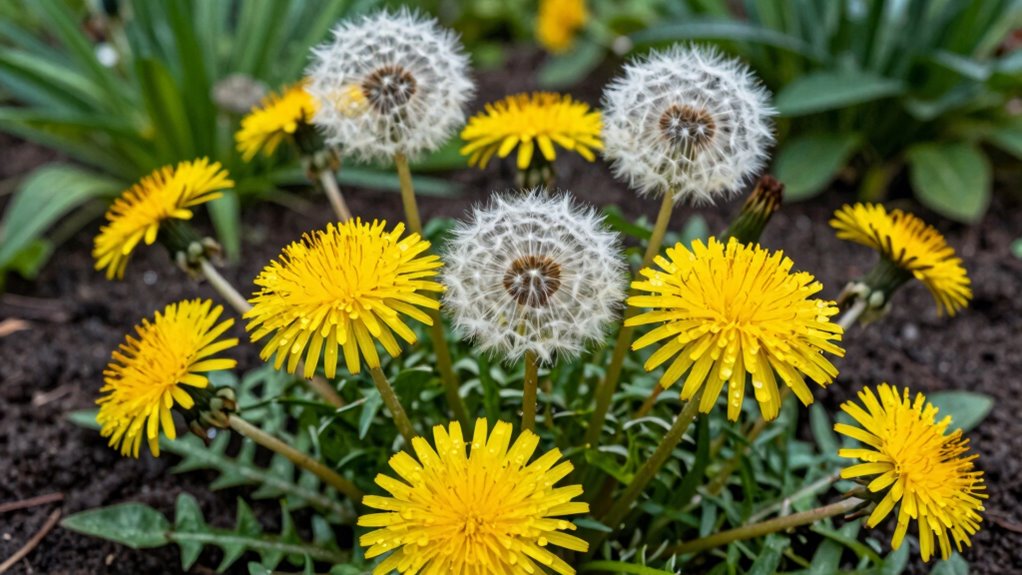
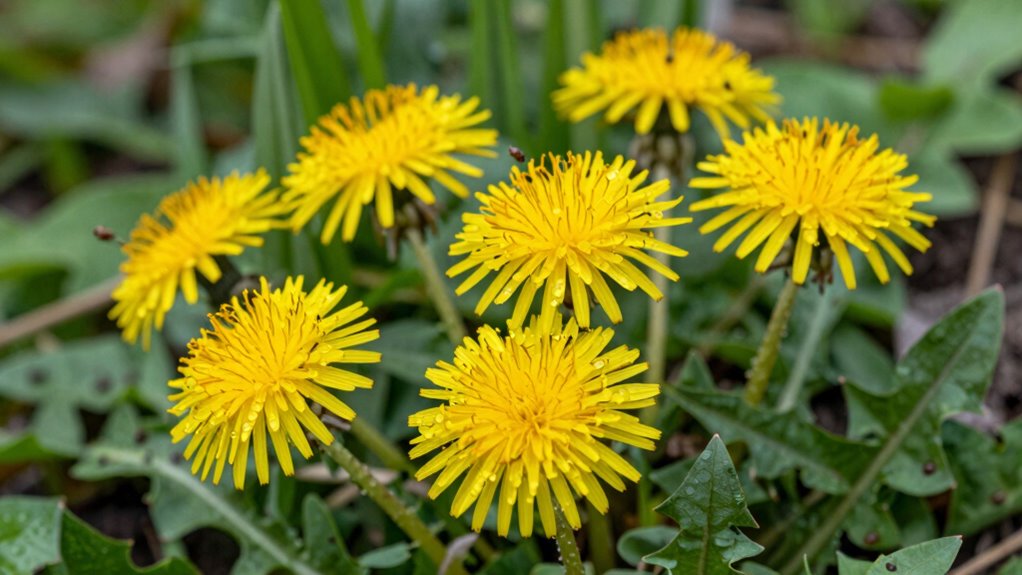
Dandelions aren’t just pesky weeds; they’re a versatile and nutritious food source that you can enjoy year-round. If you’re interested in incorporating them into your diet, it’s helpful to understand some foraging tips to gather them safely and sustainably. Look for dandelions in areas away from pollution, such as parks or your own yard, where chemicals haven’t been sprayed. Choose young, vibrant plants with tender leaves, which tend to be less bitter and easier to prepare. Always wash your foraged dandelions thoroughly to remove dirt and insects, and avoid plants near busy roads or industrial areas. Foraging is straightforward once you get the hang of identifying the right plants, and over time, you’ll develop an eye for mature versus tender leaves, flowers, and roots. Proper plant identification is essential for safe foraging and enjoyment. Additionally, understanding the nutritional benefits of dandelions can motivate you to include them regularly in your diet.
When it comes to culinary uses, dandelions are incredibly adaptable. The leaves, flowers, and roots each have distinct flavors and benefits. Young leaves work well in salads, offering a slightly bitter, earthy taste that pairs beautifully with sweet or tangy dressings. You can also sauté the leaves like spinach or blend them into smoothies for a nutrient boost. The flowers are perfect for making dandelion wine, or you can dip them in batter and fry them for a tasty snack. Dandelion petals can be added to baked goods or used as a colorful garnish. The roots are often roasted and ground into a coffee substitute or used in teas, providing a rich, earthy flavor and digestive benefits. Incorporating dandelions into your culinary repertoire not only adds variety but also helps you make the most of this abundant plant throughout the year. During spring, young greens are tender and ideal for salads, while in late summer and fall, you can harvest mature leaves or dried flowers. In winter, dried roots can be brewed into tea, ensuring you have access to their health benefits year-round. To maximize nutritional intake, try experimenting with different parts of the plant in various recipes. Using dandelions in your culinary repertoire not only adds variety but also helps you make the most of this abundant plant throughout the year. During spring, young greens are tender and ideal for salads, while in late summer and fall, you can harvest mature leaves or dried flowers. In winter, dried roots can be brewed into tea, ensuring you have access to their health benefits year-round. Incorporating dandelions into your meals is simple—just start with small doses to gauge your taste and digestion. With some basic foraging tips and creative culinary uses, you’ll find that these wild plants are an easy, economical, and nutritious addition to your diet at any season.
dandelion greens salad mix
As an affiliate, we earn on qualifying purchases.
As an affiliate, we earn on qualifying purchases.
Frequently Asked Questions
Are Dandelions Safe for Pets to Eat?
Dandelions are generally safe for pets to eat, but you should prioritize pet safety by ensuring proper toxic plant identification first. Always supervise your pets when they’re nibbling on plants, and avoid letting them eat dandelions from areas treated with pesticides or chemicals. While most pets tolerate dandelions well, some might experience stomach upset. When in doubt, consult your veterinarian to confirm that your pet’s safe to enjoy dandelions.
Can Dandelions Be Used in Cooking or Recipes?
Think of dandelions as tiny green goldmines, ready to elevate your dishes. You can incorporate them into cooking through dandelion salads, adding a bitter, earthy punch, or brew dandelion tea for a soothing, detoxifying drink. Their tender leaves and cheerful flowers are versatile, turning simple recipes into vibrant, health-boosting creations. So, yes, dandelions are a delightful, nutritious ingredient waiting to be woven into your culinary adventures.
How Do I Identify Edible Dandelions From Toxic Plants?
To identify edible dandelions and avoid toxic plants, focus on plant identification details like bright yellow flowers, deeply toothed leaves, and a milky sap. Dandelions have a hollow, jagged leaf shape and grow in sunny areas. Always check for any unusual markings or different leaf shapes, and compare with trusted plant guides. This helps with toxic plant avoidance and guarantees you’re harvesting safe, nutritious dandelions.
What Are the Nutritional Benefits of Eating Dandelions?
Eating dandelions provides numerous nutritional benefits, including a rich source of Dandelion antioxidants that help fight free radicals. You also gain Dandelion detox benefits, supporting your liver and digestion. Dandelions are packed with vitamins A, C, and K, along with minerals like calcium and iron. Incorporating them into your diet can boost your immune system, promote healthy skin, and aid in natural detoxification processes.
Are There Any Side Effects or Allergies Linked to Dandelion Consumption?
About 10% of people might experience allergies to dandelions, especially those sensitive to ragweed. While generally safe, consuming dandelions in a dandelion detox or herbal medicine can cause mild side effects like stomach upset or skin reactions. It’s best to start with small amounts and consult a healthcare professional if you have allergies or are on medication. Always listen to your body when trying new herbal remedies.
dandelion root tea bags
As an affiliate, we earn on qualifying purchases.
As an affiliate, we earn on qualifying purchases.
Conclusion
Now that you know the truth about eating dandelions year-round, you can harvest, enjoy, and incorporate them into your diet confidently. You can embrace their versatility, appreciate their nutritional benefits, and savor their flavor, no matter the season. You can grow them, forage them, and share them with others, turning a common weed into a valuable food source. You can transform your approach to foraging, your mindset about weeds, and your diet—all with dandelions.
dandelion flower edible
As an affiliate, we earn on qualifying purchases.
As an affiliate, we earn on qualifying purchases.
dandelion coffee substitute
As an affiliate, we earn on qualifying purchases.
As an affiliate, we earn on qualifying purchases.