
TL;DR

Get garden gear delivered free with Prime
- Fast, free delivery on millions of items
- Prime Video, Amazon Music and more included
- Member-only deals all year
Grow Organic’s guide outlines how to plant and care for goji berry shrubs, including site selection, watering, pruning and harvest. It recommends full sun and well-drained soil, and says to pick berries only when they are fully colored and softened; results and timing vary by climate and cultivar.
Grow Organic has published a guide to growing goji berries, covering planting, routine care, pruning and harvest for home gardeners. It recommends a sunny site with well-drained soil and advises waiting until berries are fully colored and soft before picking them.
The guide describes goji, or wolfberry, as a deciduous woody shrub that can develop arching branches and send up shoots from its roots. It says the plant is commonly grown in USDA hardiness zones 3–10, while noting that performance depends on local conditions and winter lows. Full sun is recommended for flowering and fruiting; partial shade may help in areas with especially hot afternoons.
For planting, Grow Organic advises setting nursery plants in spring once the soil is workable. The planting hole should be about twice as wide as the root system, with the plant kept at its existing soil depth. The guide recommends 4–6 feet between plants and stresses drainage: goji roots do not fare well in persistently soggy soil. It gives a soil pH range of 6.8–8.1 and recommends testing before making amendments rather than adding lime automatically.
New plants need consistent watering while they establish. Older shrubs can tolerate some drought, but prolonged dry spells may limit fruit production, according to the guide. Container plants require particular attention to moisture and drainage, with a larger pot needed as roots fill the original one. The article also advises removing unwanted root shoots early, keeping mulch away from stems and wearing gloves around thorny branches.
Pruning guidance focuses on removing dead, damaged and crossing branches during dormancy, and shortening long stems to an outward-facing branch. The guide cautions against severe summer pruning, which may reduce the crop. It also recommends checking leaves for aphids, mites and powdery mildew. For pest or disease treatments, gardeners should confirm the problem and use only products labeled for the crop, following label directions and harvest intervals.
Planning for Fruit and Space
Goji shrubs can be a long-term garden planting, but their spreading growth makes site selection and maintenance relevant before planting. The guide’s spacing and root-shoot advice can help gardeners leave room for harvesting and keep shoots from encroaching on paths or nearby beds. It also says to check local guidance because the shrub may escape cultivation in some regions.
Expectations about harvest timing matter, too. The article says named cultivars may start producing in one to two years, while maximum production may take three to five years; both timelines vary with cultivar and growing conditions. These are guide estimates, not a guarantee for an individual plant. Picking by ripeness rather than a fixed calendar date can help avoid harvesting fruit before it is ready.
Popular right now

Shark AV2501AE AI Robot Vacuum with XL HEPA Self-Empty Base

Shark Navigator Lift-Away Upright Vacuum Cleaner, White (NV356E)

De'Longhi La Specialista Touch Semi-Automatic Espresso Machine with Grinder
As an affiliate, we earn on qualifying purchases.
What the Growing Guide Covers
The source article is a practical overview rather than a report of a new horticultural study or change in official guidance. It brings together recommendations for site choice, planting, watering and pruning, alongside container growing, pest checks and harvest. Its advice is aimed at home gardeners and draws attention to local differences in climate, soil and plant behavior.
Grow Organic identifies Lycium barbarum as native to China and explains that goji is naturally shrub-shaped, despite sometimes being called a tree. It says plants are commonly self-fertile, though some gardens may see improved yields with a second plant nearby. Results depend on the site and cultivar, so gardeners may need to adapt care to local conditions rather than treat the guide’s ranges as guarantees.
Local Results and Timing Vary
The supplied guide does not give a publication date, identify a particular cultivar or provide evidence from a controlled growing trial. It therefore does not establish how a specific plant will perform in a reader’s garden. Fruit timing, mature size and winter survival can vary with cultivar, local climate and care.
The source also does not identify which regions may face concerns about goji spreading beyond gardens. Gardeners should check local Extension or other regional guidance before planting. Its suggested soil pH range is general guidance; a soil test is needed to determine whether any amendment is appropriate.
Track Growth Through the Seasons
Gardeners following the guide can start by testing soil, selecting a sunny site with good drainage and checking local advice about spread. After planting, monitor soil moisture and plant growth, especially during establishment and in containers. Inspect foliage for pests or mildew and confirm any diagnosis before considering a treatment.
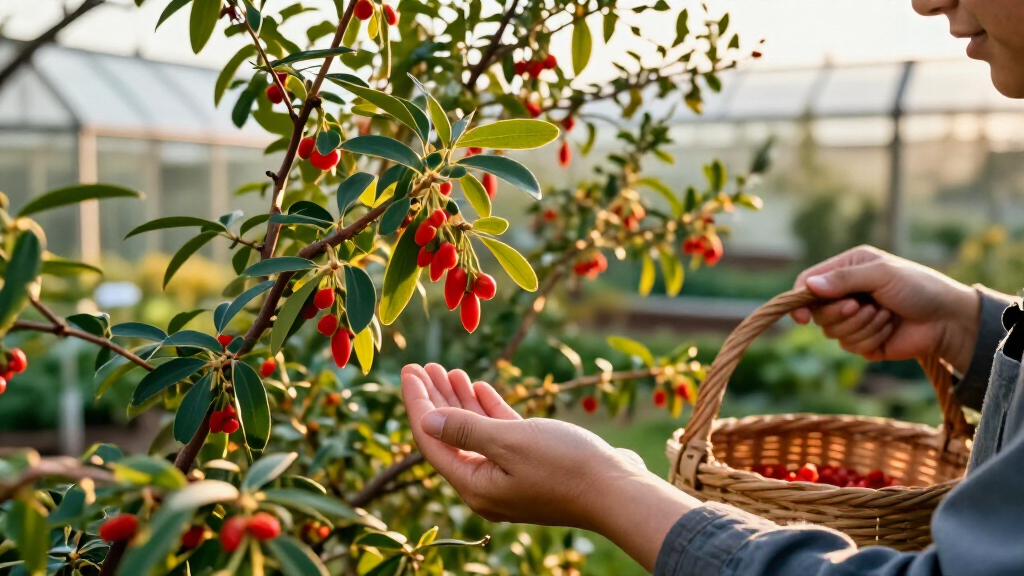
The article recommends recording flowering and harvest dates to refine care in later seasons. For picking, wait until each berry is fully red or orange-red and soft, then handle it gently because ripe fruit bruises easily. The guide says sound ripe berries can be eaten fresh, frozen or dried using appropriate drying instructions, and warns against eating unripe fruit.
Key Questions
When should I plant a goji berry shrub?
The guide recommends planting in spring, when the soil is workable. It advises digging a hole about twice as wide as the root system and keeping the plant at its existing soil depth.
How much space does a goji plant need?
Grow Organic recommends spacing plants 4–6 feet apart. Goji can send up shoots from its roots, so leave space for mature branches and harvesting and remove unwanted shoots early.
How long before goji plants produce fruit?
The guide says named cultivars may begin fruiting one to two years after planting, with maximum production potentially taking three to five years. Timing varies with cultivar and growing conditions.
How can I tell when goji berries are ready to pick?
Wait until individual berries are fully colored and soft, often red or orange-red. Pick gently because ripe berries bruise easily, and do not eat unripe fruit.
Source: rss