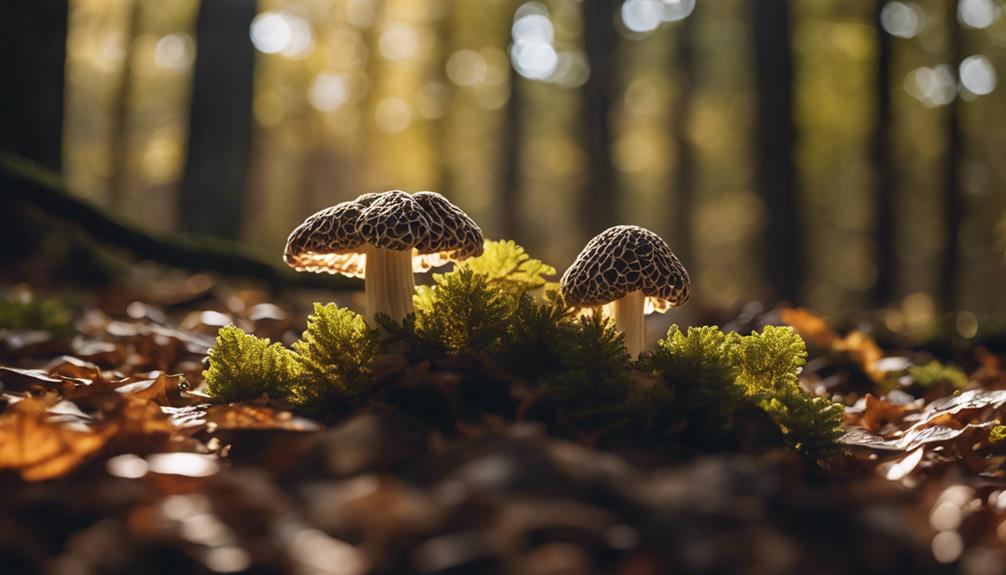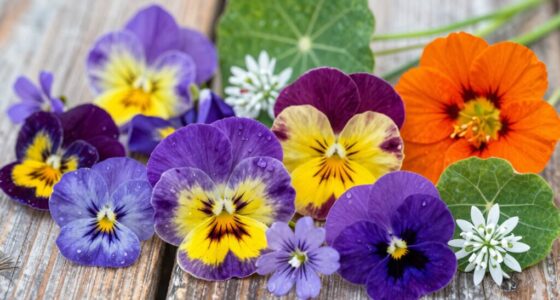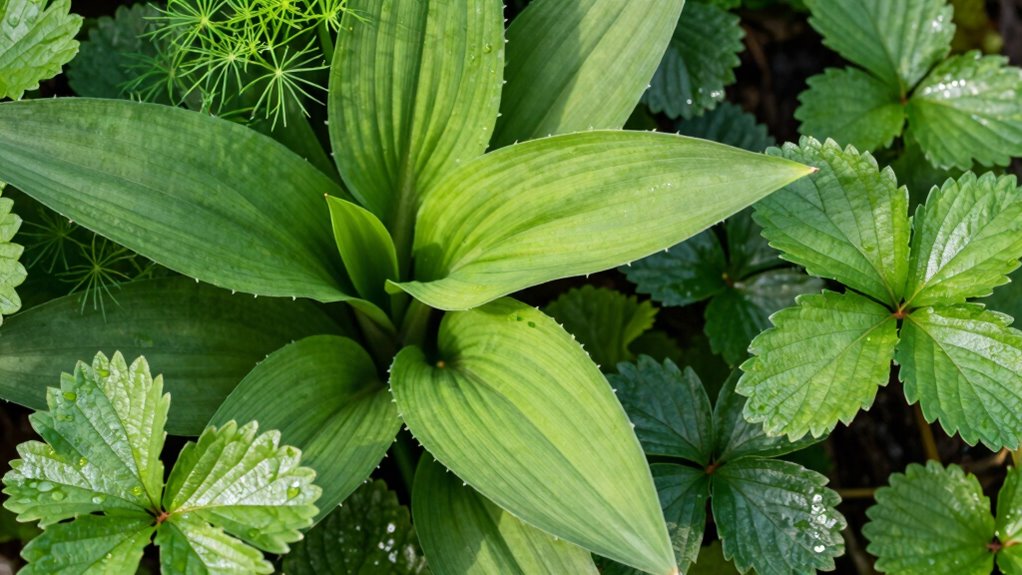

To recognize edible plant families more easily, focus on distinctive features like leaf arrangements, flower structures, and growth habits. Familiarize yourself with common traits of families such as Asteraceae’s composite flowers or Apiaceae’s umbrella-shaped blooms and hollow stems. Observing seasonal cues and differences between cultivated and wild plants also helps. The more you practice, the quicker you’ll identify safe options. Keep exploring, and you’ll discover even more tips to refine your foraging skills.

Get garden gear delivered free with Prime
- Fast, free delivery on millions of items
- Prime Video, Amazon Music and more included
- Member-only deals all year
Key Takeaways
- Focus on distinctive features like flower structure, leaf arrangement, and growth habit for quick identification.
- Study characteristic traits of common edible families such as Asteraceae, Apiaceae, and Rosaceae.
- Observe seasonal cues and growth patterns to differentiate cultivated versus wild plants.
- Practice regularly in natural habitats and use plant guides to improve recognition skills.
- Cultivate or encounter plants frequently to reinforce recognition and build confidence.
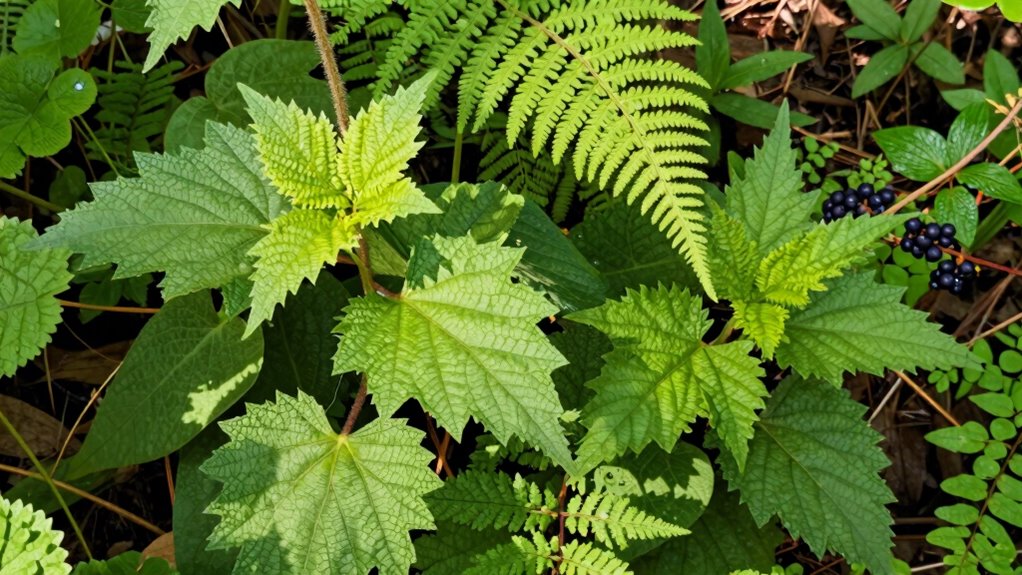
Learning to identify edible plant families can greatly enhance your foraging skills and guarantee your safety. When you familiarize yourself with the common features of these families, you reduce the risk of confusing edible plants with toxic look-alikes. Recognizing plant families involves understanding their unique characteristics, such as leaf arrangement, flower structure, and growth habits. Foraging safety is paramount, so take the time to study these traits carefully before harvesting anything from the wild. Once you know what to look for, you’ll find it easier to distinguish edible plants from potentially dangerous ones, making your foraging experience more confident and enjoyable.
Mastering plant family features boosts foraging safety and confidence in identifying edible wild plants.
Start by focusing on the plant families that are most commonly foraged for food, like the Asteraceae (daisy family), Apiaceae (carrot family), and Rosaceae (rose family). Each family has distinctive features. For instance, plants in the Apiaceae family often have umbrella-shaped flowers and hollow stems, making them easier to identify once you’re familiar with their structure. Conversely, members of the Rosaceae family usually have five-petaled flowers and compound leaves, which can help you quickly recognize edible fruits like berries and apples. By paying attention to these details, you develop a mental map that guides your foraging decisions and reduces the chance of misidentification.
Understanding cultivation techniques also plays a role in recognition. Many edible plants are cultivated intentionally, so knowing how these plants grow in cultivated versus wild environments can help you identify them more accurately. For example, cultivated apples and strawberries often have specific features or growth patterns that can differ slightly from their wild counterparts. Recognizing these differences helps you avoid harvesting plants that might look similar but aren’t safe to eat. Furthermore, knowing how these plants are cultivated can alert you to their seasonal availability and best harvest times, which improves your foraging safety and ensures you’re gathering the best quality food.
As you gain experience, you’ll notice that many edible plant families share common traits that make them easier to identify with practice. Regularly observing plants in their natural habitat, studying plant guides, and even cultivating some yourself can strengthen your recognition skills. Remember, the more familiar you become with these families, the more confidently you can forage without risking your safety. Ultimately, learning to recognize edible plant families isn’t just about identifying plants; it’s about developing a deeper understanding of nature’s diversity, so you can forage responsibly and sustainably.
As an affiliate, we earn on qualifying purchases.
Frequently Asked Questions
Are All Plants Within a Family Safe to Eat?
Not all plants within a family are safe to eat because of plant toxicity, which varies even among edible plant variations. You should never assume every plant in a family is edible; always verify specific species and consult reliable sources. Look for distinctive features and avoid plants with known toxic traits. Being cautious guarantees you enjoy safe, edible plants without risking poisoning from misidentification or toxic varieties.
How Can I Identify Edible Plants in Unfamiliar Environments?
When you encounter unfamiliar plants, start with wildflower identification guides and avoid toxic look alikes. For example, if you spot a plant resembling wild garlic, check its smell and leaf shape before eating. Learn to recognize key features, such as leaf arrangement and flower structure. Always verify with reputable sources or experts, because many edible plants have toxic look-alikes. Trust your knowledge and cautious approach to stay safe.
Do Edible Plant Families Vary by Region?
Yes, edible plant families vary by region due to regional foraging and cultural variations. You’ll notice different plants being common in specific areas, shaped by climate, soil, and local traditions. When exploring unfamiliar environments, keep regional differences in mind to identify edible plants accurately. Learning about local plant families helps prevent misidentification, ensuring you safely enjoy edible plants unique to that region’s ecosystem and cultural practices.
Can Non-Edible Plants Resemble Edible Ones?
Did you know that about 30% of toxic look-alike plants resemble edible species? Non-edible plants can closely resemble edible ones, especially because plant part variations often cause confusion. You need to pay close attention to details like leaf shape, stem color, and flower structure. Always double-check your identification, as mistaken similarities can lead to poisoning. When unsure, consult a guide or expert before consuming any wild plant.
How Often Do Edible Plant Classifications Change?
Edible plant classifications can change occasionally as scientists update taxonomy and improve classification accuracy. You should stay informed about taxonomy updates because new research might shift how plants are categorized, affecting their safety and edibility. These changes aren’t frequent but happen as botanical understanding deepens. Regularly consulting trusted sources or updates guarantees you’re correctly identifying edible plants, reducing risks from misclassification and enhancing your foraging safety.
Conclusion
By getting familiar with key plant families and their distinctive features, you’ll be better equipped to identify edible plants in the wild. Remember, practice makes perfect—so don’t be afraid to get your hands dirty and observe closely. When you understand the basics, you’ll have a leg up in the field and avoid falling for false alarms. Keep learning, stay cautious, and soon you’ll be able to spot edible plants with confidence, turning over a new leaf in your foraging adventures.
Fall yard work Picks
leaf blowers
As an affiliate, we earn on qualifying purchases.