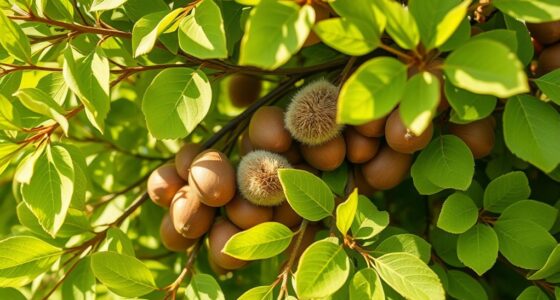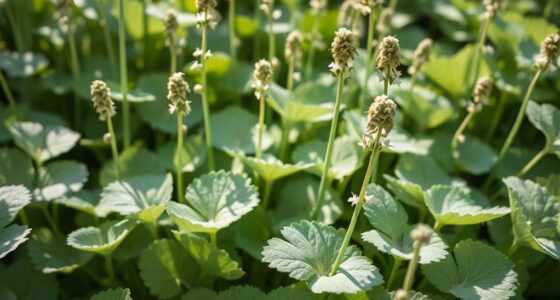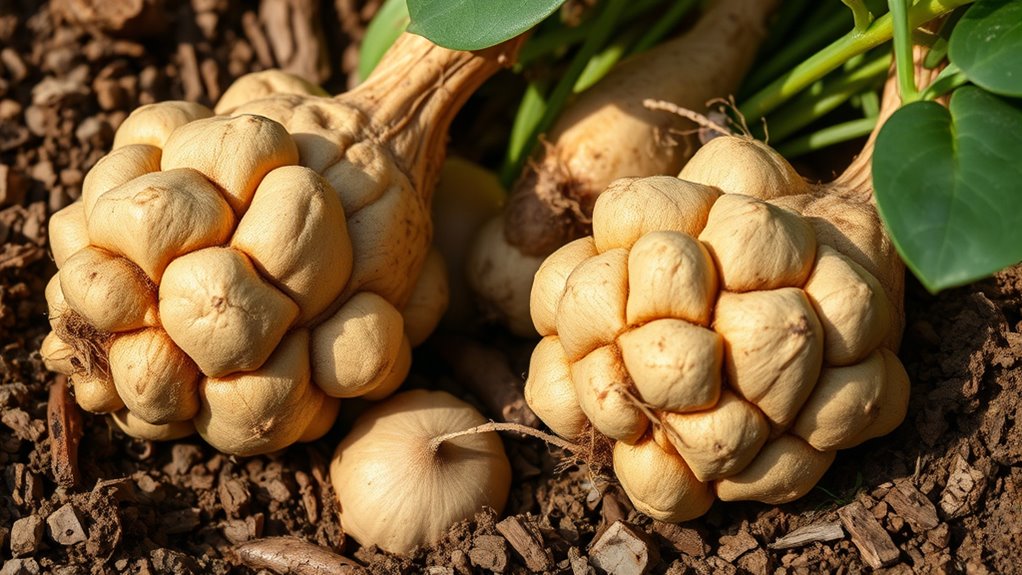
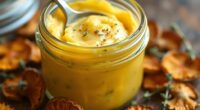
You can find Jerusalem artichoke tubers, also called sunchokes, by foraging in wild areas such as fields, edges, and abandoned lots, especially in North America. These tubers are nutritious, packed with inulin, fiber, and minerals that boost gut health, support digestion, and help stabilize blood sugar. Their versatile flavor makes them great raw, roasted, or prepared in various dishes. Keep exploring to discover more ways you can incorporate these healthful, wild treasures into your diet.
Key Takeaways
- Jerusalem artichokes are wild tubers that can be foraged in North American forests and fields during the fall and early winter.
- Look for knobby, sunflower-like plants with underground tubers that resemble ginger or small potatoes.
- Foraging requires careful digging to avoid damaging the tubers and to ensure sustainable harvesting.
- Proper identification is essential, as some wild roots may resemble toxic plants; consult local foraging guides.
- Harvested sunchokes can be stored in cool, moist conditions for several weeks before culinary use.
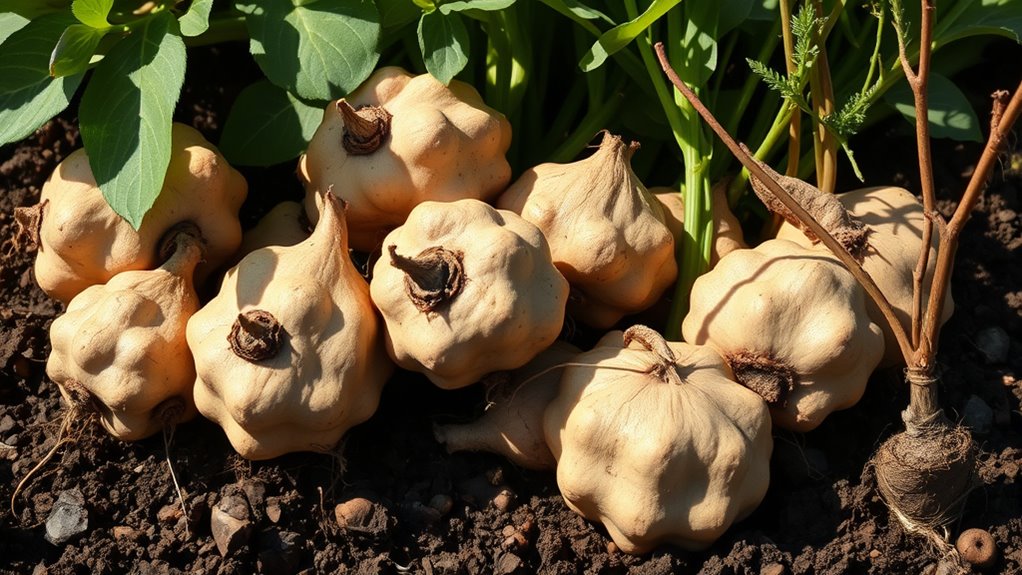
The Jerusalem artichoke, also known as sunchoke, is a tuberous root vegetable native to North America. It’s a wild gem waiting for you to discover, offering more than just sustenance—it’s a key to reclaiming your health and culinary freedom. When you embrace the sunchoke, you tap into its impressive nutritional benefits, which empower you to break free from processed foods and synthetic supplements. Rich in inulin, a prebiotic fiber, it supports your gut health, helping you digest more comfortably and absorb nutrients more effectively. This fiber also aids in stabilizing blood sugar levels, giving you control over energy swings and cravings. Additionally, sunchokes are low in calories but packed with essential minerals like potassium, iron, and magnesium, fueling your body and strengthening your immune system. Its high antioxidant content also fights free radicals, helping you reclaim vitality and longevity. Fighting free radicals is essential in maintaining overall health and preventing chronic diseases.
You’ll find that the culinary uses of sunchokes are as liberating as their health benefits. They are incredibly versatile, inviting you to craft dishes that are both nourishing and exciting. You can slice them thin and enjoy them raw in salads, where their crisp texture and slightly nutty flavor add freshness and crunch. Roasting sunchokes brings out a sweet, nutty aroma that makes them a perfect side dish or snack. They also blend well into soups, purees, or even chips, giving you options to elevate your meals beyond conventional ingredients. Cooking with sunchokes allows you to break free from the monotony of traditional vegetables, infusing your kitchen with creativity and vitality.

Generic Jerusalem Artichokes-Sunchokes-Tubers for Spring Planting-Package of 5-Farm-Fresh Organic
tubers, perennial, exotic vegetable, inulin, super food
As an affiliate, we earn on qualifying purchases.
As an affiliate, we earn on qualifying purchases.
Frequently Asked Questions
Can Jerusalem Artichokes Be Grown Indoors?
Yes, you can grow Jerusalem artichokes indoors through container cultivation. Embrace indoor gardening by choosing a large pot with good drainage and placing it where it gets plenty of sunlight. You’ll enjoy the freedom of fresh tubers right in your home, and their vigorous growth offers a sense of liberation from store-bought produce. With regular watering and patience, your sunchokes will thrive and reward you with delicious harvests.
What Are Common Pests Affecting Jerusalem Artichokes?
Imagine your garden as a battlefield, and pests are invaders trying to steal your bounty. Common pests like aphids, beetles, and wireworms attack Jerusalem artichokes. You can identify these pests through pest identification techniques and fight back with organic pest control methods. By staying vigilant and using natural solutions, you take back control, freeing your plants from harmful intruders and ensuring a healthy, thriving harvest that’s truly yours.
How Do I Store Harvested Jerusalem Artichokes?
To store harvested Jerusalem artichokes, you should use proper storage methods that keep them fresh longer. Place the tubers in a cool, dark, and well-ventilated area, ideally at 45-50°F with high humidity. Avoid storing them in the fridge’s coldest section to prevent chilling injury. Ideal storage conditions help maintain their quality, ensuring you can enjoy their flavor and benefits over several weeks.
Are There Any Health Risks From Consuming Jerusalem Artichokes?
You should be aware that consuming Jerusalem artichokes can cause digestive issues like gas and bloating due to their high inulin content. Some people might also experience allergic reactions, including skin rashes or difficulty breathing. To enjoy their benefits without risks, start with small amounts and monitor how your body responds. If you have allergies or digestive sensitivities, consult a healthcare professional before adding them to your diet.
When Is the Best Time to Harvest Jerusalem Artichokes?
You’ll want to wait until the harvesting season reaches its peak maturity, usually after the first frost. That’s when the tubers have grown full and flavorful, ready to be unearthed with ease. As you liberate these treasures from the earth, remember that timing is everything—harvest too early or too late, and you might miss out on their best qualities. Embrace the journey to the perfect moment of harvest.

Sunkuka Julienne Peeler Stainless Steel Cutter Slicer with Cleaning Brush Pro for Carrot Potato Melon Gadget Vegetable Fruit
MULITIFUNCTIONAL — Julienning or peeling fruit, vegetables easy and fast with this peeler. One blade to peel vegetables…
As an affiliate, we earn on qualifying purchases.
As an affiliate, we earn on qualifying purchases.
Conclusion
So, next time you stumble upon a Jerusalem artichoke, don’t dismiss it as just another tuber. Its humble exterior hides a surprisingly versatile ingredient, perfect for your culinary adventures. Ironically, what many overlook as a weed might just become your new favorite find. Just remember, sometimes the most overlooked treasures are right beneath your nose—hidden in plain sight, waiting for you to give them a second chance. Who knew such a simple root could surprise you so much?

Fresh Jerusalem Artichokes, 5 Tuber Pack, Raw Sunchokes for Planting or Eating, Natural Sunroot Vegetable
VERSATILE USE: Fresh Jerusalem artichokes suitable for both planting to grow your own crop or immediate consumption as…
As an affiliate, we earn on qualifying purchases.
As an affiliate, we earn on qualifying purchases.

GoodCook BestBake Nonstick Textured Carbon Steel Cookie Sheet, 11" x 17", Large Baking Sheet, Even Heating, Scratch-Resistant, Non-Toxic, Durable, Ideal for Baking and Sheet Pan Dinners
QUALITY LARGE BAKING SHEET: Ensures a perfect bake every time for larger batches of your favorite recipes, from…
As an affiliate, we earn on qualifying purchases.
As an affiliate, we earn on qualifying purchases.